70 - Historical Context of Greece
2023 No 70
Now, while Paul was waiting for them at Athens, his spirit was being provoked within him as he was observing the city full of idols.
—Acts 17:16
Introduction
Paul stood in Athens at a unique time in redemptive history. Rome was the power in charge, but they had built upon centuries of Greek expansion annd infrastructure. By AD 50, Athens was the epicenter of Greek thought, philosophy, and religion. In many respects, it was the cultural heart of the Western world. One could easily travel from Africa, across the Middle East, and into Europe. In that day, the universal trade language was Greek. Paul stood in the geographical center of an empire that had become uniquely globalized. God, in all His wisdom, had chosen this moment in time to bring a message of hope to all nations.
To say that the Greeks were mobile would be an understatement. Three centuries prior, under the leadership of Alexander, they had conquered much of the known world. As they went, they spread their culture and left fingerprints everywhere. Paul could see and feel that in his day, and so can we. It is hard to encompass all that ancient Greece has contributed to our modern world. We are who we are today… because of Greece. Our philosophical worldview, our democracy, our scientific methodologies, and our sense of justice are all rooted in this ancient culture.1
Neither time nor space allows for a complete discussion of this influence. A lot has happened in the last 2000 years, but we must acknowledge that Athens remains a global crossroads. And as a crossroads, they have a significant impact on modern migration. Their situation is unique, and their story deserves to be told. It truly would make a great movie! For our purposes, however, we will need to pick up that story in the early 20th century and move forward to the present.
Greek Migration Patterns
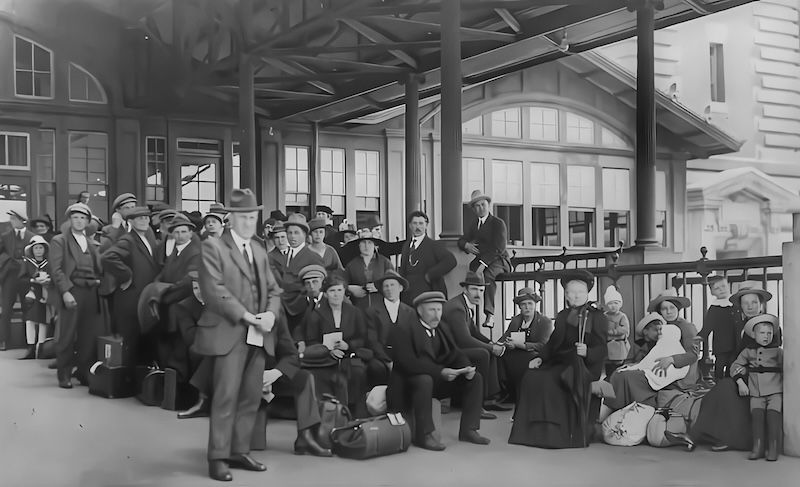
There were two waves of Greek emigration (sending their own people out) in the 20th century. Each would create a deep national sympathy for migrants. Why? Because as we shall see, they have experienced the necessity of movement to preserve their own nation and people. Most Greeks have an "oral tradition" passed down through their generations of the “one” who saved the family. Such helps to explain, at least in the early days of the current migration crisis, why the Greeks have been so receptive to Middle Eastern refugees.
End of the 19th, and Early 20th Century
An economic crisis can be a strong motivator for migration. In the 1890s, Greece suffered from the collapse of its exports of currents (a type of raisin). These currents represented between 50 and 70 percent of their total exports and were the backbone of their economy. Things were so bad that by 1893, Greece was forced to declare bankruptcy.3 The hardships created by this financial crisis caused the government to encourage many to look for work outside of the country. By 1915, nearly one-sixth of the population of Greece had emigrated, mainly to the United States and Egypt. They were a part of a larger European movement, often described as “the great migration.”4 Those movements were critical as their remittances (return dollars) would serve to stabilize the economy.5
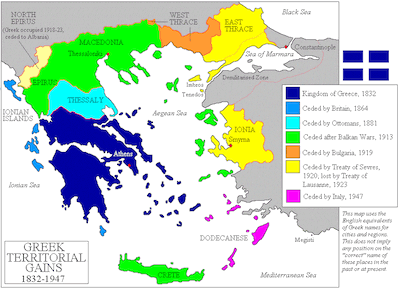
This economic turmoil led to significant governmental, social, and constitutional reforms. Greece not only overcame the crisis, but achieved a measure of international prowess. Recognizing the value of expanding her national borders, Greece became a powerful player in the Balkan wars (1912-13). The defeat of the Ottomans in that conflict gave Greece new freedom across the region and nearly doubled her territories. When the First World War began, Greece attempted to remain neutral. However, by the war's end however, they had joined the Allies. In return, they were given the territories of Thrace (just west of Istanbul), the Turkish region of Smyrna… and control of the eastern Aegean islands.
As in most every story, context is critical. In the years leading up to and including WWI, the Ottoman Empire suffered significant defeats and lost nearly all of its European territories. Nationalism was on the rise across Europe, and that would lead to severe atrocities. Of the two million Ottomans in the region, a third would be displaced, a third would be killed, and the remainder were left chiefly homeless.6 In Anatolia (Turkey), this was viewed as more than just a political loss… it was perceived as a persecution, if not genocide, of Muslims.7
Some may say that the Ottoman response was retaliation. In reality, it was much more associated with the nationalistic tendencies of the era. Before WWI, as many as two million Christian Armenians lived in Anatolia.9 They had always lived in tension with the Ottoman rulers, which only escalated in the late 19th century. Anger over the atrocities experienced during the Balkan war was carried into WWI and was reciprocated by an effort to cleanse all of Anatolia ethnically. It is estimated that between 800,000 and 1.5 million Armenians were killed, with an equal number deported. Additionally, another 250,000 Assyrians were believed to have been killed.10 By the end of the First World War, as much as half of the Greek-speaking Christian population in Asia Minor were killed. Some place that number at 750,000.11 Needless to say, there was death and suffering on both sides of the conflict.
With the Ottoman defeat in WWI, a young, nationalistic Turkish government was formed. Greece stepped in to take control… with expansionistic motivations in the vacuum of power. She already held Smyrna and saw the time to be ripe to take more territory. Yet another war began as Turkey fought Greece for her independence. In a surprise to everyone, Turkey won the conflict under Mustafa Kemal Pasha’s (Atatürk) leadership in 1922. In the Treaty of Lausanne, Greece would consequently surrender Eastern Thrace, the territory of Smyrna, and some of the Aegean islands to Turkey. To end the slaughter of civilians (Greek and Turkish in Anatolia), both sides agreed to a population exchange that occurred in 1923, whereby over 1.5 million people were forced to relocate. They were predominantly Greek, and when they arrived in Greece, they would constitute nearly 25% of the entire population.
The economic impact of the war and the massive introduction of Greek nationals would consume the nation for the next decade. One in four people had arrived without a home, without a job, and often without knowing the language. It was a massive assimilation effort that touched every Greek family. Politically, it was a disaster that ultimately led to a coup d’état in 1935. That would institute a series of dictators that would last until 1974… but more on that in a moment. There is first a need to describe the effects of the Second World War on Greece.
In the early days of the war, Greece fought against the Axis powers. They repelled fascist Italy in 1940, providing an early victory for the Allied forces. Ultimately, however, they fell to Hitler's troops in 1941 and were then ruled by both Italy and Bulgaria. The suffering was great for the next four years; hundreds of thousands would die of starvation, and tens of thousands of Jews would be deported and executed. The Greek resistance was strong, and German reprisals against the civilian populations were harsh. Entire cities would be razed, leaving over a million Greeks homeless.12
One can only imagine the turbulence of this era. Large numbers of Greeks had to adapt to life in the US and Egypt for economic reasons, while much of the homeland had to integrate those who had arrived after a series of wars. The displacements during the two world wars led to a large Greek diaspora. Many would work abroad and send support home to their extended families. This has had a lasting impact. Their stories, trials, and difficulties of integration remain embedded in the oral traditions of the Greek people to this day. And yet, the problems were far from over.
Last Half of The 20th Century
Following the defeat of the Nazis in 1945, the country fell almost immediately into civil war. The battle was between communist forces under Russian influence and the existing anti-communist Greek government. The latter would win, but not before witnessing additional economic decline, massive internal displacements, and political division for decades to come. But… not all was lost. Once the internal conflict ended in 1949, Greece experienced a relatively rapid recovery, aided by the US-led Marshall Plan and the joining of NATO in 1952. Despite internal dictatorial controls and abuse, the country continued its economic growth into the 1970s. A final coup d’état in 1974 led to a new constitution and the installation of a democratically elected president. Greece joined the European Communities in 1981, later becoming the European Union. She adopted the Euro in 2001 and even hosted the 2004 Summer Olympic Games in Athens.
Even so, Greece’s new global position created some additional, significant challenges. To maintain her economic status, the government had over-borrowed from international investors. As her economy began to suffer from the debt load, Greece could not devalue her monetary standard, the Euro, to keep pace. The global financial crisis of 2007-2008 pushed her over the edge, and Greece once again faced bankruptcy. Foreign investors demanded economic reform before restructuring the debt, including strict austerity measures. Social programming and retirement provisions were challenged to cut costs, greatly inflaming the population.
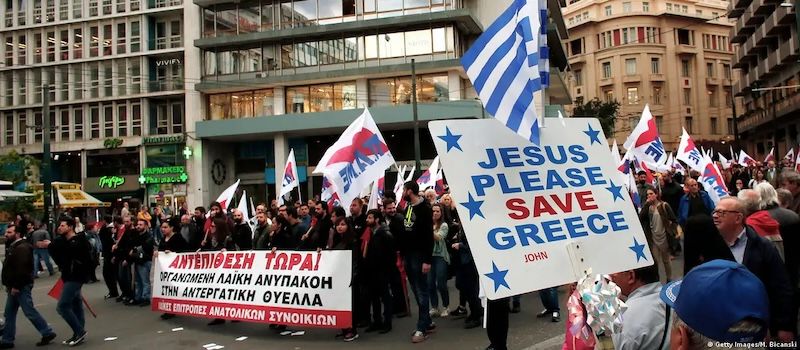
This, once again, forced many to migrate beyond her borders to look for work. Unemployment was high (23% for adults and 55% for youth), and nearly a third of the population lived below the poverty line.14 Compounding the situation, social benefits had been dramatically cut. Emigration flows to other OECD countries grew by 160% between 2010 and 2012, with nearly two-thirds going to Germany.15 Most of these migrants held a university degree. In the following years, over 400,000 Greeks left the country, averaging 50,000 departures per year.16 These movements, combined with previous histories, created an environment that supported migration, along with an empathy for those arriving on Greek shores.
This political and economic history would significantly impact a future migration crisis. In September 2015, a "Coalition of the Radical Left" gained majority control and promised change. What came with the political shift was a clear pro-migrant policy supporting ”open borders” for Greece and Europe.17 Needless to say, these factors combined into a perfect storm for Greece. There was a national affinity for refugees, a strong aversion to any control from the European Union, and a newly elected leftist party in power. Thus, when the migrants began to arrive, the government policy was to "let them come."
In fairness, their openness was not to host the refugees but rather to allow them to pass through Greece and into Europe. Angela Merkel had openly declared that Germany would take in as many refugees as could arrive.18 Not everyone, however, desired to become a transit country. Hungary responded by closing its borders, forcing migrants to cross through Croatia and Slovenia.19 Austria then opened its borders, allowing passage to Germany.20 Combined, the message of the entire Balkan region to the refugees, particularly Syrians, was that there was an open door to Europe.
Greek Foreign Immigrants
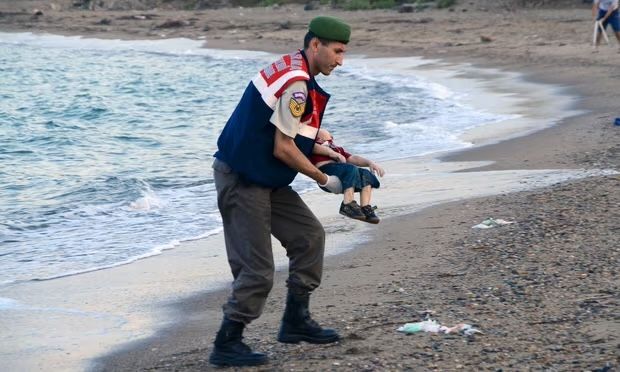
Understanding the Greek Migration Crisis of the last decade must be placed into the context of events that evolved out of the Arab Spring. For that, I encourage you to review a few previous posts.22 It is essential to recognize that as the Arab Spring was turning into an Arab Summer, Greeks were watching with great sympathy. Protests in the Middle East and North Africa had turned into rebellion, and rebellion turned into war across the region.23 Millions were being displaced, and the needs were significant. When the body of a two-year Syrian boy, Alan Kurdi was found on a Turkish beach in September 2015, the attention of the world fell on the refugee crisis.24 All eyes were on Turkey… and Greece.
There Was a Need (Early Days)
In the early days, one could not deny the need to provide safe and secure routes for Syrian refugees. That has not changed today!!! Back then, however, everyone was grappling with the immensity of the problem. In 2015, over 800,000 refugees crossed into Greece from Turkey. (As compared to just under 13,000 at the end of 2022.)25 Most came by boat, while an estimated 50,000 crossed the river to the North. Thousands would die on the journey. Grecians responded with much kindness and hospitality, but they were incredibly overwhelmed. It did not matter how fast the government moved the migrants from the islands to the mainland and then provided transportation to the Balkan borders; more arrived than could be supported.
The pathway into Greece was relatively simple. Smugglers would sell seats in boats headed for the Greek islands, often within sight of Turkish beaches. Refugees were crossing in anything that would float, from homemade rafts to poorly constructed inflatable boats. Most were not seaworthy, leading to many deaths. One could purchase a life jacket, but many were fake, filled with shredded paper. We spoke with one military official who described how local fishermen would make 6-8 daily trips, dropping migrants near the islands with little more than inner tubes to swim the remaining distance. The year 2015 was an intense, insane period.
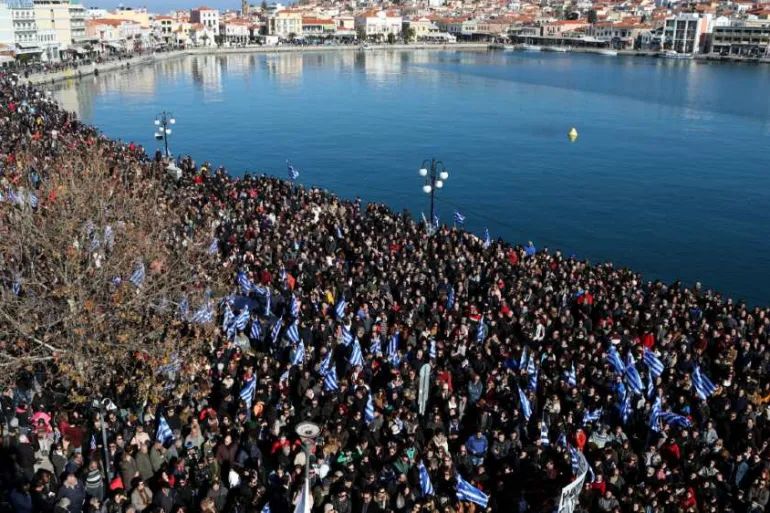
The world responded, but not always in the best of ways. Humanitarian organizations swept onto the Greek islands, and chaos quickly ensued. One island had representatives from over 400 NGOs at one time. It was as if everyone was competing for their “share” of the relief effort. Their activities were controversial, conflicting, and often disparaging to local residents. The government processed the migrants as quickly as possible, but the influx overwhelmed all of the structured systems. Temporary migrant camps formed on the islands that held thousands, where even the basic necessities were lacking. Ultimately, the Greek islanders bore the brunt of the impact… physically, emotionally, and economically.
And that was when all of the European borders were open.
There Was a Problem (European Doormat)
As Greece entered into the second year of migration crisis, Balkan and Eastern European countries began to close their borders and strictly restrict passage. Not being able to move forward, the number of asylum seekers stuck in Greece started to increase dramatically. This would put tremendous pressure on a Greek system that had already failed financially. Reception centers on the islands of Lesvos, Kos, and Samos turned into refugee camps, which then turned into prisons.27 Compassion fatigue began to set in, and hospitality began to fade. And yet, the migrants continued to come. Those transferred to the mainland were filling the streets and city squares.
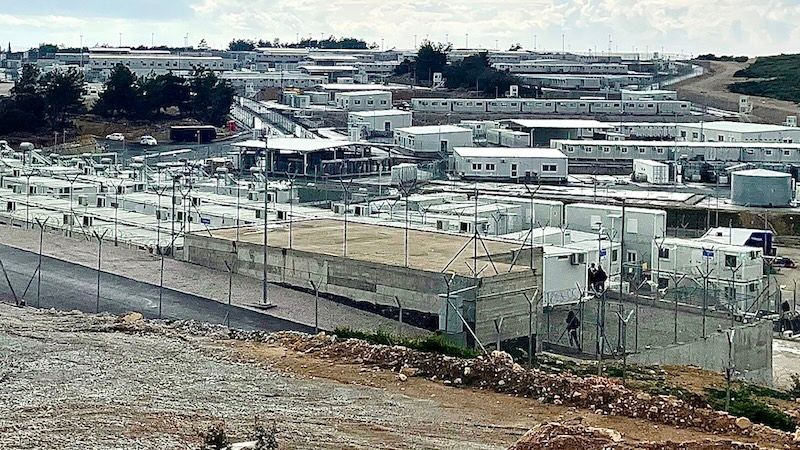
The isolation of Greece is critical to understand what happens next. Being geographically separated from the EU meant that the refugees were genuinely stuck in Greece. As the nation demanded support from its EU partners, the responsibility and resources were funneled through large international NGOs such as the Red Cross, the Danish Refugee Council, the International Organization for Migration, and the UNHCR.28 These resources helped the migrants but did little for the struggling Greek economy or those nationals whose lives had been upended by the crisis. Once again, outsiders were in control of the Greek way of life.
Within a few short years, the strain on Greece would take its toll, forcing political shifts. People who were once sympathetic to migrants were now completely exhausted. A country that despised external control now hated it all the more. And the experiment with leftist ideologies had failed miserably. Open borders had only led to societal collapse. The marks of change started to become evident in 2019.29 The policies of the past would have a rebound, and the elections of 2023 would move things much more toward a nationalistic, radical right.30 Greece would once again close its borders and create policies to deter immigration.
For the refugees, the situation has become dire. Because Greece cannot move the migrants forward, they are now seeking to push them back into Turkey. Stories are coming to light of terrible abuses of people who have already been traumatized. A recent example comes from the New York Times as they documented migrants being put back into boats and sent to Turkey.31 There are other stories of migrants being captured on the Greek side of the Evros River and forced to swim back to Turkey in freezing conditions.32 And then, there is the horrific situation that occurred on June 14, 2023, where it would appear that the Greek Coast Guard refused to assist a boat in distress in open water. It ultimately sank, with a loss of perhaps 700 people.33 That disaster is still under international investigation.
I was recently on the island of Samos, where a modern reception center is hosted. Before the above shipwreck, the number of migrants in the camp averaged around 500. Due to the international pressure on the government and calls for accountability, Greece relaxed much of its enforcement activities between the islands and Turkey. (In other words, they sought to have a very low profile and stay out of the news.) As one might imagine, smugglers took advantage of the pause and sent thousands across. At the time of this writing, the camp has over 4,000 migrants, with hundreds arriving each day. It truly appears to be a problem without a solution.
Conclusion
Two thousand years ago, Athens was the philosophical center of the Roman empire. Everyone served their own god, worshiping an idol in its image. For some, it was a god of a better life; for others, it was one of knowledge, and yet for others, one of power. In the end, they were all empty promises. For Paul, however, it was an opportunity to point people to the one place that could satisfy their souls and give them hope in a world of confusion. He knew that if the gospel could be proclaimed and received in Athens, the impact would spread across all of the known world.
Those idols still exist today… and they do nothing to bring hope to a world of conflict and confusion. They are just empty promises. Greece serves as a clear example of this. And yet… God has planted his church across this country and has sent His people to the remote islands in the Aegean Sea. Christians are faithfully serving both the people of Greece… and the refugees who land on their shores. It is exhausting work, requiring the dedicated prayer and support of the global church. It is proving to be effective work, as many are coming to faith. It is also eternal work, because arriving migrants are discovering how to become missionaries to their fellow migrants. And that work goes with them wherever they may ultimately land.
1 Bruce S. Thornton, Greek Ways: How the Greeks Created Western Civilization (San Francisco: Encounter Books, 2000), 11.
2 Philip Chrysopoulos, "Ellis Island: Thousands of Greeks’ First Sight of America", Greekreporter https://greekreporter.com/2023/07/12/ellis-island-thousands-of-greeks-first-sight-of-america/ (accessed November 4, 2023).
3 Victoria Loutas, "On This Day: Greece Declared Bankruptcy in 1893", The Greek Herald https://greekherald.com.au/culture/history/on-this-day-greece-declared-bankruptcy-1893/#:~:text=There were several factors which,effects of the Long Depression. (accessed October 29, 2023).
4 Mitch Hamilton, "6 - European Migration: We Were Also Migrants", M2M3 https://m2m3.org/6-european-migration-we-were-also-migrants/ (accessed October 29, 2023).
5 Adam McKeown, "Global Migration, 1846-1940", Journal of World History 15, no. June (2004).
6 Justin McCarthy, Death and Exile: The Ethnic Cleansing of Ottoman Muslims, 1821-1922 (Princeton, NJ: Darwin Press, 1995), 164. According to McCarthy, of the 2,315,293 Muslims who had lived in the areas taken from the Ottoman Empire in Europe (excluding Albania), 1,445,179 (62 percent) were gone. Of these, 413,922 were migrants to Turkey during and after the Balkan Wars (1912–20); and 398,849 came to Turkey between 1921 and 1926, most as part of the Greek-Turkish Population Exchange. But 812,771 Muslims from Ottoman Europe had survived as refugees. The remaining 632,408 were dead. Twenty-seven percent of the Muslim population of conquered Ottoman Europe had died.
7 Berna Pekesen, "Expulsion and Emigration of the Muslims Form the Balkans", Leibniz Institute of European History http://www.ieg-ego.eu/pekesenb-2011-en (accessed October 29, 2023).
8 Wikipedia, "History of Modern Greece", Wikimedia Foundation https://en.wikipedia.org/wiki/History_of_modern_Greece (accessed November 5, 2023).
9 Ronald Grigor Suny, "They Can Live in the Desert But Nowhere Else: A History of the Armenian Genocide, Human Rights and Crimes Against Humanity (Princeton: Princeton University Press, 2015).
10 "Sayfo", Wikipedia https://en.wikipedia.org/wiki/Sayfo (accessed October 29, 2023).
11 Adam Jones, Genocide: A Comprehensive Introduction, 3rd edition. ed. (London; New York: Routledge, Taylor & Francis Group, 2017), 360.
12 Mark Mazower, After the War Was Over: Reconstructing the Family, Nation, and State in Greece, 1943-1960, Princeton Modern Greek Studies (Princeton, NJ: Princeton University Press, 2000).
13 Ian Johnson, "Greece Passes More Austerity Measures", Deutsche Welle https://www.dw.com/en/greek-parliament-approves-more-austerity-measures-amid-protests/a-38897191 (accessed November 5, 2023).
14 CIA, "Greece", Central Intelligence Agency https://www.cia.gov/the-world-factbook/countries/greece/ (accessed October 29, 2023).
15 OECD, Migration: Addressing Migration Challenges Beyond the Current Humanitarian Crisis (Paris, 2016).
16 M Pratsinakis, "Greece’s Emigration During the Crisis Beyond the Brain Drain", in Challenging Mobilities in and to the EU During Times of Crisis, ed. M Kousis, A Chatzidaki, and K Kafetsios (Springer, 2022), 32.
17 Vasilios Makrides, "Contested Civic Spaces in Greece in the Context of Foreign Immigration and the Refugee Crisis of 2015", Nonprofit Policy Forum 13 (2022).
18 Bernd Riegert, "Merkel: Europe Can Do It", Deutsche Welle https://www.dw.com/en/europes-conservatives-fight-over-merkels-refugee-speech/a-18800824 (accessed October 29, 2023).
19 RFE/RL, "Hungary Closes Border with Serbia to Migrants as Crisis Mounts", Radio Free Europe / Radio Liberty https://www.rferl.org/a/eu-migrants-hungary-detentions-afghanistan-syria/27248952.html#:~:text=Hungary has closed the main,into Hungary the previous day. (accessed October 29, 2023).
20 "Refugee Crisis: Thousands Arrive in Austria, Germany", CBC News https://www.cbc.ca/news/world/refugees-austria-germany-1.3216982 (accessed October 29, 2023).
21 Helena Smith, "Shocking Images of Drowned Syrian Boy Show Tragic Plight of Refugees", The Guardian https://www.theguardian.com/world/2015/sep/02/shocking-image-of-drowned-syrian-boy-shows-tragic-plight-of-refugees (accessed October 29, 2023).
22 Mitch Hamilton, "The Central Route: The Historical Context of the Maghreb", M2M3 https://m2m3.org/27-the-central-route-the-historical-context-of-the-maghreb/ (accessed October 29, 2023). See also, Mitch Hamilton, "Historical Context of Arab / Persian Displacements", M2M3 https://m2m3.org/68-historical-context-of-arab-persian-context/ (accessed October 29, 2023).
23 Greg Myre, "The Hopeful Arab Spring Turns into a Roiling Arab Sumer", NPR https://www.npr.org/sections/parallels/2013/07/03/198349749/the-hopeful-arab-spring-turns-into-a-roiling-arab-summer (accessed October 29, 2023).
24 Smith, See also, "Death of Alan Kurdi", Wikimedia Foundation https://en.wikipedia.org/wiki/Death_of_Alan_Kurdi (accessed October 29, 2023).
25 Greece Sea Arrivals Dashboard (December 2022), (ReliefWeb, 2022).
26 Madeleine Speed, "Aid Workers Face Growing Hostility on Lesbos", Aljazeera https://www.aljazeera.com/news/2020/2/15/aid-workers-face-growing-hostility-on-lesbos (accessed November 5, 2023).
27 Evgenia Chorou, "New Refugee Camp on Samos “Like a Prison” Says Msf", InfoMigrants https://www.infomigrants.net/fr/post/35160/new-refugee-camp-on-samos-like-a-prison-says-msf (accessed November 5, 2023).
28 UNHCR, Regional Refugee and Migrant Response Plan for Europe: Eastern Mediterranean and Western Balkans Route (Geneva: United Nations High Commissioner for Refugees, 2016).
29 Mehran Khalili, "Greece’s Political Shift Could Spark a Grassroots Reawakening", DiEM25 https://diem25.org/greeces-political-shift-could-spark-grassroots-reawakening/ (accessed October 29, 2023).
30 Loukas Tsoukalis, "The Pendulum Swings to the Right in Greece", The Progressive Post https://progressivepost.eu/the-pendulum-swings-to-the-right-in-greece/ (accessed October 29, 2023). See also, Suzanne Lynch, "Europe Swings Right - and Reshapes the EU", Politico https://www.politico.eu/article/far-right-giorgia-meloni-europe-swings-right-and-reshapes-the-eu/ (accessed October 29, 2023).
31 U. S. Department of State, 2022 Country Reports on Human Rights Practices: Senegal (Washington DC: Bureau of Democracy, Human Rights, and Labor, 2022).
32 Samantha Lock, "Greece and Turkey Trade Blame after 92 Naked Migrants Rescued at Border", The Guardian https://www.theguardian.com/world/2022/oct/17/greece-and-turkey-trade-blame-after-92-naked-migrants-rescued-at-border (accessed October 29, 2023).
33 "2023 Messenia Migrant Boat Disaster", Wikimedia Foundation https://en.wikipedia.org/wiki/2023_Messenia_migrant_boat_disaster (accessed October 29, 2023).