85 - Stories From the Balkans
2025 No 85
But Joseph had recognized his brothers, although they did not recognize him. Joseph remembered the dreams which he had about them, and said to them, “You are spies; you have come to look at the undefended parts of our land.” Then they said to him, “No, my lord, but your servants have come to buy food.
—Genesis 42:8-10
Introduction
Migration can be complicated. Just look at the drama that was taking place in Egypt in the days of Joseph. It is a story of sibling betrayal, human trafficking, drought-induced displacement, family reunification, national and cultural integration policy… and divine intervention. Everyone in the passage has a story to tell.
The same is true across the Balkans, the final leg of the Eastern Mediterranean Route. By the thousands, Sub-Saharan migrants have made their way towards Europe in search of a better life. Some arrive legally, others by clandestine and irregular means, and many don’t make it at all. We can discuss the context of migration, recognize the historical patterns, and understand the political dynamics that impact people's movements. But unless we meet the migrants, it is only an academic exercise, and the realities remain in a fog.
Joseph would later tell his brothers they were motivated by evil, but that God was working His good plan. (Gen 50:20) Similarly, there is good to be found along the Balkan Route. Many of those making their way north are believers. Amid their trials, they bear witness to the God who cares for their needs. God has called His church and those with access and influence to seek their welfare and introduce their companions to the gospel of Christ.
The following stories are true, drawn from conversations with immigrants while engaging in fieldwork in the Balkans. Certain elements may have been changed to protect identities. Others have been embellished, condensed, or combined to reflect the voices of many in one story. Our prayer is that their testimonies help to humanize the stories you read in the press and to begin to see these migrants through the compassionate eyes of God.
Legal Migrants in Transit Cities
Not every migrant is illegal. This is certainly true along the Western Balkan Route. Thousands of invisible migrants entered their host countries following all of the rules. They are university students, entrepreneurs, tradesmen, government workers, and employees of multinational corporations. Their presence is good for them, good for the host country, and often good for their families back home.
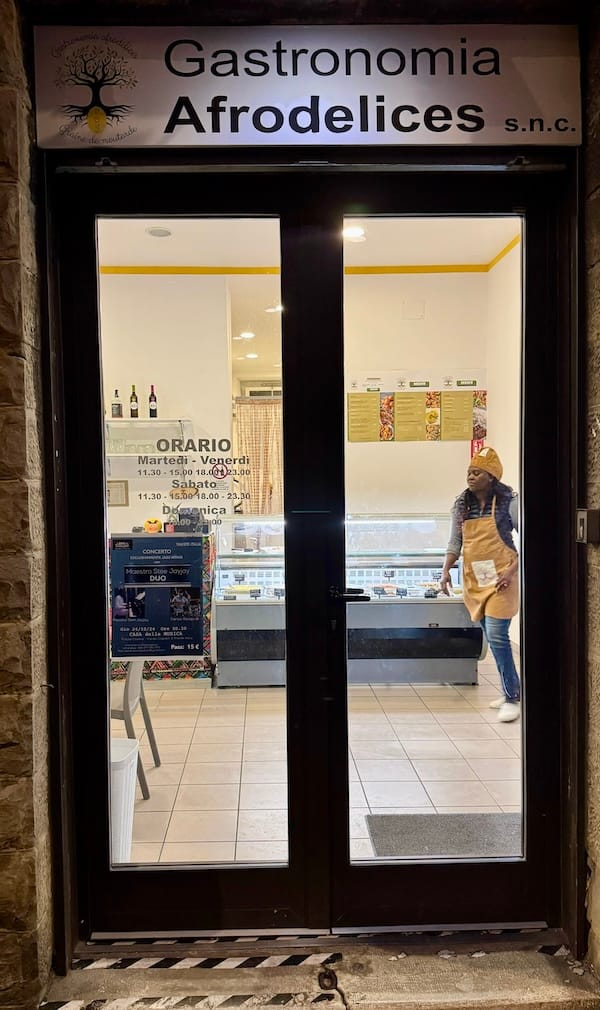
On a recent trip, I had the joy of meeting a young lady named Olivia. She was a Cameroonian university student who had completed her culinary management degree at the University of Trieste. She and two friends started a tiny, off-campus restaurant called Gastronomia Afrodelices. I had a delightful experience, a wonderful conversation, and an excellent plate of Jollof rice!
Like many from her home in Yaoundé, she excelled in her studies and qualified for a scholarship in Italy. Together, the three recognized that Trieste was an international town and that there would be a taste for African food. There is a sizeable community of West Africans in Trieste. Many are now in second and even third generations. They were her first patrons, but others would soon arrive. Olivia told me that life was not easy as a restauranteur, but they were making a go of the business.
I could repeat this story in Belgrade, Zagreb, or even Sarajevo. As I spoke with those I met, they thanked God for their success and praised how their communities had accepted them. They also expressed their frustration with the current immigrant situation. They each knew Africans who had come illegally through the Balkan Route. They struggled with the foolishness of the journey, the degree of victimization experienced by the migrants, and the enduring effects of poor immigration policies stretching back more than a decade.
Two Different Balkan Routes
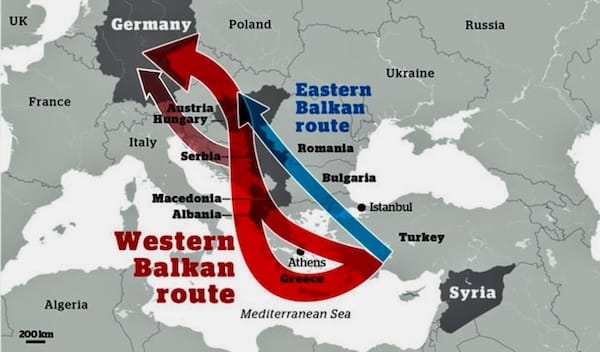
As we have noted in previous posts, there are two different Balkan Routes. There is 1) the Western Balkan Route through Greece, Albania, Serbia, Bosnia, Croatia, and Italy. Then there is 2) the Eastern Balkan Route through Bulgaria, Serbia, and Hungary. The entrance to both routes is Turkey, and the target country is typically Germany.2 Migrants have a way of segregating along these routes for specific reasons.
The Eastern Balkan Route
Jean-Marie was born in Gitega, the capital of Burundi. His parents were doctors, and they lived through some of the country’s roughest political times. With his parents’ blessings, he decided to emigrate to Europe. For Jean-Marie, the first step of his journey would be a direct flight to Belgrade. He was fortunate because only three African countries have visa-free entry to Serbia: Burundi, Guinea-Bissau, and Tunisia.3 All others have to go through Turkey.
Amos, however, was from the Democratic Republic of the Congo. His goal was to go to Germany to join his uncle’s family. To do so, he needed to take a flight to Istanbul. He did not plan to take the route through Serbia and Hungary to get to Germany, i.e. the Eastern Balkan Route, but it was just how the cards landed. He had been working in Turkey for several years, raising money. Along the way, he had made friends with a group from Pakistan, and they connected him with their smuggler. And since all the Pakistanis were going through the Eastern pathways, that would also become his route.
The cost of getting to Belgrade was 6,000 Euros. For this price, he would cross the Bulgarian border at night, and then a smuggler would pick up the group and take them 400 kilometers north to the capital city of Sofia. After that, they would cross into Serbia. Both borders, Bulgaria and Serbia, were crossed by foot, and each went smoothly. Amos, being the only black man in the vans, had to take extra precautions. He had to stay low, keep his head covered, and could only exit to use the restroom. With that, they crossed the two countries without difficulty and made the entire trip in less than 24 hours.
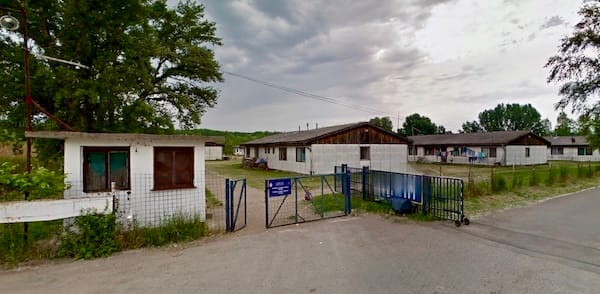
Once in Belgrade, Amos was taken to a safe house outside town. It was in a neighborhood with a government-run shelter that provided housing for immigrants seeking asylum in Serbia. It was there that he met Jean-Marie. Being from the same region of Africa allowed them to strike up a conversation, and they soon became friends. Being both black, they were grouped with other Africans. Tunisians, being fairer-skinned, were often grouped with Moroccans. But because most spoke French, they all tended to travel together. They were at the house nearly two weeks before they received word that they would be moving on to Hungary. That would cost another 6,000 euros.
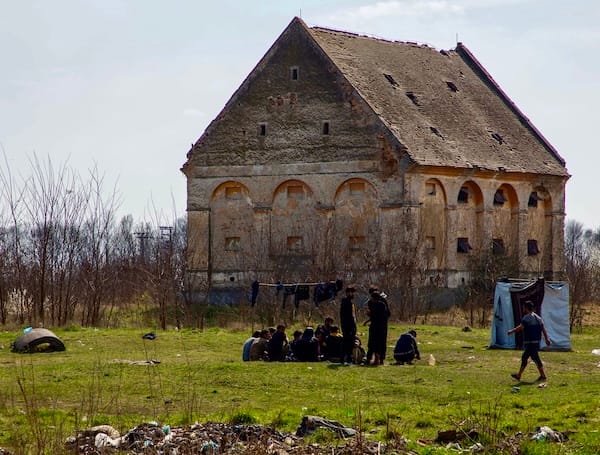
Their first stop was just south of the border. It was here that things made an unexpected turn. Understand that one does not cross the border to Hungary without the assistance of others… typically organized gangs. Here, migrants are assigned to informal camps or “squats.” Being isolated and entirely under the control of Serbian gangs created a lot of frustration. The camps were squalid, with inadequate water, no sanitation, and little protection from the elements. The smugglers on the Serbian side had taken half of the money upfront, leaving the migrants with little option but to follow their system. Because the gangs had been paid in advance, they did not have to get in a hurry or take extra risks to move people along.
Smugglers are found on both sides of the border. Those on the Hungarian side are eager to receive their “clients” so they can be paid. Crossings occur on dark mountainsides, often with compensated help from authorities. Migrants are then hidden in trucks and vans and driven across the country to the German border. The greatest risk was being discovered by Hungarian authorities. Amos and John-Marie were fortunate. They arrived in Germany without much difficulty. Others were not so lucky. In 2024, Hungary apprehended over 16,000 migrants and 132 smugglers. The migrants were pushed back to Serbia; the traffickers faced prison.
The Western Balkan Route
As you might imagine, interviewing migrants along the routes is difficult. Most are wary of strangers, particularly those who are asking questions. Most of their stories are only told in part, only after they arrive in a safe place. Consequently, we must combine stories from multiple sources to see the whole picture. The following reflects Timothy’s journey as a young man from Côte d’Ivoire.
Timothy arrived in Turkey in the same manner as most. He purchased a tourist visa online and flew to Istanbul from Abidjan.5 He stayed in Istanbul for nearly two years before raising enough money to cross into Greece. You can understand what that journey was like by reading a previous post here.6 Once across the Evros River, he traveled to the Northern Greek city of Thessaloniki. He would settle for six months before going further.
When Timothy arrived in Thessaloniki, he searched for someone to help him travel north through the Balkans. He found a man with a good reputation for success through his WhatsApp connections. They had coffee together, and his confidence grew. The only problem was that the trip would cost him nearly 8,000 euros. That was 5,000 more than he had in his pocket and more than he had already spent to get to Greece. Needless to say, he was going to have to find a job. Unsurprisingly, the smuggler had connections.
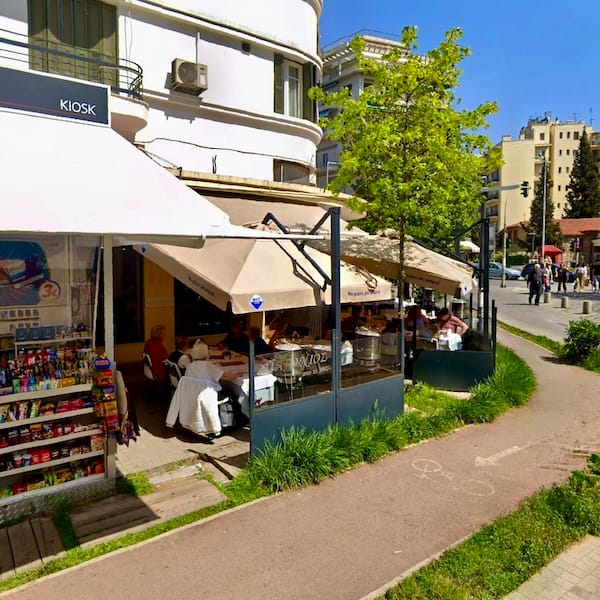
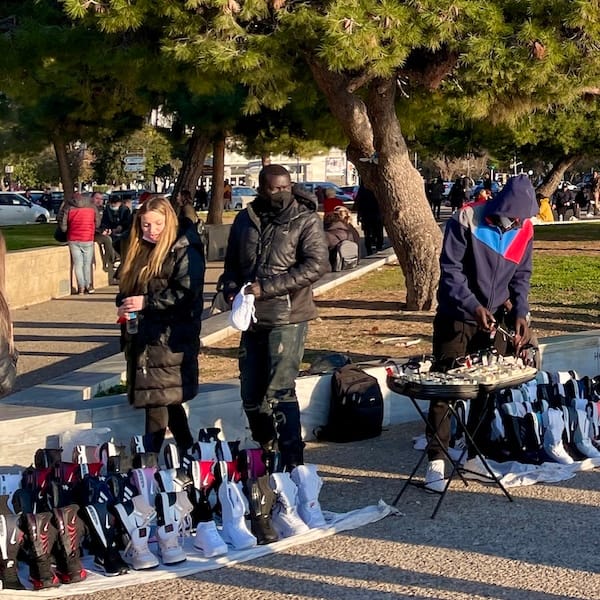
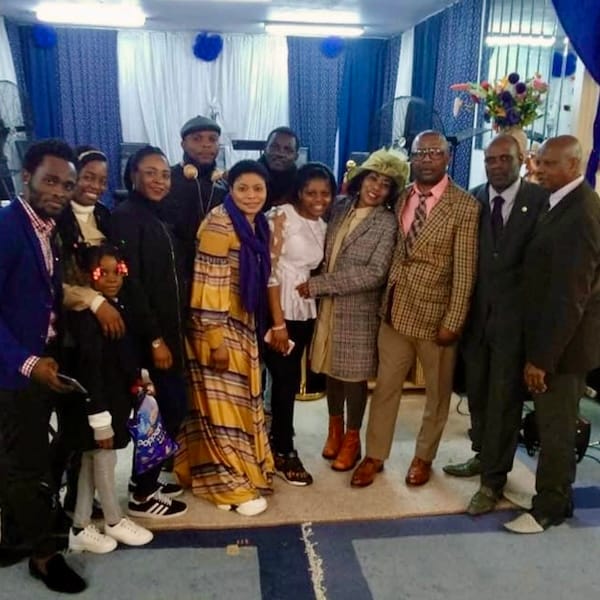
Cafe's, Markets, and Churches in Thessaloniki
Timothy went to work selling merchandise to tourists at White Tower Square by the seafront. It was hard work convincing tourists to purchase his goods while avoiding local police. His Balkan smuggler also had a place for him to stay, and the price was affordable. While he prepared for the journey, he found a church he could attend that was not far from his neighborhood.
I spoke with Timothy’s pastor in Thessaloniki. He told me he did everything he could to encourage this young man to settle in Greece, follow the system, and gain legal residency. Timothy attended faithfully, seemed to grow in the Lord, and stayed out of trouble. But then, one day, he was gone. The pastor told me he had heard of a large group leaving the city and being transported north to Albania. He believed that Timothy was in that group. He also told me that nearly 20 other church members left that day. I asked how he managed in losing so many at once. He told me that, unfortunately, it happens two to three times a year. They were getting used to it.
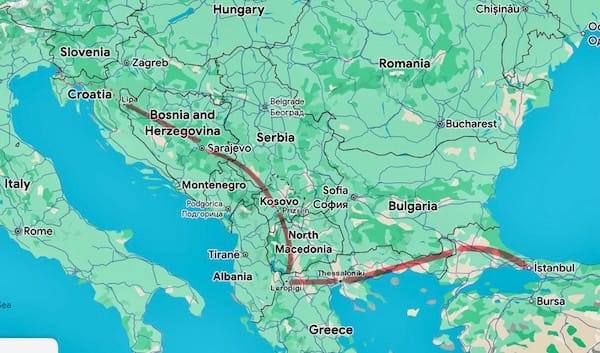
Timothy had traveled some 220 kilometers northwest to the village of Leropigi on the Albanian border. From there, smugglers would help him evade border patrols and make his way north towards Kosovo. They would walk the entire distance, taking about a week for the journey. It was during the winter, and it was bitter cold traveling through the mountains. He related that the smugglers did not go with them the entire way. The group would travel a day or two with one guide, who would then hand them off to another for the next journey segment. They rested three days in Prizren, Kosovo, before leaving for Sarajevo in Bosnia. It was necessary to skirt the border of Montenegro, staying in Serbia until they reached the border with Bosnia and Herzegovina. From there, they began to walk again.
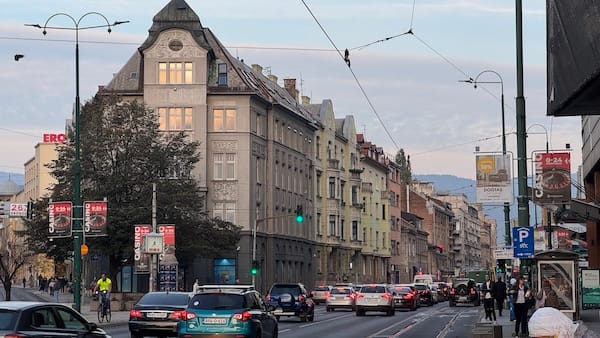
Once he arrived in Sarajevo, things took a turn, so he thought, for the better. Unknown to most migrants, Bosnia is striving to meet international standards for migration management as part of its entrance to the European Union. They have created four “temporary reception centers”: two close to Sarajevo and two close to the border with Croatia.7 These centers provide food, shelter, and medical care. Migrants must register… but are free to come and go. While the time varies from individual to individual, the average stay in the Sarajevo camps is around a week before they move forward.
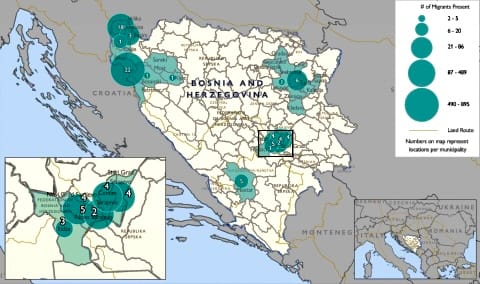
This means that Timothy could enter the center without difficulty. After a week of rest, he and others moved on (300 kilometers) to the center at Lipa, near Croatia. It was a long journey; the weather was bitterly cold, and food was scarce. By the time they arrived at the camp, most were weak, and some had become sick. Unfortunately, the camp was filled to capacity, and they had to make do with cardboard and plastic shelters outside the camp. The conditions were dismal. But things would soon get worse.
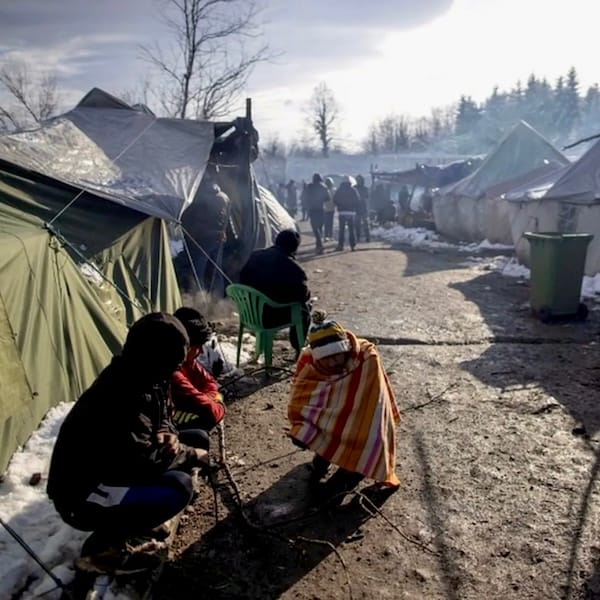
To get to Trieste, Italy, migrants must cross the border into Croatia. They then have to travel another 200 kilometers undetected to avoid being captured and pushed back into Bosnia. Because Croatia is part of the EU and a party to the Schengen Agreement, it has very heavily controlled borders. Sophisticated detection systems have been installed, and it is hard for smugglers to facilitate crossings. However, once inside Croatia, people can be paid to take them across.
Timothy understood the challenges. He knew that the “taxis” could pick him up and get him to Italy… if he could get across. It is expensive at 2,000 euros. He had spent all of his money just getting this far, and there were no jobs in Bosnia to make up the difference. For many, this becomes an end-of-the-road situation. Fortunately, he could call his brother in Abidjan, who arranged to send the money to the smugglers upon his arrival in Italy. The challenge was to get across the border undetected. As noted above, such was not easy.
It is called “the game”. It is what the migrants refer to their attempts to cross the Croatian border. It involves “walking through forests, crossing rivers, climbing border fences, jumping trains, hiding in trucks or procuring taxi services via smugglers.”10 At last count, Timothy had played “the game” six times. Each time, he was intercepted and pushed back across the border. He had the scars from the batons used by the police. He nearly died on one effort when a group tried to cross a river on one of the coldest nights. They had been told the border patrols would stay at their base due to the cold, but it wasn’t true. He got frostbite while hiding in the forest and nearly did not make it back to the center. He still walks with a limp.
He has been there now for eight months. He told me that he would not stop trying. He has come too far to quit. I did not have the heart to tell him that what I saw in Italy was not much better. Migrants who are successful often land in Trieste, on the Eastern shore of the Adriatic Sea. Most arrive without money, sick, injured, and without a plan. Most do not wish to apply for asylum in Italy, and getting to Germany or elsewhere undetected takes more money.
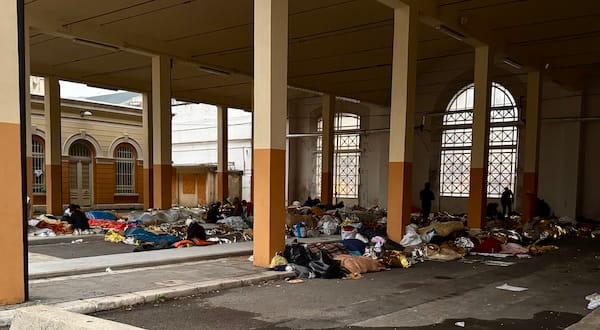
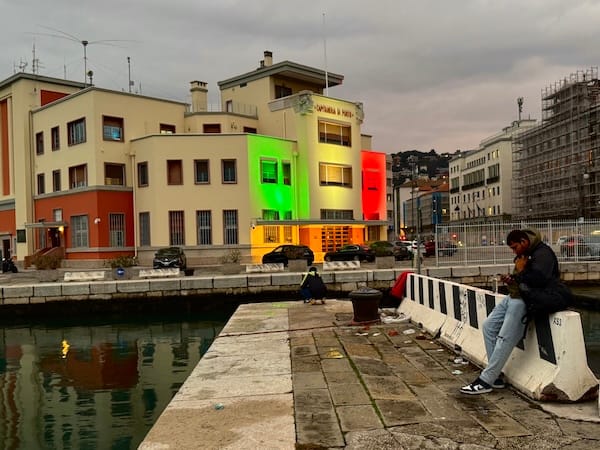
Migrant Camp in Trieste, Italy
Conclusion
Traveling along the Eastern Mediterranean Route is challenging. Africans are in the minority in the Balkans, but as with travel across the Aegean Sea to the Greek islands, they have a way of filling the empty slots offered by the smugglers. Because this is a pay-as-you-go system, we find many stranded in inhospitable places. There are hundreds of thousands in Turkey, tens of thousands in Greece, thousands in Cyprus, and hundreds in the Balkans. Most will ultimately find a way through or a way back. But... many will die along the way.
Their stories are traumatic and should burden the heart of every follower of Christ. That compassion does not justify bad decisions, illegal movements, or poorly crafted government policies. Remember, God demonstrated his own love towards us, in that while we were yet sinners, Christ died for us. (Romans 5:8) I could wish that all were legal like Olivia. But they are not, and our call is to see them as Christ sees them… and to love them with His love.
It is hard to imagine the future along the Eastern Mediterranean Route. Croatia, Romania, and Bulgaria are not just in the EU but are now part of the Schengen agreement, which pushes the Eastern EU border to Turkey. Bulgaria and Greece will soon be in the spotlight, as they will be the only barriers between a visa-free Turkey and the dream of Europe. Even now, we are finding that a whole new branch of the EMR route is expanding via Russia, Belarus, and into Poland. We will examine that possibility in our next post.
1 Susan Strongman, "The Forgotten Millions: The Long and Grinding Road to Freedom for Syrian Refugees", The New Zealand Herald https://www.nzherald.co.nz/nz/the-forgotten-millions-the-long-and-grinding-road-to-freedom-for-syrian-refugees/FFJGJIKQOWLKPRZUATK6JBI2D4/#google_vignette (accessed January 24, 2025).
2 M. Augustus Hamilton, "84 – Western Balkan Route: A Modern Silk Road", M2M3 https://m2m3.org/84-western-balkan-route-a-modern-silk-road/ (accessed January 24, 2025).
3 "Serbia Visa Exemption & Requirements", Embasies https://embassies.net/serbia-visa-exemption#:~:text=As of 2025%2C regular passport,short-term stay on arrival. (accessed January 24, 2025).
4 Elisa Oddone, "Afghans Are among Thousands of Migrants Hoping to Reach Europe Via Serbia", NPR https://www.npr.org/2021/09/26/1025135970/afghan-refugees-migrants-serbia-europe (accessed January 24, 2025).
5 M. Augustus Hamilton, "72 – The Road to Turkey", M2M3 https://m2m3.org/blog/72-the-road-to-turkey/ (accessed January 24, 2025).
6 M. Augustus Hamilton, "75 - Going by Land: Crossing the River", M2M3 https://m2m3.org/blog/75-going-by-land-crossing-the-river/ (accessed January 24, 2025).
7 Massimo Guglietta, "Bosnia and Herzegovina: The Challenges of Hosting Migrants", Observatorio Balcani e Caucaso Transeuropa https://www.balcanicaucaso.org/eng/Areas/Bosnia-Herzegovina/Bosnia-and-Herzegovina-the-challenges-of-hosting-migrants-232903 (accessed January 24, 2025).
8 "Outside Temporary Reception Centers in Bosnia and Herzegovina", IOM https://bih.iom.int/sites/g/files/tmzbdl1076/files/documents/DTM report_final version 16 04 2021 (2)-2.pdf (accessed January 24, 2025).
9 Guy Delauney, "Bosnia's “Inhumane” Camp Conditions Put Thousands of Migrants at Risk", BBC https://www.bbc.com/news/world-europe-50700345 (accessed January 24, 2025).
10 Claudio Minca and Jessica Collilns, "The Game: Or, ‘The Making of Migration’ Along the Balkan Route," Political Geography 91 (2021).