86 - From Russia with Love: A “Hybrid” War Between Belarus and the EU
2025 No 86
Do not listen to Hezekiah, for thus says the king of Assyria, “Make your peace with me and come out to me, and eat each of his vine and each of his fig tree and drink each of the waters of his own cistern, until I come and take you away to a land like your own land, a land of grain and new wine, a land of bread and vineyards, a land of olive trees and honey, that you may live and not die.”
—2 Kings 18:31-32
Introduction
In 701 BC, the Assyrian King Sennacherib besieged Jerusalem in a strategically calculated attempt to conquer Judah. This was following his earlier successful campaign that resulted in the fall of the Northern Kingdom of Israel in 722 BC (as chronicled in 2 Kings 17:3-6). It marked a significant moment in history, as many Israelites were forcibly taken into captivity, never to return to their ancestral lands. This tragic loss is why history remembers them as the “ten lost tribes of Israel.” He now had his sights set on the remaining two tribes, Judah and Benjamin.
To facilitate this conquest, Sennacherib sent his envoy, Rabshakeh, to the walls of Jerusalem with a clear message: surrender or face dire consequences. Rabshakeh's appeal was not merely a matter of military might but deeply rooted in political pragmatism. His primary objective was to resettle the inhabitants of Jerusalem throughout the vast expanse of the Assyrian Empire, a strategy aimed at quelling potential uprisings and consolidating power over a diverse population.1 For those defending Jerusalem, the choice presented may have seemed pragmatic, even reasonable under the circumstances. Yet, historical accounts reveal that becoming an immigrant in Assyria often came with heavy burdens and little chance for a better life. It also serves as an example that the promises made on the front end of a migration journey may not match the realities upon arrival.
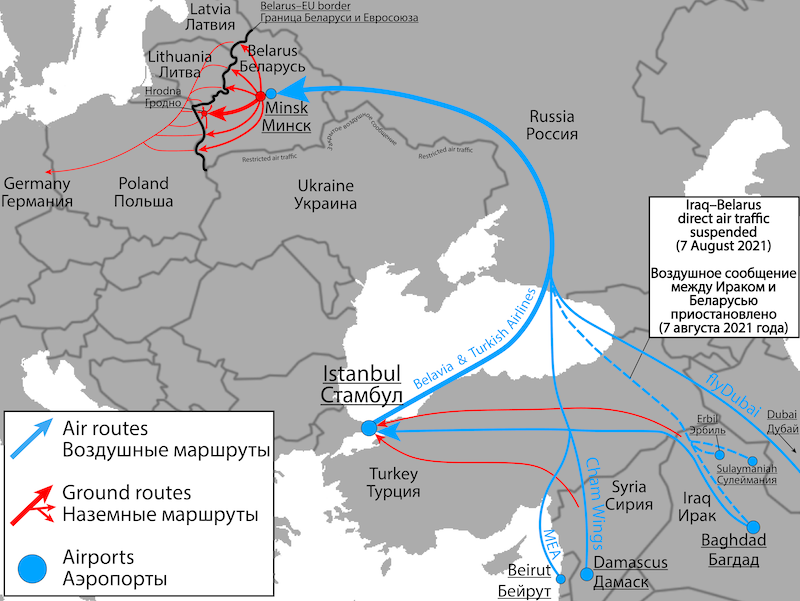
Fast forward two and a half millennia to the modern era, and we observe similar political maneuvers. The migrant crisis that began in 2015 serves as an illustration. As millions sought refuge, primarily from war-torn regions, President Erdogan played a pivotal role by agreeing to curb the flow of migrants passing through Turkey toward Europe, all in exchange for a financial sum of six billion euros from the European Union.3 This delicate arrangement showcased the interplay between humanitarian needs and political bargaining, as Erdogan further manipulated the situation by threatening to reopen Turkey's borders. He was seeking support from the EU concerning his policies in Syria.4 Others would do the same.
In 2022, Morocco employed a similar strategy, using the migrant crisis as leverage against Spain regarding the contentious issue of Western Sahara.5 At one point, they turned a blind eye as thousands of migrants stormed the fences in Ceuta and Melilla.6 It worked, and Spain changed its position on the issue. This maneuver highlighted how countries can exploit migration flows to advance their geopolitical interests. Amazingly, in 2024, Egypt secured an agreement that resulted in nearly 7.5 billion euros to address migration concerns, once again showing how managing migration often aligns with broader political goals.7
The current situation of Russia and Belarus promoting migration into Europe reflects this ongoing practice. It serves as a reminder that while individual migrants contribute to these movements, their choices are often influenced by broader political strategies and the paths established by smugglers. Therefore, we must approach irregular migration with a thoughtful understanding, ensuring we do not place undue blame on those seeking safety and opportunity rather than the actions of states and non-state actors involved.
How it Began
Before 2020, there was limited migration from the East through Lithuania and Poland. Poland had an estimated 13,300 immigrants that year, 2,100 of whom were perhaps from sub-Saharan Africa.9 Most of them were university students, and nearly all of them were legally present. However, circumstances changed dramatically. In August 2020, Alexander Lukashenko was elected to his sixth term as president of Belarus. The election results were contested, opposition figures faced repression, the European Union decided not to recognize his government, and sanctions were imposed. Then, in May 2021, a Ryanair flight traveling from Greece to Lithuania was diverted to Minsk, where two political dissidents who had challenged Lukashenko's presidency were removed from the plane. The international response was quick and decisive: the EU banned all flights over Belarus and imposed stricter economic sanctions.10
In response, Lukashenko’s government announced they would suspend any effort to prevent illegal immigration towards Europe. Lukashenka said, “Before, we stopped drugs and migrants. Now, you will eat this and catch them yourself.”11 He had hoped that such a move would force the EU to recognize his presidency and remove the sanctions against his country.12 In return, he would stop the movements of migrants across the border… following a pattern set by Turkey. In many respects, his threat took very little effort. All he had to do was lower the standards for visa entry to Belarus and spread a rumor on Arab TV channels about the ease of crossing the border with the EU.13
It worked.
In 2020, just under 700 illegal crossings from Belarus into the EU were recorded; that number increased to 8,200 in 2021.14 By 2024, the total number of known attempts was over 150,000!15 Only one in ten would actually make their way into the EU, being close to 17,000.16 However, these individuals are not the same refugees and economic migrants who are traveling through Turkey and along the Western Balkan Route. Instead, they are financially stable migrants who can afford the high costs associated with flying to Minsk and then paying smugglers a significant sum to take them to the EU border. The cost of this crossing can easily exceed fifteen thousand euros.17
Evolution of Smuggling Networks
While the government may control the border, it is the smugglers who create the pathways for crossing. In the early days, the borders of Latvia, Lithuania, and Poland were not fenced as they are today. Border patrols were understaffed, making crossings relatively easy. Smugglers would recruit migrants during tourism trips to Belarus and then provide transportation to the border. Corruption was rampant, both in the issuance of visas and in the border crossings themselves. The increasing number of arrivals seeking asylum would soon place a significant burden on these EU border countries.
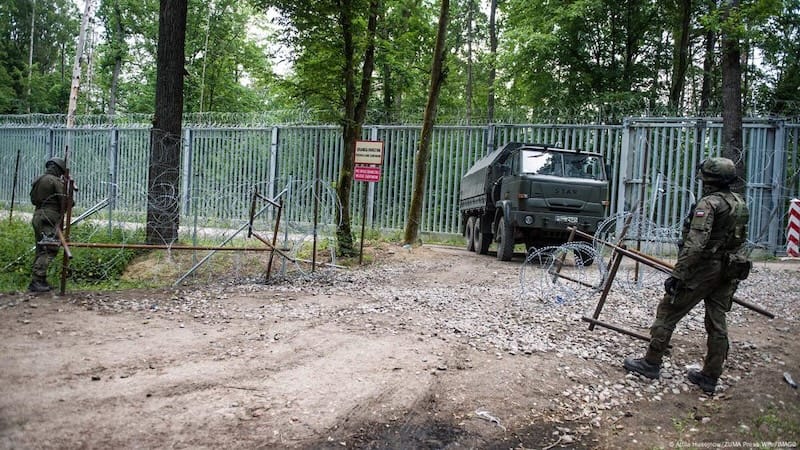
In those days, Latvia and Lithuania were the primary destinations for smugglers. These countries responded with strong legislation that allowed the construction of a twelve-foot fence topped with razor wire along their 400-mile border.19 They would then adopt a controversial policy allowing for the pushback of all migrants caught attempting to breach the fence. They felt that such was appropriate and necessary given the nature of the “hybrid war” being waged by Belarus.20 As border crossings became more complex, operations moved further south towards Poland. They, in turn, built their own fence, and the area is now 100% surveilled by cameras, heat detection sensors, and armed patrols.21 One would have imagined that this would have mitigated the problem. Normally it would have. But then Russia became involved.
The Russian Connection
Although Russia had been at war with Ukraine since 2014, it was in February 2022 that a full invasion began. This resulted in the internal displacement of 8 million people and led to another 8 million refugees who fled the country, most of whom crossed into Poland.23 Nearly a million have stayed.24 The international community condemned Russia's assault, which led to sanctions and ongoing diplomatic disputes between Russia and the EU.
This situation has enabled Russia to join Belarus in what is being described as a "hybrid war" against the European Union. This development has significantly impacted migration patterns, particularly for our group of sub-Saharan Africans. As Russia gains more influence over traditional migrant routes through the Sahel, it creates new opportunities for recruitment.25 Currently, migrants are encouraged to travel to Russia, then to Belarus, and subsequently enter the EU. Moscow believes that exacerbating the crisis will provide political support for anti-migrant far-right parties in France, Germany, and Italy.26 The goal is to destabilize EU governmental systems. It is a policy that has had, to some degree, its desired effect.
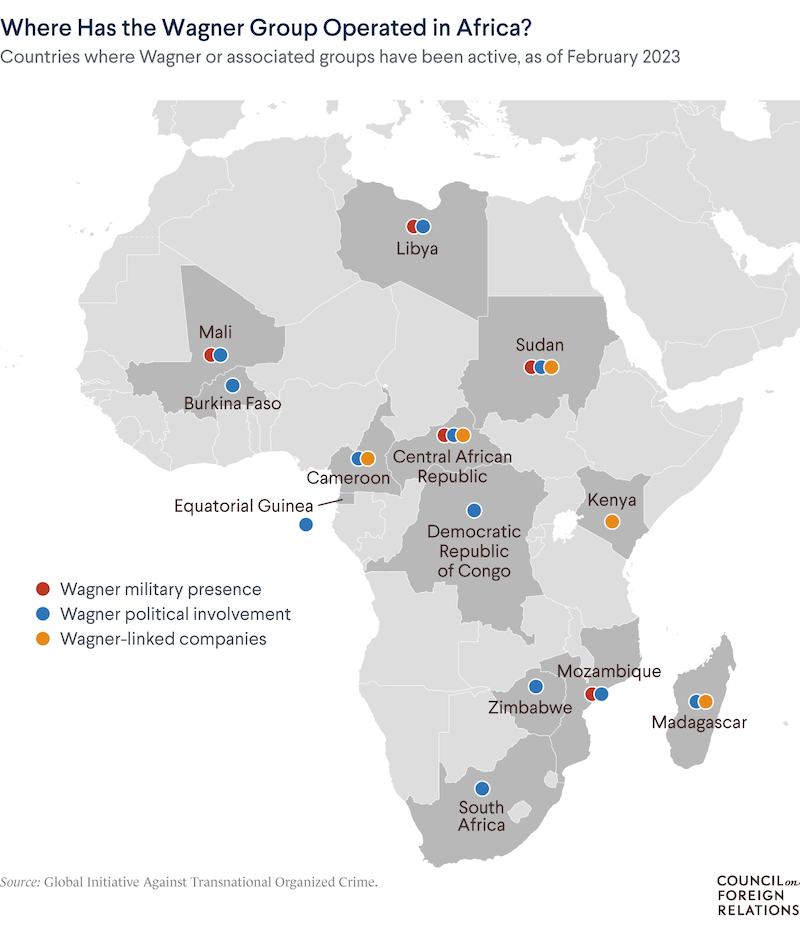
The details of how this is happening are worth noting. As mentioned above, Russia is deeply involved in Africa, both economically and militarily.27 Moskow has been recruiting Africans for their universities for years, with over 40,000 students arriving in 2024-25. That is three times the number of scholarships offered in 2012.28 Russia also aims to double its trade with the continent, reaching $36 billion by 2030.29 This means that affiliated smugglers have easy access in these countries to recruit individuals who wish to travel to Europe. According to InfoMigrants, in 2021, most border crossings into Poland were from the Middle East. However, in 2022, the demographics changed, with sub-Saharan migrants becoming the predominant group.30
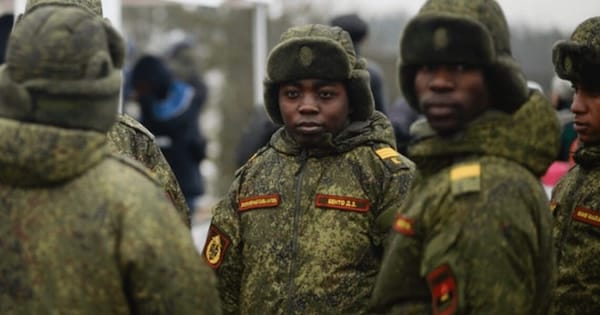
In ways much darker, sub-Saharan migrants are now being recruited for other purposes. Keep in mind that most migrants are sold a ticket to Europe in incredibly deceptive ways. When costs of passage often exceed 10-15,000 euros, more than the annual salary of most Africans, migrants want to hear that the trip will be safe, comfortable, and successful. Migrants on these routes discover that they have been duped only after they arrive in Russia. Stories abound of Africans landing in Moskow to discover that they have then been conscripted to serve on the front lines of the war in Ukraine.32 By some estimates, there are currently over 600 Africans serving in the Russian military service.33 It is impossible to know the true numbers. Citizens of Niger, Burkina Faso, Tanzania, Nigeria, Congo, Cameroon, the Central African Republic, Zambia, and Mali have been spotted by journalists on the front lines.34
The Conditions for the Migrants
It would be easy to blame the migrants for everything. After all, they chose to travel this route, knowing they would illegally cross the EU border. But let us remember a few things.
- Poor people typically do not migrate. Only those with significant cash can afford this journey, which is why smugglers target them.
- They are not the wealthiest individuals either; otherwise, they wouldn't want to migrate. This indicates that these are people who have migrated using family resources to improve their family's life. They have a lot on the line.
- They have been terribly deceived by being told everything that they wanted to hear. They believed a lie, got on a plane, and cannot go back.
If we grasp the idea presented above, we can conclude that these individuals made poor decisions and subsequently became victims. While many are facing the repercussions of their choices, no one deserves to be mistreated in this way.
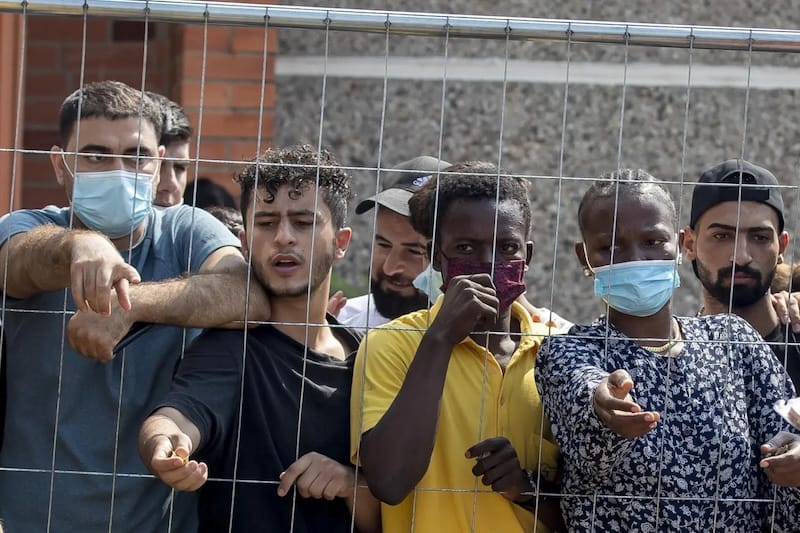
When most migrants arrive in Minsk, they are given a few days to regroup before being transported to the border. Once they reach Lithuania or Poland, they present themselves as refugees. To successfully apply for asylum, they must demonstrate a reasonable fear for their safety if they return to their home country. This means they cannot go back home... and they pragmatically cannot return to Belarus. There are several reasons for this. First, the smugglers have taken all of their money. Second, and more significantly, Belarus does not want these migrants to return, as doing so would not align with its political objectives.
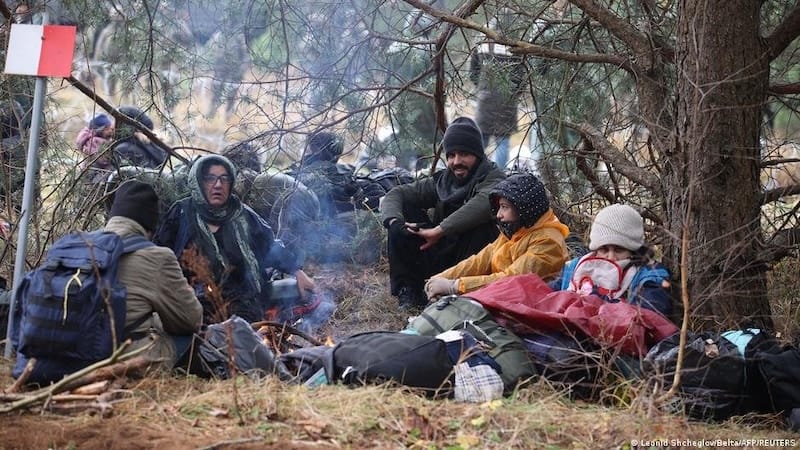
At the border, migrants face significant challenges. Despite bringing ladders, wire cutters, and shovels, they are no match for the sophisticated fences and border controls. Many suffer injuries during their attempt to cross. If they aren't severely lacerated while climbing over the concertina wire, they risk breaking bones when jumping from the top of the fence to the other side. If caught, EU border guards take them back to the gates (even the injured) and push them back into Belarus. Some migrants have been known to spend months at the fence, desperately trying to find a way across, with many suffering and even dying in the cold.36
Those who manage to enter Poland often find that they have crossed into a rural area of the country. They will need assistance to avoid capture, which can be challenging to find unless smugglers have arranged transportation in advance. While such arrangements do occur, traffickers in the EU face severe prison sentences if they are caught. As a result, many migrants must navigate their way into the interior of Poland, hoping to connect with sympathetic individuals who can take them to a processing center. This context helps explain why there were 150,000 attempts to cross into Poland, but fewer than 18,000 were successful.
In recent months, the government has established exclusion zones along the border, ranging from 600 meters to 2 kilometers in width. In these areas, civilians are prohibited, limiting access to the press and aid organizations. The zones also prevent civilians or smugglers from picking up migrants. This gives the government unrestricted authority to carry out pushbacks however they choose. These zones were not in effect when we conducted fieldwork in the area in early 2024, and such work would not be possible today.
The Christian Response
One may ask, “What is the Church's response to the migrant situation in the region?” The answer falls along three lines.
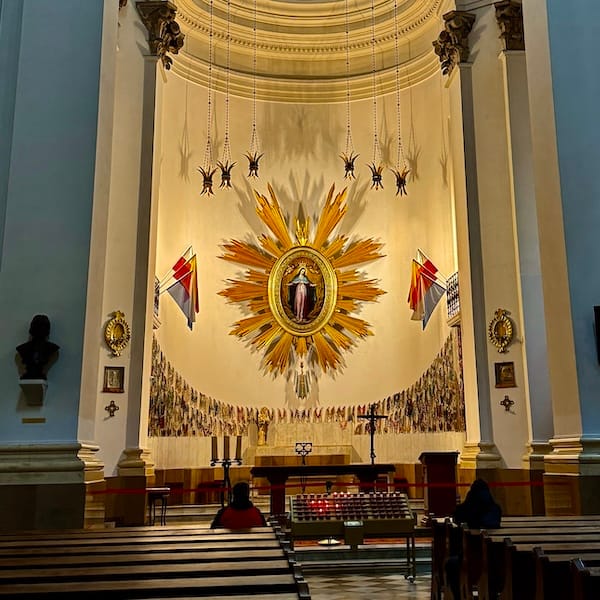
Polish National Church – Courtesy of the Author
National Churches
To be sure, there are national churches in Latvia, Lithuania, and Poland. The majority are Catholic, followed by Orthodox communities. As one might expect, these churches are long-standing indigenous communities. Their populace tends to be rural, traditional, and proud of their culture. As in other parts of the world, their exposure to immigration is either via news media or, if they are along migration pathways, briefly experiential.
One might imagine that the rural nature of the border would make it easy for smugglers to transport migrants from the “fence” across, say, Poland to Germany. Nothing could be further from the truth. Communities closely monitor their surroundings, making it difficult for migrants to pass through a region undetected. At times, this makes these traditional religious groups seem to be fiercely nationalistic and hostile to all immigration. Such would be a mischaracterization. They do not lack compassion. Most are simply committed to preserving their culture and asking foreigners to follow the rule of law. It does, however, tend to make them less than likely to engage in ministry to migrants.
In urban contexts, further from the borders, there are a number of indigenous, if not evangelical, churches that make an effort to engage the communities. They recognize the needs of both the regular and the irregular populations and desire to provide care. One can often find ministries that are focused on pragmatic needs (food, clothing, legal aid). But, like most, they have a full plate with their own congregations and strive to find the balance.
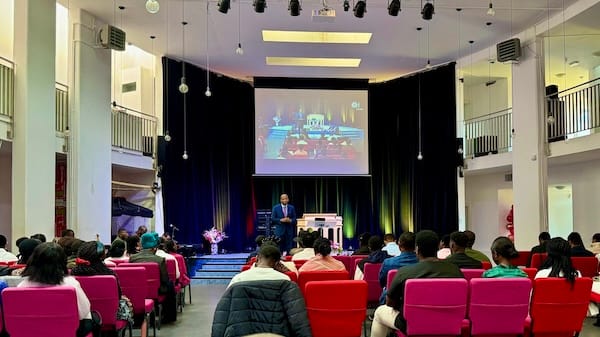
Immigrant Church Warsaw – Courtesy Author
Immigrant Churches
Immigrant communities have a remarkable ability to create places of worship wherever they land, which is evident across Europe. In Poland, especially in urban areas, you can find African and other ethnic congregations. Most of these began as student fellowships and eventually evolved into permanent churches. They are often led by individuals who choose to make Poland their home. Occasionally, pastors come to cities like Warsaw specifically to establish churches. These congregations thrive in their context and are essential in ministering to the local communities around them. It’s worth noting that Poland had a vibrant sub-Saharan faith community even before the influx of migrants in 2021. These churches continue to serve the legal immigrant population while their members care for their neighbors.
As is common in many migrant communities, many asylum seekers and individuals residing without authorization come from Christian backgrounds. I am continually impressed by how they often gather spontaneously, worshiping together and supporting one another’s needs. On a Sunday morning, you can walk through most major cities and hear the sounds of worship from the above apartments.
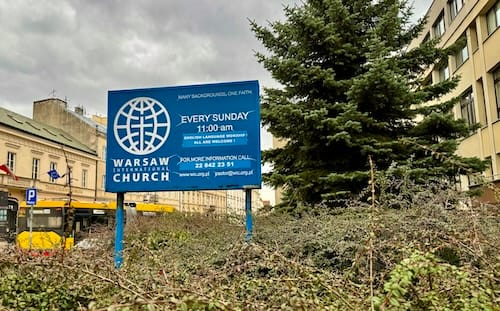
International Churches
International churches can also be found in larger cities. By definition, they tend to minister to the diverse expat communities. They often have significant ministries among the legal immigrant populations, but they struggle to touch those more distant. Because they draw from expat populations, they also tend to have refugee and aid workers among their memberships. These workers then help guide the fellowship into appropriate ways to serve refugees, care for those who have been victimized, and address issues among irregular populations.
Conclusion
The Assyrian envoy made a fantastic offer to the soldiers besieged on the Jerusalem wall: "Leave your life of misery, come with us, and life will be wonderful." None of it was true, of course, but it served the political need of the moment. We hear similar offers today.
I have a special opportunity for you! You can travel to Germany, and it all starts with getting a scholarship to study in Belarus. Where is that? It's the country north of Ukraine, which shares a close relationship with Russia. We will help you secure admission to a university there, and then arrange for a driver to take you to the border with Poland. Once you cross into Poland, you will be in the EU, and another driver will take you to Germany. From there, you can apply for asylum or travel wherever you choose. The total cost for this is only fifteen thousand euros!
It’s clear that the current state of the world is troubling, but amidst the lies, suffering, and loss, there is also hope. The light of Christ resides in the hearts of many who will embark on this journey. Unfortunately, some may not recognize this light until they face their darkest days. This same light can be found in churches in Latvia, Lithuania, Poland, and even Belarus. Because God's people are present in these places, there is an opportunity for the gospel to be shared and for that light to shine brightly. May we commit to pray for all.
1 Karen Radner, "Mass Deportation: The Assyrian Resettlement Policy", History Department, University College London https://www.ucl.ac.uk/sargon/essentials/governors/massdeportation/ (accessed January 20, 2025).
2 "Belarus: Border Crisis with Poland Loses Sight of the People Trapped in the Middle", The Conversation https://theconversation.com/belarus-border-crisis-with-poland-loses-sight-of-the-people-trapped-in-the-middle-171549 (accessed January 21, 2024). Original Image from Belarus–European Union border crisis. (2025, January 9). In Wikipedia. https://en.wikipedia.org/wiki/Belarus–European_Union_border_crisis
3 "What Is the EU-Turkey Deal?", Crisis Watch https://www.rescue.org/eu/article/what-eu-turkey-deal (accessed January 20, 2025). See also Gamze Ovacik, Meltem Ineli-Ciger, and Orçun Ulusoy, "Taking Stock of the EU-Turkey Statement in 2024," European Journal of Migration and Law 26 (2024).
4 "Erdogan Warns ‘Millions' Heading to Europe", Deutsche Welle https://www.dw.com/en/erdogan-warns-millions-of-refugees-heading-to-europe/a-52603580 (accessed January 20, 2025).
5 Lorena Stella Martini, "Between Disputes and Rapprochement: Latest Evolutions and Power Dynamics in Morocco-Spain Relations", Trends Research and Advisory https://tinyurl.com/38zza858 (accessed January 20, 2025). And, InfoMigrants, "Spain and Morocco Mend Ties with Migration Agreements", InfoMigrants https://www.infomigrants.net/en/post/46559/spain-and-morocco-mend-ties-with-migration-agreements (accessed January 20, 2025).
6 "Thousands of Migrants Storm Fence at Morocco-Spain Border", Deutsche Welle https://tinyurl.com/4ue4mpb9 (accessed January 21, 2025).
7 Lisa O’Carroll, "EU Seals €7.4bn Deal with Egypt in Effort to Avert Another Migration Crisis", The Guardian https://www.theguardian.com/world/2024/mar/17/egypt-eu-deal-refugees-mediterranean (accessed January 20, 2025).
8 Henry-Laur Allik, "Poland, Baltics Step up Border Controls Amid Migrant Crisis", Deutsche Welle https://tinyurl.com/392xbdab (accessed January 20, 2025).
9 "Net International Migration, Emigration and Immigration Figures in Poland from 1950 to 2023", Statistica https://www.statista.com/statistics/1063046/poland-net-migration/ (accessed January 20, 2025). And, BolaJi Balogun and Konrad Pedziwiatr, Poland: Sub-Saharan Africans and the Struggle for Acceptance (Minority Rights Group International, 2018), 86.
10 Joe Evans, "Belarus Dictator Threatens to ‘Flood EU with Drugs and Migrants’", The Week https://tinyurl.com/4ef6j6zt (accessed January 20, 2025).
11 Amos Chappel, "The Massive Migrant Surge from Belarus into the EU", Radio Free Europe https://www.rferl.org/a/belarus-lithuania-migrant-surge/31335955.html (accessed January 20, 2025).
12 Maxim Samorukov, "Very Northern Kurdistan. What Will the Crisis on the Belarusian-Polish Border Lead To?", Carnegie https://web.archive.org/web/20211112201348/https://carnegie.ru/commentary/85759 (accessed January 20, 2025).
13 Oleg Adamovich, "How I Searched for Migrants Making Their Way from Belarus to the European Union", KP https://www.kp.ru/daily/28309/4450794/ (accessed January 20, 2025).
14 "Migratory Routes: Eastern Borders", Frontex https://tinyurl.com/bdcrv3ze (accessed January 20, 2024). See also, "Frequently Asked Questions About Irregular Migrants Detained at the Border with Belarus", Ministry of the Interior of the Republic of Lithuania https://vrm.lrv.lt/en/information-on-irregular-migration/ (accessed January 20, 2025).
15 Allik. Due to a lack of reporting in Belarus and exclusion zones on the EU side of the border, it is impossible to know how many attempts have been made to cross the border.
16 "Irregular Migration into EU Dropped Sharply in 2024: Border Agency", Al Jazeera https://www.aljazeera.com/news/2025/1/14/irregular-migration-into-eu-dropped-sharply-in-2024-border-agency (accessed January 20, 2025).
17 Paul Adams, "How Belarus Is Helping ‘Tourists’ Break into the EU", BBC https://www.bbc.com/news/world-58952867 (accessed January 20, 2025).
18 Liudas Dapkus and Mstyslav Chernov, "Lithuania Struggles with Migrant Influx Opened by Belarus", Associated Press https://apnews.com/article/middle-east-africa-business-lifestyle-europe-92d38ceabf97e160180e8526008297e0 (accessed January 21, 2025).
19 Jokubas Salyga, "The EU’s Border with Belarus Has Become a Deadly Rampart of Fortress Europe", Jacobin https://tinyurl.com/22ejncvz (accessed January 20, 2025).
20 Anna Maria Dyndr, "The Border Crisis as an Example of Hybrid Warfare", The Polish Institute of International Affairs https://www.pism.pl/publications/the-border-crisis-as-an-example-of-hybrid-warfare (accessed January 20, 2025).
21 "Lithuania-Belarus Border Now 100-Percent Surveilled – Ministry", LRT https://www.lrt.lt/en/news-in-english/19/1946371/lithuania-belarus-border-now-100-percent-surveilled-ministry (accessed January 20, 2025).
22 Mariel Ferragamo, "Russia’s Growing Footprint in Africa", Council on Foreign Relations https://www.cfr.org/backgrounder/russias-growing-footprint-africa (accessed January 21, 2025).
23 "Ukraine", IOM: Displacement Tracking Matrix https://tinyurl.com/2cx9jwkr (accessed January 20, 2025). See also, "Number of People Who Crossed the Polish Border from the War-Striken Ukraine Frim January 2022 to October 2024, by Date of Report", Statistica https://tinyurl.com/ykf9p8m3 (accessed January 20, 2025).
24 "Ukraine: Over 6 Million Refugees Spread Across Europe", United Nations https://unric.org/en/ukraine-over-6-million-refugees-spread-across-europe/ (accessed January 20, 2025).
25 Liam Karr, "Africa File, May 16, 2024: Russian Outreach across Africa", Critical Threats https://www.understandingwar.org/backgrounder/africa-file-may-16-2024-russian-outreach-across-africa (accessed January 20, 2024).
26 "Why Poland Says Russia and Belarus Are Weaponizing Migration to Benefit Europe’s Far-Right", Associated Press https://apnews.com/article/poland-belarus-migrants-russia-ukraine-59d6050c2ea6853de3154150e8c9dcb5 (accessed January 20, 2025).
27 Anna Caprile and Eric Pichon, Russia in Africa: An Atlas (Geneva: European Parliamentary Research Service, 2024).
28 Wagdy Sawahel, "Russia Increases Scholarships for Students from Africa", University World News https://tinyurl.com/yc2tsd7d (accessed January 20, 2025).
29 Dmitry Kornilov, "Africa and the North-East Asia. Russia's African Vector", Top War https://topwar.ru/246562-afrika-i-svo-afrikanskij-vektor-rossii.html (accessed January 20, 2025).
30 "Poland Says More Sub-Saharan Migrants Are Attempting to Cross into EU Via Poland", InfoMigrants https://tinyurl.com/3vfbt9a (accessed January 20, 2025).
31 Mikhail Kalinin, "Lost in Translation: How African Migrants Are Tricked and Threatened into Russian Military Service", The Insider https://theins.ru/en/politics/276018 (accessed January 20, 2025). See also, "African Troops ‘Forced to Ukraine Frontlines' While Russians Stay in Camp", RFI https://www.rfi.fr/en/africa/20250117-african-troops-forced-to-ukraine-frontlines-while-russians-stay-in-camp (accessed January 25, 2025).
32 2024 Trafficking in Persons Report: Cameroon, (Washington DC: US Department of State, 2024). See also, "Russia Tricking Africans to Fight War in Ukraine", Africa Defense Forum https://adf-magazine.com/2025/01/russia-tricking-africans-to-fight-war-in-ukraine/ (accessed January 20, 2025).
33 Kalinin.
34 Kornilov.
35 Poland Says More Sub-Saharan Migrants Are Attempting to Cross into EU Via Poland.
36 Marlène Panara, "'You Shouldn’t Be Attached To Life To Come Here: Tales From the Polish-Belarusian Border", InfoMigrants https://tinyurl.com/56mr4mpz (accessed January 20, 2025).