87 - Stories from Belarus
2025 No 87
So Esau bore a grudge against Jacob because of the blessing with which his father had blessed him; and Esau said to himself, “The days of mourning for my father are near; then I will kill my brother Jacob.” Now when the words of her elder son Esau were reported to Rebekah, she sent and called her younger son Jacob, and said to him, “Behold your brother Esau is consoling himself concerning you by planning to kill you. Now therefore, my son, obey my voice, and arise, flee to Haran, to my brother Laban! —Genesis 27:41-43
We have been studying African migration for over a decade, and it never ceases to amaze me the diversity found among the migrants, how and why they move, and where they land. It is not uncommon to find those who have fled violence, often from their own brothers. I recently had dinner with a young man from the Sudan who shared such a testimony, and we were having that dinner at a Nigerian restaurant in Poland!
People move for a variety of reasons. This blog series has traced people forcibly displaced by war, climate, economics, and personal threats. But we have also spent time visiting those who left their homes in pursuit of a dream. For some, it has been to gain an education; for others, it has been to find work. Most move in solitude. Others move because they are a part of a family, all moving together. Each of these movements is costly, often exhausting all available resources. Consequently, people eventually settle somewhere and begin to make a life… for themselves… and their children.
In this post, we want to trace the stories of those who have landed in Poland. Granted, our previous few posts on the Balkan Route may sound similar.1 Those were to the South, and hold a land connection to Turkey. This route is different. These migrants flew directly into Poland prior to its admission to the EU in 2004. Today, they fly to Russia/Belarus, and then seek entry into the European Union by illegally crossing the border. Since they are two distinct groups, we will begin our time with those who are present legally.2
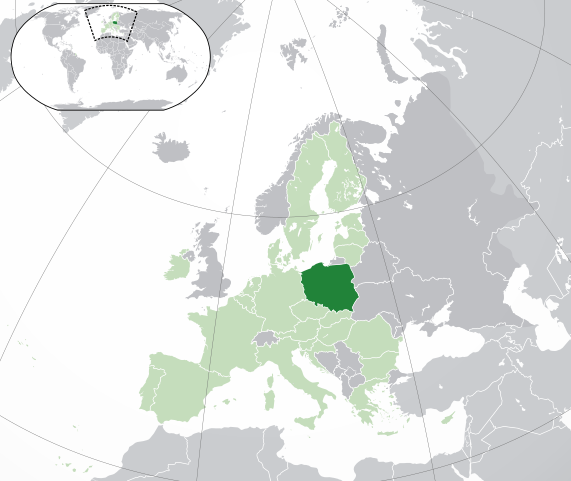
Legal Migration to Warsaw
One would not imagine Warsaw, Poland as a destination for sub-Saharan Africans. And yet, I was stunned by how many I encountered on just a short visit. Field research among migrants is not an exact science. Fortunately there are several proven methodologies to get started when you land in a new region. First, find the African restaurants. Almost every capital has one and they are a great source of information on the community. Such was true in Warsaw. We found the All Season African Restaurant in the Asian Town Mall of Bakalarskas. Its owner was a lively gentleman named Edmund. He had been the owner for nearly twenty years.
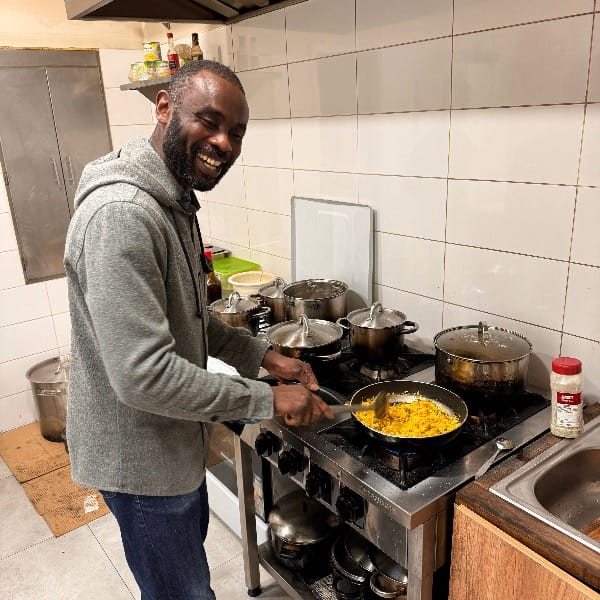
Edmund had moved to the city to join his uncle… who had migrated there many years prior. He intended to attend school, but that did not work out well for him.3 (Some people are not destined to be students!) He worked around town at various jobs but ultimately settled into the food service industry. His family suggested that he open an African restaurant, and for several years, his aunt served as the chief chef.
He shared with me that running a successful restaurant in the migrant district of town was not easy. The advantages, however, were found in the neighborhood. Because there were many other ethnic restaurants in the surrounding area, they could work together to satisfy all the legal and health requirements. For the most part, the authorities left them alone. Not many tourists passed through their part of town, the immigrant community seldom complained about anything, and their businesses helped maintain the local economy.
Edmund told me that in the early days, most of his clients were fellow Nigerians… university students who longed for authentic Nigerian food. He shared that the restaurant would not have survived if it weren’t for his aunt’s cooking. But with time, others began to come, and word spread about the unique tastes and flavors of Africa. While enjoying our dinner, we watched as he served a family of Poles, two Asian couples, and three groups of Africans.
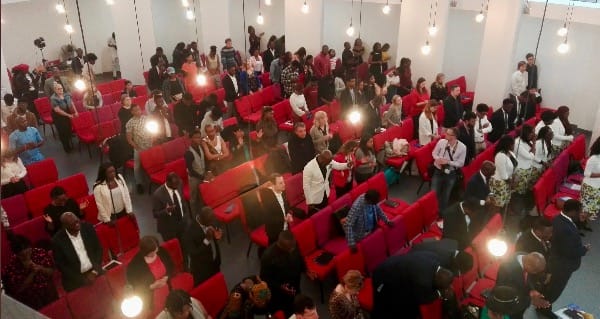
The African community in Warsaw is, of necessity, interconnected. We had met Pastor Zion, who led the Redeemed Christian Church of God in Warsaw. It was he who had referred us to Edmond and his restaurant. Zion came to Poland in 1990 with a desire to plant a church. (This was prior to the fall of the Soviet Union!) In those days, Afro-Russian political relations and economic agreements made it easy to migrate to the region. Thirty-five years later, his congregation was thriving. We enjoyed attending the services and having dinner with the pastor and his wife one evening.
As with most immigrant churches, they began small. Their members were primarily Nigerian. However, over time, they would become a foundational faith community for multiple ethnic groups hailing from around the world. They had purchased land and built a beautiful worship complex. As first-generation migrants to Poland, they were interwoven into the fabric of the culture and community. They had raised their children in Warsaw, and several of them were now in their university studies in the United States and Western Europe.
As we share the stories of Edmund and Pastor Zion, it is important to be reminded that the vast majority of migration is legal. Most of the people you will ever meet landed at a local airport, had a passport and visa in hand, and came via an invitation from a school, employer, or family member. In most cases, their movement has been good for them, their family back home, and their host culture. Many are followers of Christ and are anxious to join your community of faith. Often, they are your neighbors.
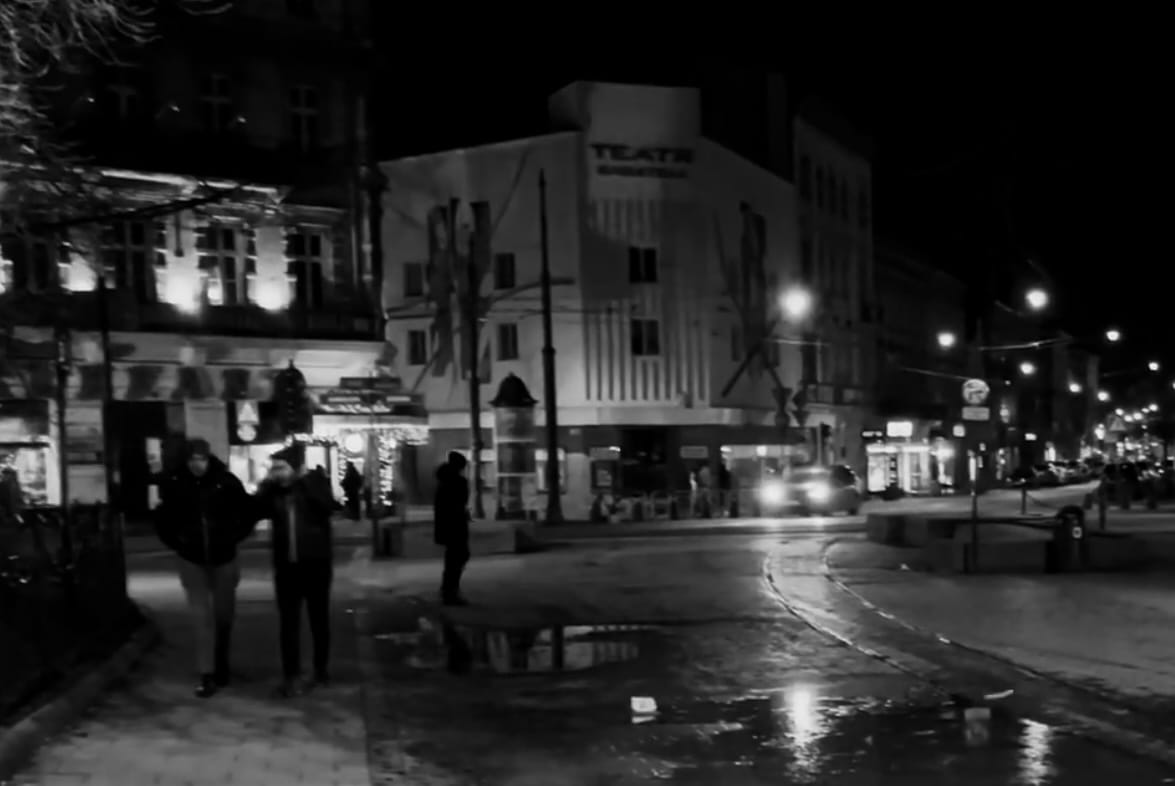
Illegal Migration Through Belarus
Another group of sub-Saharans in Poland also has a story to tell. However, these migrants prefer to remain nameless and faceless. They arrived in Warsaw along clandestine routes and would be deported if they became too visible. We met withseveral such migrants in a dark market about a block from the All Season Restaurant above. There were four men hailingfrom Nigeria, the DRC, and Cameroon. They had each been in Warsaw for over a year, having become stranded due to a lack of finances and circumstances. Their stories were similar to so many others we have heard in so many different places.
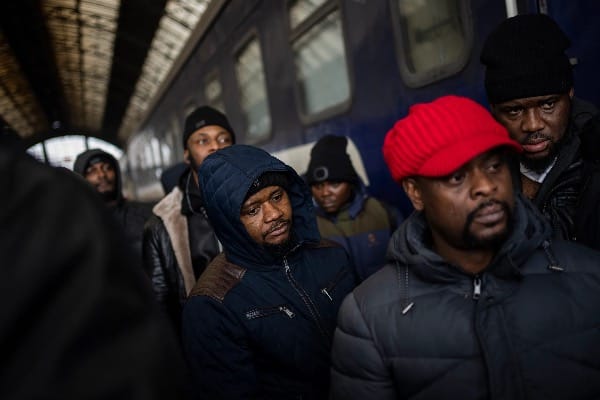
Pascal was Congolese and his dream was to make a life in England. Two years ago, he had paid smugglers in Kinshasa to help him go to London. On the surface, everything seemed simple. He could fly to Moscow on a tourist visa and then make the jump to Minsk in Belarus. His “big man” back in the Congo charged a fee to get him past customs in Russia. That, plus his airfare and subsequent fees, was nearly $7,000 USD. Getting to Russia on his own would have been simple. How to get from there to Belarus and then across the border to Poland was where assistance became indispensable.
Once in Minsk, he had to negotiate additional fees to get him into Poland. The journey would include a series of taxi rides, a Belarusian guide who would take him to an opening in the border fence, and then a Polish guide who would get him to Warsaw. The price on each side of the border would be an additional $3,000. He told me that an additional $6,000 would take everything he had. He began to look for other options. Word on the street was that he could get a taxi to the border, a journey of some 600 kilometers, for five hundred dollars. The challenge was that he would then be on his own to find a way across the fence, and he would not have a reliable contact on the other side.
Ultimately, he paid the first half ($3,000) and was taken to the border by taxi. The driver dropped him and three others off with GPS coordinates for the border crossing. They followed his directions on one of their phones and found the location along the fence. Sure enough, someone was there with a ladder and a blanket to cover the razor wire. They later learned that another “decoy” group would attempt to cross the fence three kilometers to the North. The alarms would sound once they touched the fence, and the police would go to that location. This gave them about ten minutes to climb the ladder, jump to the other side, and disappear into the forest.
Pascal was the first over the fence and was fortunate not to hurt himself when jumping from the top to the other side. Two of the other three were not so lucky. One landed wrong on his ankle, and they thought it was broken. Another landed on his side and could not get up. Their contact on the other side told them there was no time to help him and, to Pascal’s surprise, robbed him of his money and phone and demanded that they leave him behind. He did not know if he lived or died. He told me that he had heard many stories of those who had died. Their Polish guide led them to a van, took a second payment of $3,000, and drove them to Warsaw.
A Clearer Picture of the Belarus/Polish Border 5
I asked Pascal about his future plans, but he was unsurprisingly vague. He told me he had to earn more money to make his way across Europe and even more to cross the channel into England. We were in the market (with the other three Africans) long enough to watch several drug transactions. It was not hard to discern how he was making his money. We thanked him for his time, prayed for him, and left.
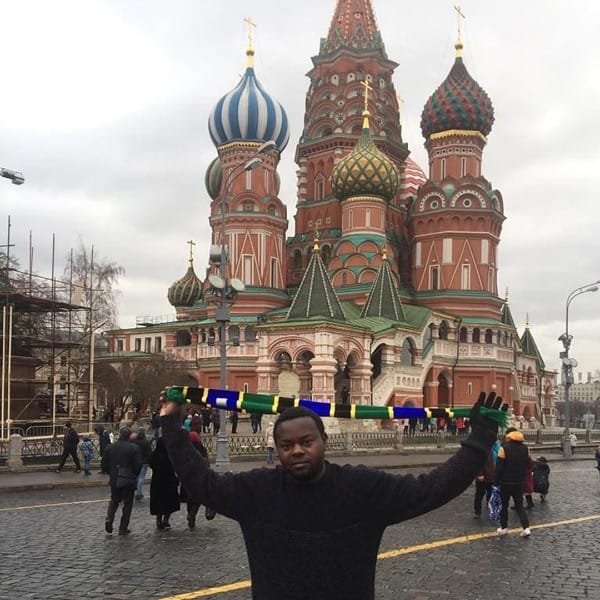
Movements from Nigeria, to Moskow, To Ukraine
Our third story is not from direct testimony. It is compiled from news reports and secondary accounts from other sub-Saharans.7 But stories, like that of Samuel, are very common. Too common.
Samuel graduated from the Federal Science and Technical College in Lagos, Nigeria. His studies in engineering had allowed him to find work, but the pay was low… and the prospects of advancement were even lower. His parents were getting older, and their healthcare costs were growing every year. Samuel had dreamed of working abroad, earning more money, and being able to care for his family. It was a good day when his coworker, Jordan, told him about a job opportunity in Russia.
Jordan had been conversing with a talent scout from Moscow looking for young petroleum engineers. Since Russia wanted to do more business in Africa, they were looking for progressive young graduates to work in Russia’s expanding natural gas industry. The offer was impressive. They would cover the costs of transport to Moscow, give them a Russian passport, and pay a very generous salary. They would even pay Jordan extra if he recruited the top talent from his place of employment.
What was not to like? Samuel accepted the offer with his parents’ blessings, and he and Jordan boarded a plane for Russia. And yet… things too good to be true… often are. Upon arrival, they were taken to a hotel where they would sign the final contracts. It was a three-year commitment. They did not expect the contracts to be in Russian, with no one to translate them into English. With few options and far too much trust, they signed. It was a tragic mistake.
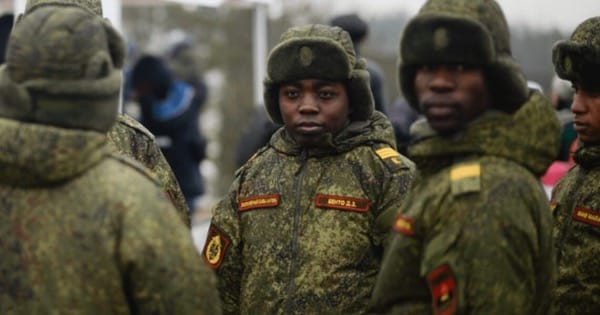
Having signed the contracts, they were put on a bus and driven to a local military base. In complete confusion, they discovered they had signed documents that actually conscripted them into military service. They were not alone; there were hundreds of other recruits. They tried to protest, but were denied communication with their families or with their consulate services. Those who refused to cooperate were threatened with torture, imprisonment, or worse. Their superiors told them they would receive eight weeks of training, but within two weeks, most were shipped off to the border with Ukraine.
Russia has been at war with Ukraine since 2014, but it escalated significantly in 2022. The carnage on both sides has been horrific. Russia has lost over 800,000 soldiers since the beginning of the conflict.9 Recently, they have begun conscripting foreigners to fight on the front lines. Samuel and Jordan had fallen into that trap.
Once on the front line, Samuel reported that the “African” soldiers were forced to fight while Russian soldiers stayed behind, often withholding the technology to avoid both drones and mines.10 In the first week, nearly half of his unit had died, including Jordan. Samuel himself had suffered a serious leg injury from a drone attack. Once he was able to walk again, but long before the wound had healed, he was sent back to fight. He was convinced that he would die. There was no retreat, for the Russians had told them that all deserters would be shot.
So, how did Samuel escape to tell his story? His escape was both ingenious and bizarre. He reported that in his few months at the front, he had yet to fire his rifle or even see a Ukrainian soldier. Their role was to march forward into minefields… or to draw the attacks of the drones. Once away from the Russian soldiers, they spent most of their time hiding. One day, he saw a group of soldiers that he assumed were Ukranians. He knew that they would shoot him on sight and that the Russians would kill him if he turned back. So… he stripped down to his underwear… tied his white t-shirt to a stick … and stepped into the open.
He shared that the soldiers were shocked at first, and he thought that they would shoot him. One could imagine the sight of a very black man standing nearly naked against the very white snow. But to his surprise, they motioned for him to come forward. Once they determined that he was alone and didn’t have any weapons, they gave him clothes and took him to their medics. He reported that he was treated with kindness, taken away from the battle lines, and allowed to call his family. They then offered a chance at freedom. All he had to do was to tell them what he knew of the Russians.
Samuel was now in southern Poland, having been released by the Ukrainian military. He was recovering from his injuries and hoping to stay in Europe. His story had gained quite a bit of publicity, and he was receiving significant attention. What would ultimately happen to him remains unknown, but Samuel was fortunate and grateful to be alive.
Conclusion
This is now our twentieth post on the Eastern Mediterranean Route, nearly our ninetieth in our M2M3 series. The one thing in common for all sub-Saharan migrants along the EMR is that they flew from Africa to Turkey. From there, they could go south to Cyprus, west towards Greece or Italy, or north towards the Balkans. The only real difference between all of those migrants, and those in our post today is that they flew to Moscow or Minsk rather than Istanbul. For the vast majority, what began as a legal movement often transitioned into illegal passages, heavily controlled by smuggling networks.
A high percentag of these migrants are Christian, having grown up in various communities of faith. Significant numbers who were once marginal in their faith have now become much more focused and are searching for a deeper walk with Christ. God is doing a work in the African diaspora, and many nonbelievers are coming to faith through their testimonies.
Many of the readers of this series are pastors in the Mediterranean zones of sub-Saharan transition. Those migrants who are legally in your community often attend your services on Sunday. Others are most certainly engaging your members in their neighborhoods and marketplaces. You know better than most that the diaspora is very present in your community. I urge you to give them your attention.
We are discovering that local churches can have a tremendous impact on those legal migrants who live in your community. They desire to assimilate into the local culture, and faith communities are a great place to start. These migrants, in turn, have both access and opportunity to minister to those who arrived via more clandestine means. It is of no surprise that God is blessing those churches that make loving their neighbors a priority.
Jacob was forced to flee his brother's wrath and wound up spending 15 years in servitude to his uncle. It was a struggle, facing abuse even from his own family. But through the journey, God would touch this young man's heart, impacting a nation for generations to come. I think He is doing the same through so many others today.
1 See https://m2m3.org/blog/86-from-russia-with-love-a-hybrid-war-between-belarus-and-the-eu/
2 This book, and the following articles, provides a fascinating glimpse into the life’s of African migrants into Poland. Omolo, James. Strangers at the Gate: Black Poland. Jacewska, Poland: Totem, 2017. See also, Diouf, Mamadou. "Warsaw in the 1980’s Through African Eyes." 2016. Accessed February 26, 2025. https://africainwords.com/2016/12/12/warsaw-in-the-1980s-through-african-eyes/. And, Nicholas, Boston. "Symbol of the Past, Model for the Future: The African Immigrant Who Became a Warsaw Uprising Hero." Notes from Poland. 2020. Accessed February 26, 2025. https://notesfrompoland.com/2020/07/31/symbol-of-the-past-and-model-for-the-future-the-african-immigrant-who-became-a-warsaw-uprising-hero/.
3 Minority Rights Group. "Minority and Indigenous Trends 2018: Focus on Migration and Displacement." 2018. Accessed February 26, 2028. https://minorityrights.org/minority-and-indigenous-trends-2018/. See Chapter 8, Pędziwiatr, Konrad, and Bolaji Balogun. "Poland: Sub-Saharan Africans and the Struggle for Acceptance." In Minority and Indigenous Trends 2018: Focus on Migration and Displacement: Minority Rights Group, 2018.
4 Photo Courtesy of Nicholas, Boston. "Symbol of the Past, Model for the Future: The African Immigrant Who Became a Warsaw Uprising Hero." Notes from Poland. 2020. Accessed February 26, 2025. https://notesfrompoland.com/2020/07/31/symbol-of-the-past-and-model-for-the-future-the-african-immigrant-who-became-a-warsaw-uprising-hero/.
5 Observers, France 24: The. "Observers Special Report: How Migrants Found Themselves Trapped at the Belarus-Poland Forder." YouTube. 2021. Accessed February 26, 2025. https://youtu.be/xFNJcv4kCkY?si=47JRNZvp3u_1nXMU.
6 "Using Threats and False Promises, Russia Sends Africans to Fight in Ukraine." ADF. 2024. Accessed February 26, 2024. https://adf-magazine.com/2024/07/using-threats-and-false-promises-russia-sends-africans-to-fight-in-ukraine/.
7 "African Troops “Forced to Ukraine Frontlines” While Russians Stay in Camp." RFI. 2025. Accessed February 26, 2025. https://www.rfi.fr/en/africa/20250117-african-troops-forced-to-ukraine-frontlines-while-russians-stay-in-camp.
8 Photo courtesy of Brown, Amanda. "Pressure and $5000 Promise: African Students Are Recruited for War in Russia." News Insight. 2022. https://insightnews.media/pressure-and-promise-of-5-thousand-dollars-students-from-africa-are-recruited-for-war-in-russia/.
9 "What Are the Russian Death Toll and Other Losses in Ukraine." Brand Ukraine. 2025. Accessed February 26, 2025. https://war.ukraine.ua/faq/what-are-the-russian-death-toll-and-other-losses-in-ukraine/.
10 "African Troops “Forced to Ukraine Frontlines” While Russians Stay in Camp." RFI. 2025. Accessed February 26, 2025. https://www.rfi.fr/en/africa/20250117-african-troops-forced-to-ukraine-frontlines-while-russians-stay-in-camp.