88 - Stories from Albania
2025 No 88 - Revised***
Therefore, my people go into exile for lack of knowledge; their honored men go hungry, and their multitude is parched with thirst. --Isaiah 5:13
I am a firm believer in inter-dimensional travel.
I grew up in the Star Trek generation. I watched Captain Kirk as a child and Jean-Luc Picard as a young adult. It is sad to say that it probably shaped my worldview in significant ways. Being the son of a Navy veteran, the structures of Star Fleet fit nicely into my understanding of leadership. It also affected my marriage! On that TV show, I learned about the concept of alternative dimensions. You may say this is just science fiction, but you have never been shopping with my wife.
Every married man has experienced this. You are at the grocery, faithfully pushing the cart, as your beautiful wife collects things from the list. Then… mid-conversation… in an instant… she is gone. Fearing the rapture, you go into search and rescue mode, laying eyes on every square foot of the store, but she is nowhere to be found. Gone! But then, just as you are ready to file a missing person’s report, she reappears! Where did she go? It is a mystery. When you ask her where she was, she reports that she simply went down an aisle to get a can of corn. But you looked down that aisle… five times… and she was not there. So what happened? Like some gap in the space-time continuum, she had slipped into another dimension. She was not even aware of what happened. For her, time and space appeared to be one fluid event. But for you, she was definitely “somewhere else”!
An Unexpected Intersection
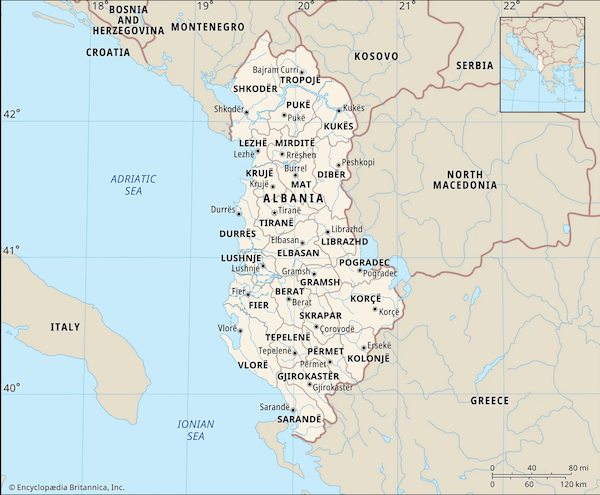
There are times when this phenomenon is manifested in the diaspora. Such was my experience this past month when I stumbled into a completely different dimension. I was at a conference in Tirana, Albania, at a hotel conference center. It was one of those all-inclusive beachside hotels that dot the coastline of almost every Mediterranean country. Some of the most influential Christian leaders of the modern world were in attendance. These men and women serve the global church, seeking to ensure that every pastor has the tools necessary to lead their flock and to proclaim the gospel in their communities. I indeed sat at the feet of giants.
A diverse group of young men and women served us at the hotel. The managers were obviously from the Balkan region, but those who cleaned our rooms were mainly from the Philippines. Those cleaning tables in the cafeteria were often sub-Saharan Africans. They were wonderful people and extremely courteous. Yet, I could sense a spirit of isolation and despair in my heart. I intentionally spoke with many of them, yet there was little conversation. It was one of those things that was hard to put a finger on, but having spent the past decade with immigrants, I just had an odd feeling. I am around people from the Philippines and Africa every day. Something was not right. It didn’t take much digging to find out what was going on. I soon discovered they were victims of an insidious form of human trafficking.
An Incredible Job Opportunity
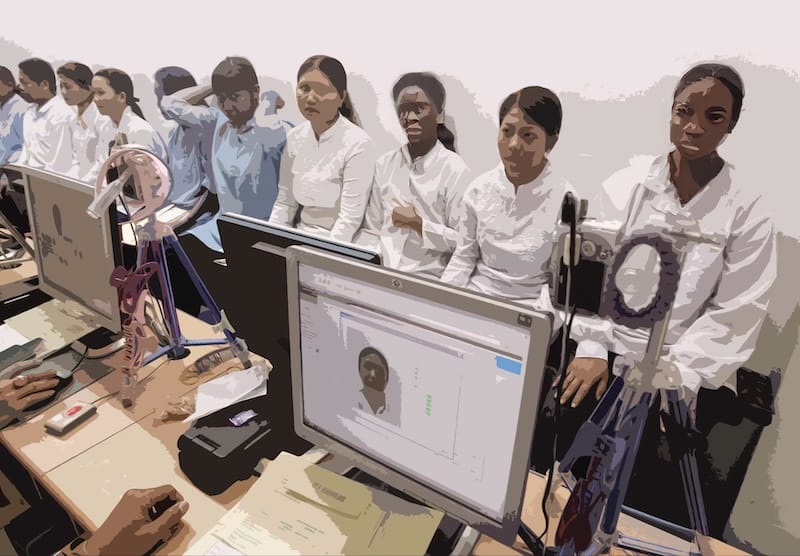
Imagine growing up in Uganda. It is a country that understands poverty. It ranks 24th on the world poverty index. Over 98% of the population earns less than $6.85 per day, and one in five makes less than $2.50 per day.2 Over half of Ugandan youth are not in employment, education, or training (NEET).3 One can graduate from university and still not find a job. For this reason, over 25,000 leave Uganda each year in search of work internationally, hoping to find a better life. It is here where the exploitation begins.4

Let's play this out with a young lady named Hope. She comes from a typical family, worked hard to get good grades in school, and earned her undergraduate degree in business management. Yet, upon graduation, she could not find a job. Then, one day, she saw this advertisement… obviously marketed to young Ugandans... on Facebook.
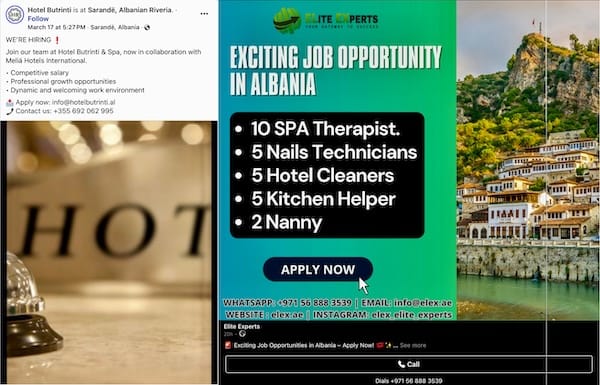
She had heard of internet scams offering false employment opportunities, so she knew to be careful. She did a separate search online and found the agency registered in Albania. Independent references were all positive. So, she made the call. On the other end of the line was an agent who described the job opportunities in the growing Albanian tourist sector. There was a need for mid-level managers at many of the resorts. The recruiter said her degree would open the door for one of those positions. If she would allow the agency to represent her, they would promote her resumé and help with the arrangements for relocation.
Of course, there were fees to be paid. The agency charged a management fee of one thousand euros, which she would pay back once she started drawing a paycheck. She would also be responsible for her airfare, the costs of a visa, and the fees required for residency and a work permit. All told, the cost could be as much as four to seven thousand euros. We must remember that this was her parents' equivalent of two years of salary.
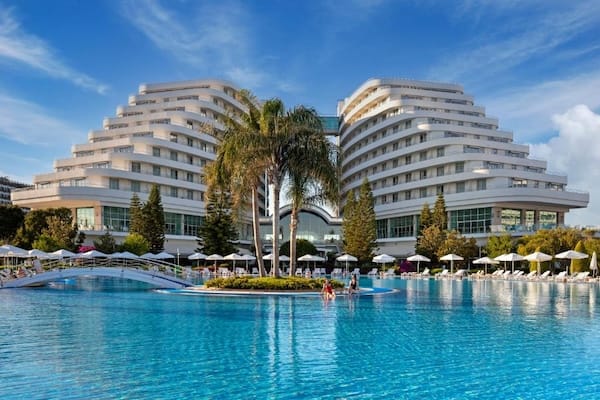
Before long, they notified her of a job offer from a resort hotel in Tirana. It was a management position with a one-year contract. The pay would be roughly twelve hundred euros monthly, with housing provided. It was an offer that was beyond all of her hopes and dreams. But as most of us know, things too good to be true seldom are.
The agency helped her get a visa, which allowed her to purchase her tickets. What surprised her was that a dozen or so other girls from Uganda were on her flight. All were going to Albania to work. There was a sense of excitement as they talked about their new jobs and how their good fortune would change their lives and those of their families. People were waiting to receive them when they landed in Tirana and made their way through customs.
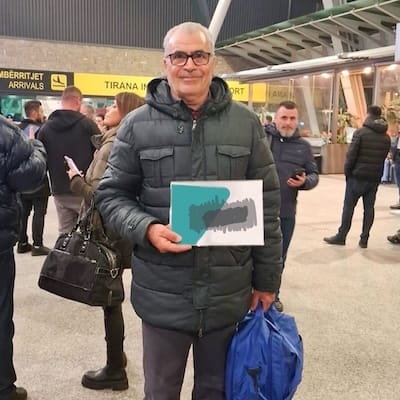
Hope met a man holding a sign with her name, and he took her to hotel. It is a large hotel/conference center on the Adriatic Sea. The manager showed her to her new quarters, a hotel room she would share with another person. She was allowed to unpack and then went to the administrative office to do the paperwork. It was here that her world was turned upside down.
The Realities of Labor Migrant Exploitation
They first requested her passport so they could make copies. The challenge was that they did not give it back. They then gave her a contract to sign, which said that she was simply an employee of the hotel… no details… nothing about an administrative position. When Hope asked about her actual job, she was told that she would have to do whatever was required and that she would have to work her way up to a management position. Her salary was to begin at 700 euros per month. She had little choice. She now owed them money, and they were holding her passport.
Hope returned to her room in tears. How could this possibly be? She soon learned that her job was to work in the kitchen, washing dishes and cleaning tables. There were another dozen or so girls from Uganda at the hotel. Those who had been around a while came alongside the new girls to help them adjust. There were rules.
First, they were to do everything that they were told. They had to do their jobs well or be fired and deported. There were no set working hours. Many would work 12-14 hours per day and had to be available at any time of the night if called. Second, there could be no complaints, conversations about misrepresentations, or reports about their conditions to family or outsiders. Third, they were to be very kind to the guests. But, and this was important, they were not to speak to the guests about anything outside of their job responsibilities. As one might imagine, they felt exploited and trapped.
And then there was another reality. Despite the worker's contracts, their jobs were only as good as the resort's success. Tourist season in the summer meant a full house. Conference season in the winter meant the resort could stay open... barely. But, if occupancy were to drop too much, they would lay off staff, meaning no pay… and, more significantly… nowhere to live. One might imagine that 700 Euros per month would still be a lot of money for these Ugandan immigrants. Such might be true… if that is what they truly earned. Once their debts were deducted, along with additional fees that could be added at any time, they actually received very little money. Remember, they could not quit and find other work because the employer held their passports. For Hope, her situation had become hopeless.
When I arrived at the hotel, I knew something was up. I have witnessed this many times in other places. There is not much reason for Africans or Filipinos to be in Albania. Those who pass through the Balkan migration route are illegal, so they would not be working in a resort. Their goal is to pass through unnoticed. The local universities do not offer programs attractive to Africans, so that would not explain their presence. Having a sense of what was happening, I began praying for those serving us.

My Response To The Situation
I met Hope in the cafeteria. I had greeted her every day, and she always returned the greeting with a smile. But without even knowing her situation, I could see the sadness in her eyes. On my last day there, I told her that I was praying for her, that our Lord Jesus Christ would bless her, and that he would provide for her every need. She smiled, and I watched as a tear rolled down her cheek. To do more would have put her at risk.
As I often do on most of these trips, I spent a few extra days in Albania to better understand how Africans passed through the region. While in town, I had the privilege of attending the Redeemed Christian Church of God (RCCG) in Tirana. Pastor Prince and his precious wife left Nigeria 17 years ago to plant a church in the Balkans. Both difficulty and faithfulness have marked their work among the immigrant population in the region. And yet God has blessed their work immensely.
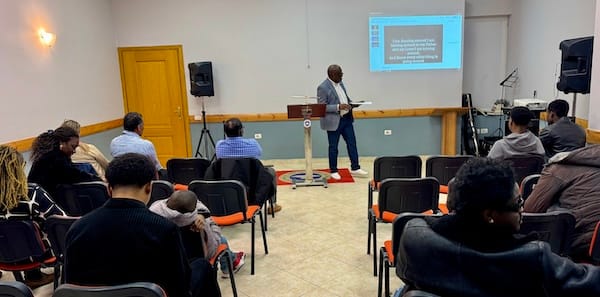
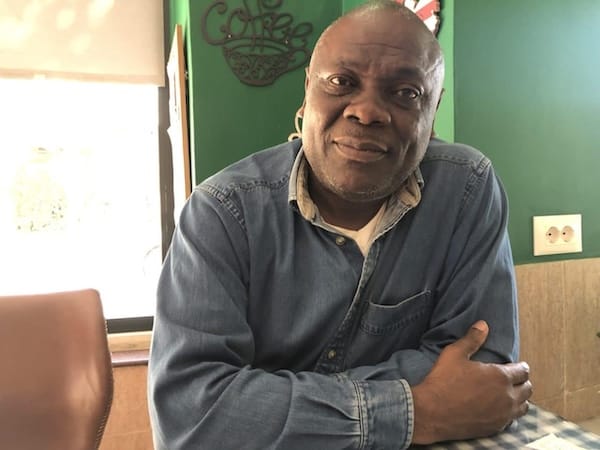
Pastor Prince filled in the gaps in my understanding, which has allowed me to tell Hope’s story above. He also shared a recent article that was written about the abuse of migrant workers in the hotel industry.6 That article can be found here. It was the pastor's attempt to bring the situation to light, and he was willing to allow his name and photo to be made public. Due to his efforts, the hotel came under public scrutiny and was forced to return their workers' passports. Most, however, cannot return home because they still owe money to their agents, cannot afford the airfare, or cannot face the shame of returning empty-handed.
Pastor Prince told me that some 30 women from Uganda were scattered along that line of resorts. Others are present, hailing from Nigeria, Camaroon, and beyond. The workers have asked him to host a church in their area, and he is working through the details of how to make that happen. Hidden behind the pain and suffering, many of these girls have an abiding faith in Christ. As with most in such situations, they read Scripture and pray together regularly. While their faith is young, their light shines brightly in dark places.
Conclusion
I think what caught me off guard was how easily it was to be in such a context, where some of our most influential spiritual leaders were gathered, and yet all of us were oblivious to the people around us being exploited by the very hotel where we were staying. It reminded me that we live in one dimension of time and space… and they live in another. At times, such as at this conference, those dimensions intersect. No blame should be laid at the feet of those in attendance. They simply did not know. And if they had known, they could have easily made matters worse for those working at the resort.
This blog series aims to help God’s people, working along migratory pathways, better understand the realities in their contexts. The abuse of labor migrants is real, pervasive, insidious, and yet lives in the shadows. In the end, I hope we all remember Hope and so many others like her in our prayers. If you travel often, you will meet her again. I also pray that we support local churches and pastors like Prince, who are in a place to make a difference. For those who attended that particular conference, may we remember those who cleaned our rooms and served our tables. May our personal reflections of the time drive us not just to our knees... but also to better understand our role in the diaspora.
*** This article has been revised. In the original post, I used the name of a particular hotel, articulating its relationship with the issues presented in this article. In so doing, it implied that employees of the hotel were aware of the trafficking situation. In addition, it did not allow the owners to refute the story or an opportunity to clear their name. No one likes to be publically accused without a venue to respond. As a follower of Christ, that was an insupportable error, and I genuinely apologize.
1 Lillian Agbeyegbe, "Analysis – Human Trafficking at Home: Labor Trafficking of Domestic Workers", Human Trafficking Institute https://traffickinginstitute.org/analysis-human-trafficking-at-home-labor-trafficking-of-domestic-workers/ (accessed March 20, 2025). See also Katie McQue, "‘Every Day I Cry’: 50 Women Talk About Life as a Domestic Worker under the Gulf’s Kafala System", The Guardian https://www.theguardian.com/global-development/2024/apr/25/kafala-labour-system-gulf-women-talk-about-life-as-a-domestic-worker-in-the-gulf (accessed March 20, 2025).
2 "Poverty and Equity Brief: Uganda", World Bank Group https://databankfiles.worldbank.org/public/ddpext_download/poverty/987B9C90-CB9F-4D93-AE8C-750588BF00QA/current/Global_POVEQ_UGA.pdf (accessed March 20, 2025).
3 "Briefing Note for Countries on the 2023 Multidimensional Poverty Index: Uganda", United Nations Development Programme https://hdr.undp.org/sites/default/files/Country-Profiles/MPI/UGA.pdf (accessed March 20, 2025).
4 "Over Half of Ugandan Youth Idle", New Vision https://www.newvision.co.ug/category/news/over-half-of-ugandan-youth-idle-NV_198596 (accessed March 20, 2025).
5 Hope's name has been changed to protect the young lady at the resort, and a generic image has been used.
6 Vladimir Karaj, "Like Prison: How African Migrant Workers Suffer Exploitation in Albania", BalkanInsight https://balkaninsight.com/2024/11/06/like-prison-the-exploitation-facing-migrant-workers-in-albania/ (accessed March 20, 2025).
7 Ibid.