89 - Arrival in Europe
2025 No 89
Now when he had spent everything, a severe famine occurred in that country, and he began to be impoverished. So he went and hired himself out to one of the citizens of that country, and he sent him into his fields to feed swine. And he would have gladly filled his stomach with the pods that the swine were eating, and no one was giving anything to him. But when he came to his senses, he said, ‘How many of my father’s hired men have more than enough bread, but I am dying here with hunger! —Luke 15:14-17
We began this series of posts on the Eastern Mediterranean Route (EMR) nearly two years ago.1 When we started, I would not have imagined the level of diversity we would find. Almost every sub-Saharan who traveled this route flew directly to Istanbul, Turkey. That meant they began their journey legally and would then employ smugglers to take them by land or boat to either Greece… or north through the Balkans to Italy. This put them into a unique class of migrants… i.e., a group with some measure of resources. The price of these trips ran into the thousands of dollars.
Things have begun to change. Today, we are seeing an increase in migrants leaving directly from Libya via boat to Greece.2 These individuals typically land completely exhausted of money… and courage. This represents an injection of migrants into the EMR who come from much lower financial status and are much more desperate in condition.
The numbers are difficult to estimate. What we do know is that in 2024, the Turkish Coast Guard intercepted over 55,000 migrants departing their shores.3 By November of that year, some 52,000 had entered Greece from the East and the South.4 In the same period, 4,500 arrived in Europe via the Western Balkan Route.5 These numbers, however, must always be questioned.6 The bottom line is that since we do not know how many depart border countries, and we do not know how many arrive in Europe, any determination of volume is pure speculation.
Like the Prodigal Son, many find themselves stranded and hopeless because of poor decisions. We have documented the suffering along the way, but there also needs to be some conversation regarding what happens to those who make it into the European Union. It may not be what you think!
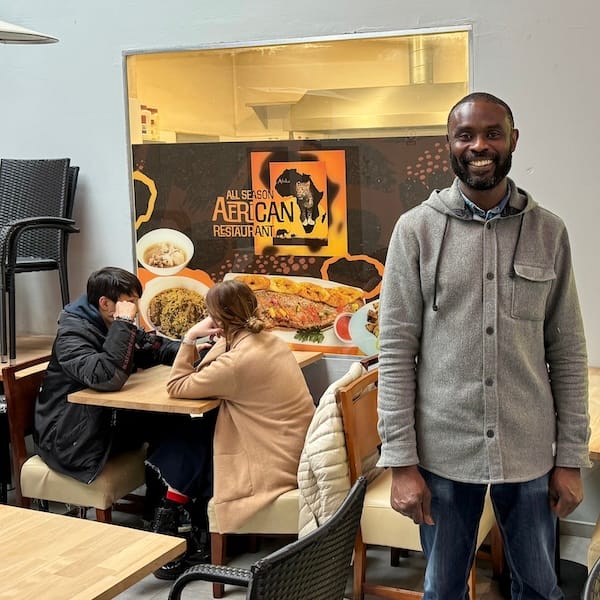
Success!
The media has played a major role in shaping the world’s image of Sub-Saharan migration into Europe. Graphic pictures of immigrants in sinking boats, battered at border fences, and detained by authorities are hard to forget. Such is indeed a reality… but it is not the majority. I often tell people that 80% of all migration is legal. That means people arrive in their host country at an airport with a passport and visa. They pass through customs without difficulty or delay and are picked up by friends and family. This is most certainly true for Africans in Europe.7
So, who are these immigrants? They are university students, diplomats, medical professionals, engineers, and many other professions. Some come as part of family reunifications, others as tourists. These are the Africans that most Europeans meet in their daily lives. They are their neighbors, vendors in the markets, fellow passengers on the metro, and members of their churches. They are hardworking people, honest to the core, gracious beyond measure, and desirous of your friendship. The nature of this blog tends to focus on irregular movements, and I confess that such does a disservice to those who have arrived legally. Their stories need to be told. I encourage you to meet your neighbors, learn about their lives, and listen to their stories. You will be blessed.
But… as we have reported often… this is not the complete picture. There is indeed the other twenty percent. In addition to the many who arrive legally, Europe is facing a significant crisis of irregular movements. How these governments manage this crisis is vital for our study. They are addressing the issue on three fronts.
- First, they must slow the tide of incoming people. Europe has a long history of agreements with border countries to encourage them to step up their controls. This is expensive, and its effectiveness varies with the political climate. One only has to look at Turkey, Tunisia, or Morocco to see the impact.
- Second, European countries must deal with the crisis at their borders. Most seek to create conditions that would signal upstream hopefuls that entry is miserable, if not impossible. This is accomplished by constructing fences, engaging in pushbacks, and forcing migrants to manage inhospitable conditions.8 This is horrifically inhumane and looks terrible in the press and public opinion.
- Third, Europe must manage the vast numbers of irregular migrants already in their countries. Some say that the total of undocumented migrants in the EU exceeds three million.9 But as we have witnessed, those numbers are likely to be grossly underreported.10
And yet… herein may lie a bright spot.
Europe is facing a population crisis, and its citizens are not reproducing at a level sufficient to fill critical labor positions. That means there is a high demand for legal labor migration. Germany needs 400,000 migrants each year to supply its current labor needs.11 Croatia seeks to bring half a million Asian workers to its agricultural and hospitality sectors.12 Italy, Spain, and France are in a similar position.
As much as public opinion may be against immigration, Europe cannot birth enough babies to resolve this crisis. One solution is to regularize undocumented migrants and move them into the labor force.13 Spain has become active in this process and, by 2027, anticipates legalizing nearly a million undocumented migrants.14
For many migrants, this will seem like winning the lottery... and in a real sense... it is. While they may not be as competitive as their European counterparts, this will enable them to find a way to live, raise their children, and support extended families back in Africa.
Sub-Saharan Africans in Europe may well number in the millions. They live in every large city, and finding them is not difficult. All it takes is an evening tour of the various African restaurants, a few hours of worship in an African church, or a walk through any university campus. Those who are legal are indeed the lucky ones, and they are the envy of their friends and families back in Africa.
Who could not celebrate their accomplishments? Most have a “rags to riches” testimony and have achieved their success through much suffering and hard work. They share the values of steadfastness, commitment, and hope. They know what they want and are willing to sacrifice and suffer to achieve their goals. At the same time, through no fault of their own, they have become the poster child for migration back home. Their posts and photos on social media cause others to dream of a life in Europe. Their remittances communicate wealth and motivate entire communities to put their children on migration pathways. What people back home do not know is that the chances of success are very, very slim.
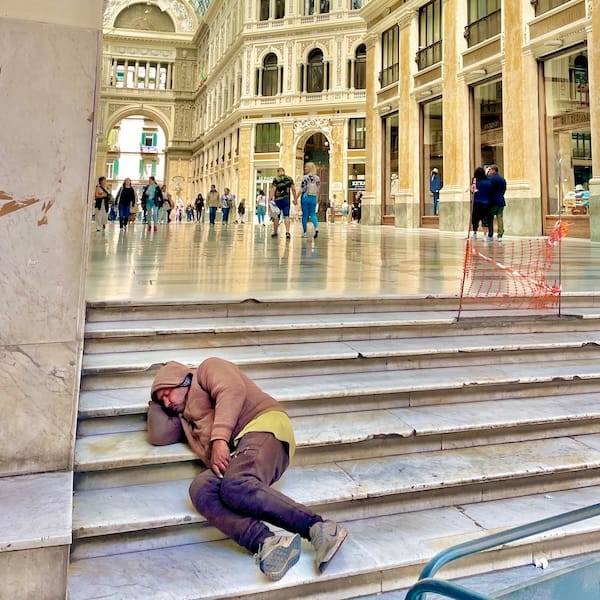
Difficult Days
One may well ask, if arrival in Europe is so wonderful, then why are thousands of migrants living in squalid conditions on the streets? Such is a complex issue to address. Let’s break it into manageable pieces.
Let's begin with those in the system working towards a residency card or work permit. This process can take months to years. Asylum seekers may receive a government stipend, but it can be temporary and falls far short of what is needed to live. The cost of living in Europe is much higher than anyone from Africa could have possibly imagined.15 That stipend may seem like a lot by African standards, but they still live in poverty. They will work together, often rooming with 6-8 others to afford the rent. Winter becomes especially difficult; many live without heat due to high utility costs. In the end, most are denied refugee status, pushing them even deeper into poverty.
The key is to find work at any level.
Finding a job in Europe can be difficult… even for those navigating the system successfully. Migrant populations are easily exploited. Employers often underpay migrants, withhold benefits, and demand labor in unsafe environments without any governmental repercussions. Many sub-Saharans find themselves in competition with irregular migrants, meaning that their legal documents can actually become a liability.
Sadly, employers may face stiffer penalties by not treating legal employees fairly than they would by employing those without papers. This becomes especially evident in the agricultural sector. We have heard stories of migrants who chose not to reveal their legal status to employers for fear of losing their jobs.
Then there are those migrants who arrive and actively avoid being registered. Remember that an asylum seeker must register in the first country they enter. But that locks them into that country for the duration of their application. Many want to get past the poorer EU countries like Greece, Italy, and Spain. They have their sights on wealthier countries like Germany, the Netherlands, or Sweden.
Once they arrive in southern Europe, they move into migrant communities that are little more than ghettos. They may live in squatter communities or even on the streets. Around almost every train station will be a group of homeless Africans living in tents or cardboard shelters. They survive by begging and digging through the garbage.
Drugs and alcohol prevail, and many suffer from mental health issues. Some will have the resources and opportunity to move North. But even there, survival is difficult. Most manage by finding low-paying jobs, begging, and digging through garbage for food
As we have noted in past articles, there is a segment of these migrants who have family in Europe. They were told they would find help… if they could get themselves into the EU. Our engagements show that there is a big difference between migrants who seek to survive independently and those who can connect with an existing community in their country of destination. Having friends or family with tenure in Europe often determines success or failure. Existing connections help to secure a place to stay, a means for assimilation into the culture, and a critical safety net if and when things go wrong. In my observations, this accounts for 95% of those who arrived illegally and ultimately became successful. Unfortunately, there are many without such connections, and they are the ones who truly struggle to survive.
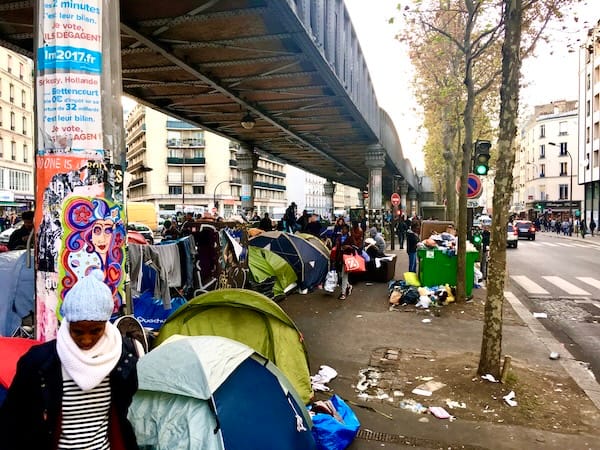
Tragic Outcomes
We need to remember that the migration process has a very specific outcome. Most migrants justify their journey because they genuinely believe they will have good work and enjoy a better life if they can make it to Europe. Everyone trusts that the money invested in their movements will pay rich dividends for their families and communities back in Africa.
Arrival was supposed to be a dream come true… but it has become a nightmare for many.
Africans are inherently communal, meaning that there are very few independent decisions. Migration was a group effort, and success or failure reflects on the group’s honor. For many, there is honor if they die along the way and great shame if they arrive and then cannot succeed. Many stop connecting with their family because of shame and quickly become isolated and alone.
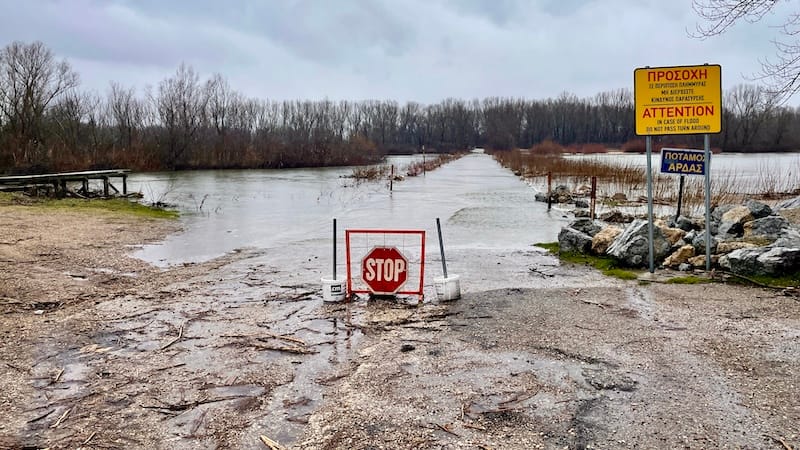
In the end, their life becomes a journey into a kind of homelessness that never ends.
We often speak of migration in terms of points of origin, transition, and destination. Any city can be one of those points, frequently serving as all three. If a migrant lands in a European city and cannot build a life, they often move on. Most migrant expectations are unrealistic, built upon stories they have heard and the testimonies of others. The realities are hard to accept.
Each began with a “grass is greener on the other side” mentality, and it becomes habitual after a while. If they are in a border country, they will seek to move to Germany or France. If that does not work out, they will go further north towards the Nordic countries or try to cross the channel into England. Many will keep moving, constantly chasing a dream.
It is a difficult question to pose, but one must wonder how many of these young men and women die in Europe while still in their youth. To date, I have yet to find a source that would keep a record of such numbers. Funeral homes do not keep such statistics… and it is hard to believe that the governments would like such to be published. There are some reports that state that there are roughly 1.3 million homeless people in the EU sleeping on the streets each night.16 It is probably futile to question if anything of value is to be learned from these kinds of reports. One must imagine that many of them are migrants.
One must also imagine that this kind of existence only leads to more suffering and a shortened life.
Conclusion
It is not unusual to find migrants who feel regret. When asked, most say they would do things differently if given the chance. Hindsight is indeed 20/20. Like the Prodigal Son in the Gospel of Luke, they dream of what could have been. But when they wake up, they must face the harsh realities and consequences of their decisions.
One of our goals in this blog is to inform church leaders better as they give counsel to their members. This is especially true for those who are considering leaving Africa for Europe. I have occasionally asked migrants what they would like these dreamers to consider before they leave. They offer the following advice.
First, their fellow Africans will be much better off if they remain in Africa and invest the time and money they would spend on their movements. These are large sums of money that could easily create a profitable business. In so doing, their suffering would be alleviated, and their community would benefit. When I ask why they don’t send that message back home, they tell me that Africans are like the brothers of the rich man in Luke 16. They would not be persuaded, even if someone from the dead showed up at their doorstep.
Second, they should go back home when possible. This is certainly true if the migrants are still mid-journey. It may also be true for those who have arrived in Europe. Life in Spain, Italy, Greece, or Cyprus is often not a life. For many, the idea of returning home and facing their families is impossible. Oftentimes, however, that is not true. Going back is an option, and programs exist to make that possible. They may even find the shame is only in their minds; the barriers are an illusion, and their fathers and mothers would gladly have them back. Sure, there may be a resentful brother… but the family would receive them well.
Third, they need to find a city and settle down if they make it to Europe. Migrants report that the best place is often in their country of first arrival. By assimilating into the culture, they can begin to save money and build a life. They know that Europe is becoming effective in slowing the tide of illegal immigration. Like most, however, the government struggles to know what to do with those who have already arrived. Most will ultimately legalize their presence. However, that requires migrants to become stable, follow the rules, and seek to be productive in the country.
Ultimately, we must realize that not all sub-Saharan migrants are alike. Some have chosen to land in Europe through legal means, have applied their skills and resources appropriately, and have become eminently successful. Others have made it, by the skin of their teeth as it were, and are barely surviving. With time, they may gain legal status. Still, others arrived only to find a life filled with misery and squalor.
The point of the story of the prodigal son was not to judge the young man for his foolish choices. It was to remind us that he was somebody's son, that his earthly father loved him, and that God loved him.
We can evaluate and judge those around us based on our presuppositions, or we can do what Jesus did and love the person in front of us. Many, if not all, will respond to such love. If we take that first step, we may find that they then take the next step to know the One who makes that love possible.
1 M. Augustus Hamilton, "67 - Introduction: Eastern Mediterranean Route", M2M3 https://m2m3.org/blog/67-introduction-eastern-mediterranean-route/ (accessed April 5, 2025).
2 "Greece Says 66 Migrants Arrive on Southern Island of Crete after Sailing from the Libyan Coast", Associated Press https://apnews.com/article/greece-migration-crete-libya-mediterranean-turkey-boats-ee77385c674a96ab7a9f124320230e76 (accessed April 5, 2025).
3 Haberin Devami, "Turkish Coast Guard Catches over 55,000 Migrants in 2024", Hurriyet Daily News https://www.hurriyetdailynews.com/turkish-coast-guard-catches-over-55-000-migrants-in-2024-204310? (accessed April 5, 2025).
4 "Greek and Turkish Coast Guards Aim to Boost Cooperation Against Migrant Smuggling", Associated Press https://apnews.com/article/greece-turkey-migration-coast-guard-talks-5bc1387a4d16b2b4173a3801b0247f8b (accessed April 5, 2025).
5 "Irregular Border Crossings into EU Drop Sharply in 2024", FRONTEX https://www.frontex.europa.eu/media-centre/news/news-release/irregular-border-crossings-into-eu-drop-sharply-in-2024-oqpweX (accessed April 5, 2025). See also, Mixed Migration Center, Quarterly Mixed Migration Update: Europe (Danish Refugee Council, 2024).
6 InfoMigrants, "Frontex Data on Balkan Route “Only Part of Reality” Says ICS" https://www.infomigrants.net/en/post/62288/frontex-data-on-balkan-route-only-part-of-reality-says-ics (accessed April 5, 2025).
7 "Lawful Immigrants", European Parliamentary Research Service https://epthinktank.eu/2024/03/15/eu-migration-and-borders-key-facts-and-figures/lawful-immigrants (accessed April 5, 2025).
8 "Europe: Findings by Leading Anti-Torture Body of Systemic Abuses at Europe’s Borders Corroborates Thousands of Tesimonies", Amnesty International https://www.amnesty.org/en/latest/news/2023/03/europe-findings-by-leading-anti-torture-body-of-systemic-abuses-at-europes-borders-corroborates-thousands-of-testimonies/ (accessed April 5, 2025).
9 Diane Taylor, "Irregular Migration into UK and Large European Countries Is Same As 2008, Research Shows", The Guardian https://www.theguardian.com/world/2024/oct/07/irregular-migration-into-uk-and-large-european-countries-is-same-as-2008-research-shows (accessed April 5, 2025).
10 Denis Kierans and Carlos Vargas-Silva, The Irregular Migrant Population of Europe (University of Oxford: MIrreM Consortium, 2024), 3.
11 Thomas Wieder, "En Allemagne, Les Travailleurs Immigrés Sont Les Bienvenus", Le Monde https://www.lemonde.fr/idees/article/2023/02/14/en-allemagne-les-travailleurs-immigres-sont-les-bienvenus_6161712_3232.html (accessed April 5, 2025). See also, Memoona Tawfig, "Bridging the Gap: Germany’s Evolving Stance on Economic Migration from Africa", Centurion Plus https://centurionlgplus.com/bridging-the-gap-germanys-evolving-stance-on-economic-migration-from-africa (accessed April 5, 2025).
12 "Labour Crunch Forces Croatia to Open Doors to Asian Workforce", France 24 https://www.france24.com/en/live-news/20240327-labour-crunch-forces-croatia-to-open-doors-to-asian-workforce (accessed April 5, 2025).
13 Ruth Heylin and Anna Triandafyllidou, Regularizations of Migrants Without Status in Europe: Scope, Impact and Lessons Learned (Toronto Metropolitan University: Canada Excellence Research Chair in Migration & Integration, 2023).
14 "Spain to Grant Residency and Work Permits to Around 300,000 Undocumented Migrants Per Year", Euronews https://www.euronews.com/my-europe/2024/11/21/spain-to-grant-residency-and-work-permits-to-around-300000-undocumented-migrants-per-year (accessed April 5, 2025).
15 Cost of Living Report: Understanding the Crisis and How It Affects African Immigrants, (London: BHM UK, 2023). The summary can be found here. "Report Shows African Immigrants in UK Struggle to Pay Bills as Cost of Living Crisis Intensifies", BHM UK https://bhmng.uk/report-shows-african-immigrants-in-uk-struggle-to-pay-bills-as-cost-of-living-crisis-intensifies/ (accessed April 5, 2025). See also, Natasha Mellersh, "Germany to Reduce Welfare Benefits for Asylum Seekers in 2025", InfoMigrants https://www.infomigrants.net/en/post/60890/germany-to-reduce-welfare-benefits-for-asylum-seekers-in-2025 (accessed April 5, 2025).
16 Homelessness in Europe: The State of Play, (Ninth Overview of Housing Exclusion in Europe, 2024). See also "Europe’s Homelessness Crisis: Council of Europe and Council of Europe Development Bank Join Forces to Find Solutions", Council of Europe https://www.coe.int/en/web/portal/-/europe-s-homelessness-crisis-council-of-europe-and-council-of-europe-development-bank-join-forces-to-find-solutions (accessed April 5, 2025).