90 - African Church on the Eastern Mediterranean Route
2025 No 90
Now Paul and his companions put out to sea from Paphos and came to Perga in Pamphylia; but John left them and returned to Jerusalem…
…after some days Paul said to Barnabas, “Let us return and visit the brethren in every city in which we proclaimed the word of the Lord, and see how they are.” Barnabas wanted to take John, called Mark, along with them also. But Paul kept insisting that they should not take him along who had deserted them in Pamphylia and had not gone with them to the work. —Acts 13:13, 15:36-41
Thomas Oden is one of those theologians who would find agreement with few in my circles—but his knowledge of the early Church was unparalleled. A few years before he passed away, he wrote a book titled The African Memory of Mark: Reassessing Early Church Tradition.1 In it, he proposed a fascinating idea: that the author of the Gospel of Mark was African. According to Oden, Mark was likely a wealthy Jewish immigrant from Cyrene, in modern-day Libya.
History records that young John Mark grew up around the Apostle Peter’s family in Capernaum, maintained a home in Jerusalem, and was present for Christ’s death, burial, and resurrection. Oden even suggests that Pentecost may have occurred in the house of Mary, the mother of Mark. If that’s true, it adds a layer of clarity to the biblical record of this young man’s journey.
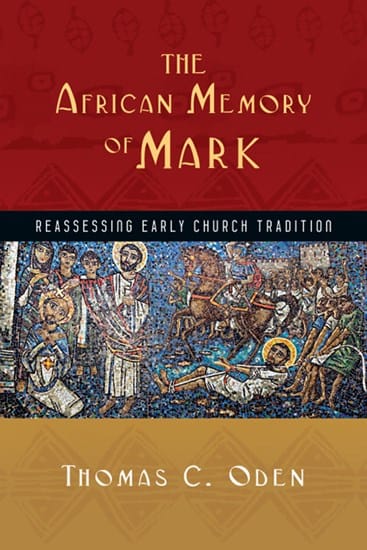
When Paul and Barnabas were sent out from Antioch on their first missionary journey, they brought Mark along as a helper.2 As Barnabas’s cousin, he was a natural choice. Unfortunately, his first outing didn’t last long. Just six verses into the effort, he abandoned the mission and returned home. And yet, that was not the end of his Kingdom service.
Later in life, Mark would accompany Barnabas on further missionary endeavors across Asia, walk alongside Peter to record his gospel, and ultimately establish the Church in Alexandria, where he died a martyr. Around 828 AD, his body was reportedly taken from Alexandria and carried to Venice, Italy. His remains now rest in the tomb of a grand cathedral that bears his name to this day.3
If Oden’s theory is correct, then Mark is quite literally the African patron saint of the Eastern Mediterranean Route (EMR). That possibility alone makes me want to believe it—and I’ll probably hold onto that view until someone proves him wrong. But regardless of how much is legend and how much is fact, my admiration for African believers continues to grow with every encounter. Along the EMR, I have met men and women who have sacrificed everything for the sake of the gospel and given their lives in service to Christ and His people.
This post is a tribute these incredible servants.
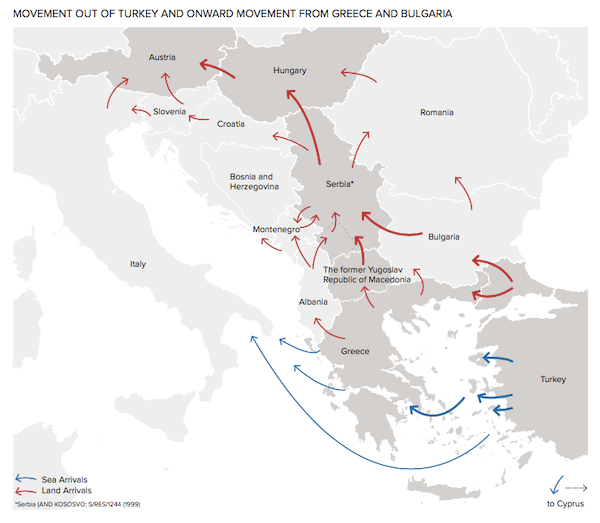
The Amazing Presence of Immigrant Churches along the EMR
Before we jump into today’s story, it’s helpful to understand the broader context of churches in the diaspora.
The first group includes what are often called national or indigenous churches. These are just what they sound like… Turkish churches in Turkey, Greek churches in Greece, and Croatian churches in Croatia. Native born people lead them, and their primary membership base consists of nationals.
Then there are international churches. These are typically expat fellowships led by expat pastors. They are a relatively new phenomenon, globally scattered, and often present at the invitation of their host countries. Historically, they were led by Western missionaries. Today, however, their leadership comes from around the world. We will take a closer look at both national and international churches in a future post.
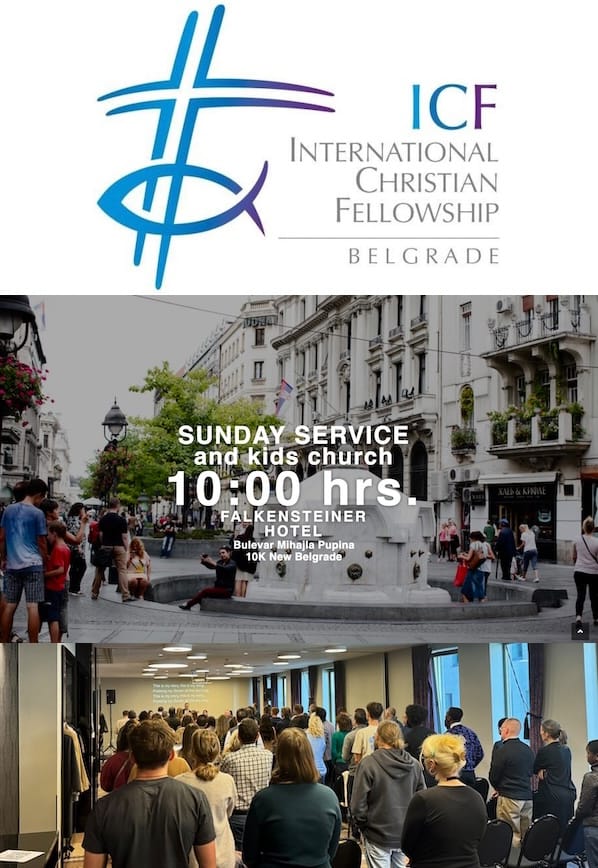
In today’s article, though, I want to turn our attention to immigrant churches—those that emerge from within the diaspora itself.
These churches generally come in two flavors. The first type is started by immigrant missionaries. You can find a wide variety of these across the Eastern Mediterranean Region (EMR): Korean, Filipino, and yes… African.
Africans are probably the largest group of immigrant churches in Europe.5
They often begin as homogeneous communities focused on reaching their own people. Over time, some begin to engage their neighbors, and their congregations grow more diverse. In general, however, first-generation churches tend to remain mono-ethnic fellowships.6 If you know of an African immigrant church in your city, there’s a good chance it fits this category.
The second type of immigrant church arises much more organically. Within every migrant community, you’ll find followers of Christ. Among Africans, they often form the majority.7 And when life gets challenging… which it frequently does in migration contexts… their faith tends to sharpen. Many young adults experience a spiritual awakening during these seasons. When no established church is available, these believers gather in homes, student housing, or any other suitable location to worship. Over time, some of these small, informal groups remain together long enough to become churches.
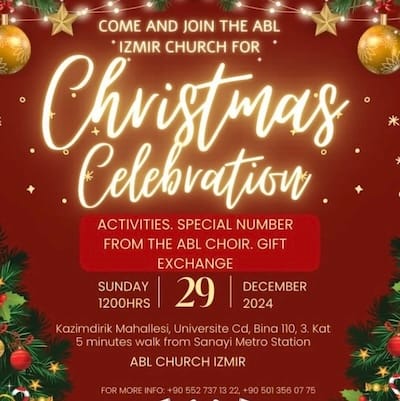
ABL Church — Izmir, Turkey
Among the many immigrant churches in Turkey, the ABL Church in Izmir stands out as a remarkable example of faith, leadership, and transformation. This fellowship began over a decade ago among African university students and has since grown into a vibrant, multi-ethnic community that continues to focus on serving students.
Pastor George has faithfully shepherded the Church for many years. He arrived in Turkey with pastoral experience, studied alongside his members, and earned an impeccable reputation in the local community. Under his guidance, the Church has firmly established its presence in Izmir and opened doors of opportunity throughout the region.
One Sunday, I recall having a conversation with Pastor George that left a lasting impression on me. He spoke about the deep sense of responsibility he feels—not just to the students themselves but also to the parents who have entrusted him with their children’s growth and well-being.
In a place like Turkey, far from home, distractions are plentiful. Many students are drawn into nightlife or other temptations. At one point, some are even enticed by the prospect of making quick money by referring fellow Africans in Nigeria to local smugglers... a dangerous and heartbreaking path.
But Pastor George remains vigilant. He keeps a close watch over his congregation and does not allow such distractions to gain ground. He consistently reminds his members that the Lord has granted them a tremendous opportunity: to study, to grow in their faith, and to become godly men and women. Whether they remain in Turkey or return home to Africa, they are called to be productive, faithful contributors to society.
Witnessing Pastor George’s unwavering commitment to his congregation continues to shape my understanding of what it means to lead with integrity, compassion, and purpose.
Student-Led Church — Famagusta, Cyprus
Northern Cyprus is one of those places where African migrants often arrive, but rarely intend to stay. For many, it’s just a stopover on a longer journey: a transition point to Southern Cyprus, which is itself seen as a potential springboard into mainland Europe. Some enter through legitimate universities; others are funneled through fake institutions that simply serve as visa pipelines. As noted in a previous post, the route from Africa to Turkey to Cyprus… and then hopefully to Europe… is often a heartbreaking dead end, leaving many migrants stranded.8
It may be relatively easy to arrive on the island, but leaving is a different story. In the North, survival often pushes people toward crime. In the South, desperation is common, and poverty abounds.
And yet—God is at work on the island.
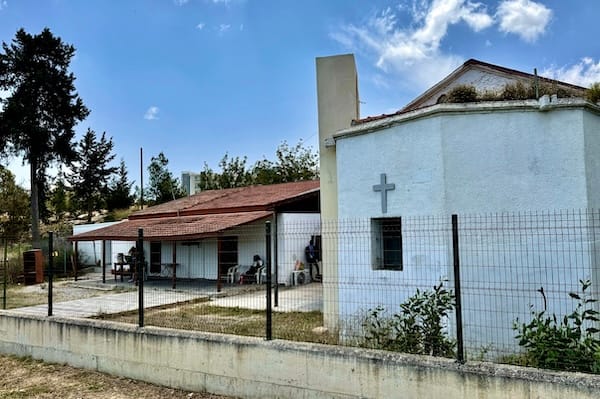
In Famagusta, Eastern Mediterranean University stands out as one of the legitimate institutions, offering a solid education to international students. Together with local community leaders and a nearby international church, they recognized a vital need: Christian students needed a place to worship... a space where they could stay grounded, build community, and avoid the pitfalls that come with isolation.
An old building on campus was set aside for this purpose. It’s nothing fancy, but the students have made it their own, and they've turned it into something extraordinary.
Today, that structure hosts about a dozen small ethnic congregations, each meeting at different times throughout the week. The students coordinate schedules to ensure everyone has space to worship. Many of them have stepped into leadership, becoming pastors of their small congregations… shepherding fellow students through both spiritual growth and the everyday challenges of life in a foreign land.
What's unfolding here is remarkable, especially in a predominantly Muslim region. The international church continues to walk alongside these young leaders, mentoring and encouraging them in their calling. The result is a vibrant, student-led movement where faith is growing, lives are being transformed, and others are being led to Christ.
RCCG House of His Glory — Thessaloniki, Greece
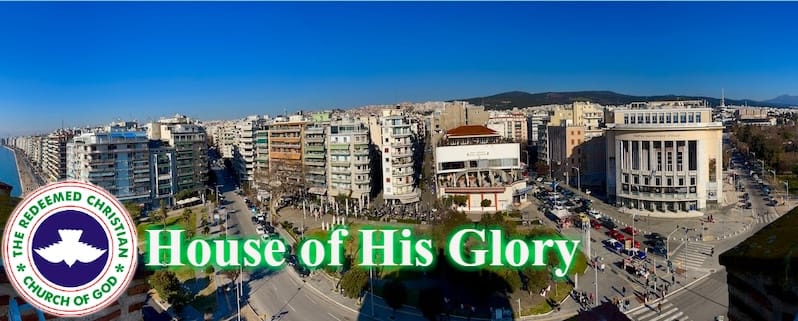
As one might expect, Northern Greece serves as a primary corridor for migrants crossing from Turkey into Europe via the Balkans. Just south of the Bulgarian and North Macedonian border lies the city of Thessaloniki. It is here that Pastor Celestine planted his church many years ago.
Sent out of Nigeria by the Redeemed Christian Church of God, Pastor Celestine followed a call shared by many African immigrant pastors: to carve out a spiritual home in a foreign land. He had to find his footing, establish a congregation from scratch, and remain faithful through seasons of uncertainty. He witnessed the mass wave of migration that swept into Greece in 2015. Since then, hundreds, if not thousands, have passed through his church doors. Throughout it all, he has remained steadfast.
Over dinner with Pastor Celestine and his wife, we listened as he poured out his heart for the migrants. He told story after story of how their church had embraced these young men and women... helping them find jobs, secure places to live, and adjust to Greek culture and society. He shared the joy of watching many come to faith. And he spoke, eyes brimming with tears, of the heartbreak of watching the church grow rapidly, only to see it hollowed out as entire groups, sometimes a hundred at a time, moved on in search of life further north.
Yet one thing was clear: this church, House of His Glory, was not going anywhere.
Rooted in love and perseverance, it remains a constant in the lives of those in transition — a place of welcome, community, and unwavering faith in the midst of movement.
Migrant Church — Lesvos, Greece
In the early days of the migrant crisis, I had the privilege of meeting a remarkable young African pastor named Michael in Athens. He had arrived as a migrant himself, slowly adapting to Greek culture and eventually gaining residency. Michael had a heart for the Lord and was powerfully used to uplift and mentor other young pastors in the migrant camps. With Michael as my guide, we took a few days to travel to the island of Lesvos, just off the Turkish coast.
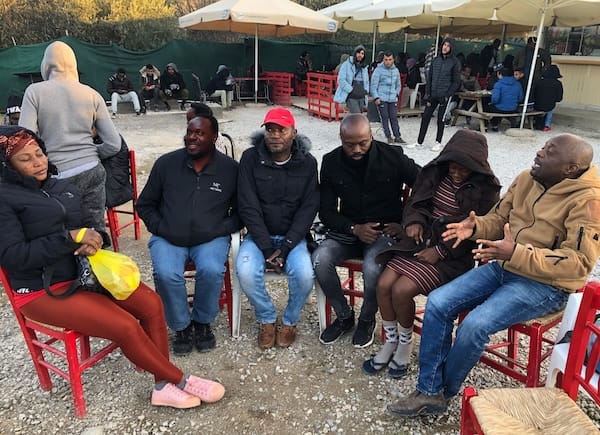
It was there that I met Pastor Joseph and his wife. Formerly a pastor in West Africa, Joseph had made the difficult decision to pursue a new life in Europe. Like so many others, they bought passage on a small boat and crossed from the Turkish town of Dikili to Lesvos. Upon arrival, they were registered and sent to the notorious Moria refugee camp.
Originally built to house 3,000 people, Moria was holding over 20,000 men, women, and children when we visited.
The conditions were appalling. There was no running water, no clean toilets, and no safe showering facilities. People cooked in makeshift tents using food purchased from tiny shops around the perimeter of the camp. Ethnic violence was rampant. In the absence of formal protection, many groups formed their own security teams to safeguard women and children. Most didn’t know how long they would be stuck there. Some had already endured over a year of uncertainty. It was a place heavy with hopelessness and despair.
And yet, it was in that place that Joseph and his wife began to lead prayer and worship gatherings. Joseph told me he hadn’t expected God to call him back into ministry… especially not there, not in a refugee camp. But he saw the pain around him and knew people needed a shepherd. He could do no less.
I could tell stories like this from Athens, Istanbul, Albania, Serbia, Croatia, and even Italy. Across Europe, African migrants are on the move… and wherever they land, they plant churches. To some, their presence might seem incidental. But nothing could be further from the truth.
God is clearly at work among sub-Saharan migrants. Many come from places steeped in deep Christian faith, and they carry that faith with them. Along their journey, they encounter people of different religions and pass through regions devoid of hope or belief. Their faith becomes both anchor and mission. Their numbers are not small, and their resolve is strong. They intentionally serve others, often at great personal cost.
They are a force… one that must be acknowledged, encouraged, and lifted up in our daily prayers.
Powerful Potential
I told someone recently, “I haven’t been everywhere… but everywhere I’ve been, I’ve found immigrant churches.”
After visiting over forty countries, I can still say this with confidence.
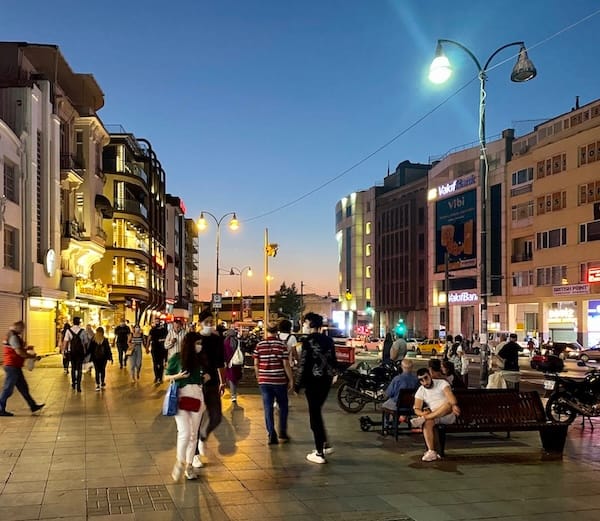
Consider this: there are more than 500 million documented migrants in the world today; many believe the true number is closer to one billion. That means roughly one in every eight people on the planet is currently on the move.
Now, imagine that just a quarter of those migrants identify as Christians. And let’s say that only a tenth of them are actively living out their faith. That would still leave us with 25 million believers—scattered across the globe, moving through cities and across borders, ready to be used by God.
For perspective, a recent study estimated that approximately 500,000 people worldwide self-identify as missionaries.9 Compared to the 25 million migrant believers, that's just 2%.
In other words, there is enormous, untapped potential within the global migrant community; potential that may already exceed the reach of the traditional missions movement.
So what if we began to see migrant believers not just as people in need of help, but as people uniquely positioned to bring help?
What if the churches in their home countries intentionally discipled and equipped them before they ever boarded a plane, bus, or boat?
What if the churches in their destination countries welcomed and empowered them, seeing their arrival as an opportunity rather than an interruption?
What if the global Church took seriously the task of connecting these believers—building networks of support, discipleship, and mission so that faith doesn’t have to get lost in transition?
What if God is already on the move… through people who are on the move?
What if…?
Conclusion
We don’t know why Mark deserted Paul and Barnabas on their first missionary journey. Maybe he was young, spiritually immature, and unprepared for the hardships. Perhaps there was tension between him and Paul that couldn’t be resolved. It’s possible that the road ahead looked very different from what he had imagined, and the life of an itinerant missionary simply overwhelmed him.
On this side of heaven, we may never know the reason.
What we do know is that Mark didn’t stay on the sidelines forever. Eventually, he would trade the comforts of life in Jerusalem for the rigors of Kingdom service. He would come to understand what it meant to wander, to sacrifice, to suffer... and to be used by God to spread the gospel across the Mediterranean world. Mark would become, in many ways, an immigrant pastor. And through his ministry, the lives of millions would be changed over the next two thousand years.
Even Paul, watching from a distance, would eventually change his mind about the young man he once doubted:
Only Luke is with me. Get Mark and bring him with you, for he is useful to me in ministry. — 2 Timothy 4:11
Whenever I have the privilege of visiting immigrant churches, I’m often asked to bring a greeting. When I stand before them, I usually share Paul’s words from 1 Corinthians 16:19: “The churches of Asia greet you.” Then I tell them of the churches I’ve visited—scattered across the world, yet united in purpose—and I remind them they are not alone.
I bring them greetings… and then I ask if I may carry their greetings to the churches I’ll visit next. The joy this simple exchange brings is extraordinary. There is something sacred about knowing—and being known—by the global Body of Christ.
So as you read this post, I bring you greetings from the immigrant churches of Asia.
May you know that they are real, they are faithful, and they are praying for you.
1 Thomas C. Oden, The African Memory of Mark: Reassessing Early Church Tradition (Downers Grove, Ill.: IVP Academic, 2011).
2 Acts 13:1-6 NASB
3 "St. Mark the Evangelist: Theft", Basilica di San Marco http://www.basilicasanmarco.it/storia-e-societa/san-marco-evangelista/il-trafugamento/?lang=en (accessed April 6, 2025).
4 Alan Meban, "UNHCR Report on Desperate Journeys", Focus on Refugees https://focusonrefugees.org/unhcr-report-on-desperate-journeys/ (accessed April 6, 2025).
5 Jehu Hanciles, Beyond Christendom: Globalization, African Migration, and the Transformation of the West (Maryknoll: Orbis Books, 2008), 220-225. See also Afeosemime U. Adogame, "The African Christian Diaspora: New Currents and Emerging Trends in World Christianity," (London ; New York: Bloomsbury,, 2015). This entire edited volume gives incredible insight into African presence in Europe prior to the crisis of 2015.
6 Harvey Kwiyani, "Blessed Reflex: African Christians in Europe," Missio Africanus: The Journal of African Missiology 3, no. 1 (2017).
7 Stephanie Kramer and Yunping Ong, The Religious Composition of the World’s Migrants (Pew Research Center, 2024), 14, 42.
8 M. Augustus Hamilton, "Northern Cyprus: Beyond Appearances", M2M3 https://m2m3.org/blog/81-northern-cyprus-beyond-appearances/ (accessed April 6, 2025).
9 Matthew Niermann, State of the Great Commission: A Report on the Current + Future State (Lausanne, 2024), 15.