91 - European Church in Need
2025 No 91
So Boaz took Ruth, and she became his wife, and he went in to her. And the LORD enabled her to conceive, and she gave birth to a son. —Ruth 4:13
In our last post, we shared stories of how immigrants are forming churches along the Eastern Mediterranean Route. Many will make it to Europe and settle near European national churches. They stand at her doors, just as they stand at yours, longing for the "right hand of fellowship" (Galatians 2:9).
Today, we’ll explore how European national churches are facing these challenges, and in many cases strengthened, by those on the move.
The Challenge Faced by the National Churches
The local church, led by local pastors, is facing unprecedented challenges in Europe. According to projections, the Christian population is expected to decline by 20% by the year 2050.1 In many respects, the region has been in spiritual decline since the aftermath of World War II. Even more concerning than the loss of church members is the growing secularization of Christianity. A recent Pew Research study found that most Europeans who identify as Christian are "non-practicing" and only about one in four believe in God as described in the Bible.2 Other research suggests that, out of every one hundred European citizens, only two may be true believers.3 In Germany alone, an estimated 10,000 churches are expected to close in the coming decade.4 In France, the laws enforcing laïcité, or secularism, restrict Christian expression more than in most Islamic countries.
But does this mean Christianity is dead in Europe?
Far from it.
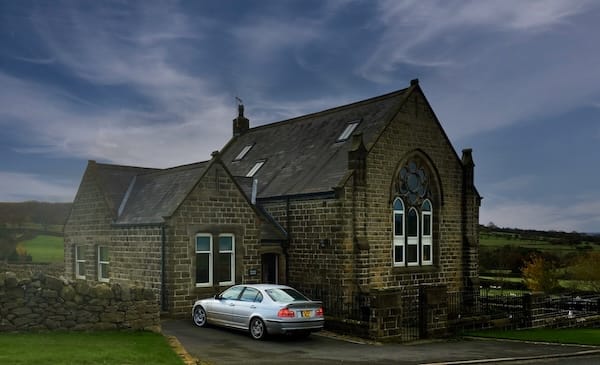
Signs of renewal are emerging across the continent. People are coming to faith, and the Church, Christ’s Bride, is beginning to stir.5 While many have labeled Europe as “post-Christian,” Christianity Today reports that it may actually be “pre-revival.”6 God is moving in the heartland of Western Christianity, and His presence can be felt in churches, both large and small. Jim Memory of the Lausanne Movement has documented much of this reawakening.7 He points to three significant trends contributing to the shift:
- Church Planting: The National Council of French Evangelicals has set a bold goal: one church for every 10,000 people. They’re currently planting at a pace of one per week. Other organizations across Europe are pursuing similar efforts with remarkable success.
- A Renewed Focus on the Next Generation: Between the long-term effects of secularism, the disillusionment caused by COVID-19, and failed political systems, Europe’s youth are searching for more than just economic or social solutions. Many are turning to faith. Youth groups are growing, even in traditionally stagnant churches. As a globally connected generation, these digital natives draw inspiration from Christian movements around the world and bring that hope into their own communities.
- Diaspora Churches: While some still question their capacity to endure beyond their first generation, these churches are undeniably active in society and making a significant impact in their host nations.8
Ironically, the greatest challenge facing Europe’s national churches is that they are, by nature, national in their orientation. Their members are mostly indigenous citizens, French, Dutch, German, etc. This isn’t inherently negative, but it does pose a limitation. Many churches genuinely want to reach their immigrant neighbors with the gospel of Christ.
The challenge is, they often don’t know how.
The Isolation Faced by the Immigrant Churches
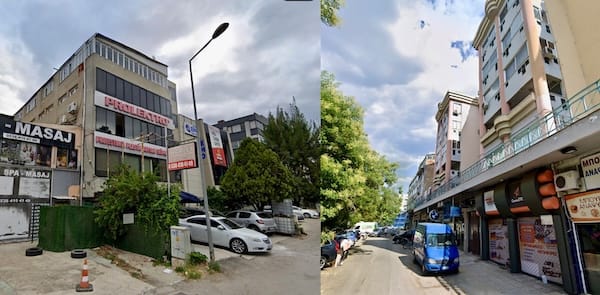
Immigrant churches can be found across Europe, but many don’t see them because they don’t know where to look. In almost any large city, Catholic churches are easy to spot; their cathedrals rise proudly above the skyline. National churches are well-marked on Google Maps, registered with the government, and anchored in the community with a visible presence. Evangelical churches can be found online, presented with digital clarity for seekers to discover.
Immigrant churches, however, are different. Most are small, often meeting in apartments. Those that grow may manage to rent a gathering space, but they rarely own the building where they hold services. But... once they move into the public arena... they must then register with the government... and follow their rules.
These churches are typically ethnic in orientation and are not usually sought by those outside of their communities. They grow organically through internal relationships and word of mouth, rather than relying on external signage. (You cannot hang a sign if you are not registered with the government!) Some do utilize modern tools for promotion, but most don’t require them. In our fieldwork, we often locate immigrant churches through social media, referrals at African restaurants, or simply by walking through neighborhoods and listening for songs of worship drifting through open windows.
Once inside, you’ll experience what Africans do best: extend hospitality. You will also encounter what Christians do best: share love. African immigrant churches see the role of the church differently than many of their Western counterparts. For members of the diaspora, the church serves as a sanctuary of safety, a haven for healing, and a family table where meals are shared. These needs aren’t as prominent for national churches, where individuals already have a place in the culture. But for strangers in a foreign land, these components are essential for survival.
Similarly, African pastors carry a deep love for their communities and a strong sense of responsibility to share the gospel with their national neighbors. Their approach, however, is distinct. Rather than inviting the community in, they send their people out. Members go to school with nationals, rent from nationals, and often work for nationals. The impact of these believers on the broader society is significant. If you visit one of these churches… you’ll see diversity. Many non-Africans attend simply because someone invited them, and once inside, they are welcomed like family. My wife and I have experienced this kind of love many times.
Immigrant churches are typically planted in one of two ways. The first is through intentional church planting. African missionaries, mainly from Nigeria, Ghana, or Kenya, are sent to Europe to plant churches. They come from denominations such as the Redeemed Christian Church of God, the Church of Pentecost, or Aladura. Some grow large, but many intentionally stay small, planting new congregations as often as possible. This strategy is widespread in European places of destination.
In more transitional spaces, church planting often happens more organically. Christian migrants arriving in a city may begin to gather for worship. Among them, one is often called into leadership and gradually assumes a pastoral role. These churches, frequently birthed in university settings and migrant camps, can grow strong and remarkably diverse.
I’ve met many of these immigrant pastors in our work worldwide. They love the Lord, long to grow in faith and leadership, and deeply desire to see their communities come to Christ. And yet, nearly all of them feel isolated… strangers in a strange land. Because immigrant churches are often independent and disconnected from national churches, they struggle. When we come alongside them, something about grey hair and four decades of ministry experience captures their attention. Many are like wanderers in a desert, thirsty for encouragement. The question I hear most often is,
“How do I do this?”
The Opportunities Created Between the Two
These challenges create space for profound opportunity.
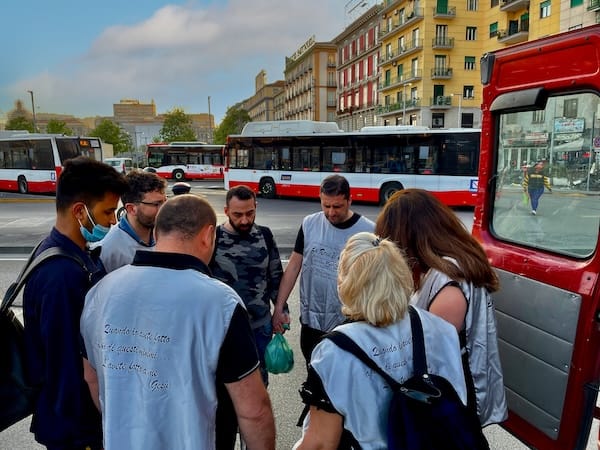
Let me share an example from a recent trip to Southern Europe. I was meeting with a group of Italian church leaders to discuss the growing diaspora in their community. These leaders love Christ and actively serve their neighbors by taking food into the streets each week to care for the most vulnerable among the new arrivals.
As we spoke, they began sharing the challenges of leading their churches amid rising political tension and growing prejudice against migrants. One Italian pastor said to me, “We know how to minister to Italians. We’ve done it for generations. But now, half our community is African. What we don’t know is how to lead our people to love their neighbors..."the ones they don’t know, don’t understand… maybe don’t even like."
It was a surreal moment. Why? Because I’d met with a group of African immigrant pastors in the same region just days earlier. They shared their own struggles in teaching their congregations. One said, “We know how to do African church and how to reach our neighbors. We grew up with it as children. But we don't live in Africa anymore. We live in a community... full of Italians! We are struggling to lead our people to love their neighbors... "the ones they don’t know, don’t understand… maybe don’t even like."
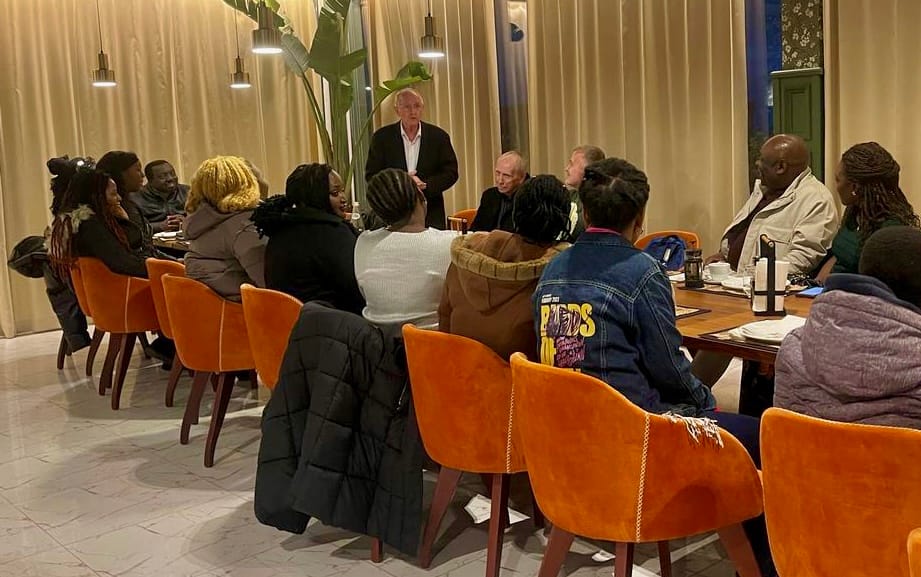
That’s when I realized my role wasn’t to be the instructor; I was to be the connector. These leaders didn’t need more information, they needed each other. They needed to sit at the same table, ask the same questions, and recognize each other for what they truly are: brothers in Christ, fellow shepherds in the same Kingdom.
Conclusion
It’s rare to meet someone who is truly against immigration. Perhaps that’s because, in some way, we are all immigrants.
Most of our movements…geographical, professional, or personal… have been driven by opportunity. We left our parents' homes for school or our first jobs. We moved again as our work and lives evolved. While many eventually settle and become long-term residents in a particular place, we live with the understanding that life is fluid, and change is inevitable. For most, the goal is to transition from "where we were" to "where we are" with as little disruption as possible. And once we arrive, we begin the process of assimilation.
Wouldn't it be nice if the burden of assimilation fell on the national churches? Immigrant churches cannot force their way into the cultural fabric of Europe, just as Ruth could not force herself into the heart of Bethlehem. What’s needed is a bridge, an intermediary, a person who understands both worlds and is willing to take a risk.
One can only imagine the challenges this young Moabite widow faced when she arrived in Bethlehem. She had to navigate a new culture, a new language, and the weight of open prejudice. And yet, God honored this remarkable woman—blessing her with a local husband and a child who would become part of Israel’s royal lineage. Ruth’s story is not just a testament to her faith and resilience, but also to God’s faithfulness. And while we often focus on Ruth herself, there is much to learn from the community that received her.
I encourage you to read this short but profound book near the beginning of the Old Testament. Pay close attention to how the people of Bethlehem responded to her presence.
It’s also worth remembering that Boaz, Ruth’s husband, wasn’t your average Israelite. He was the son of Rahab, the prostitute from Jericho who faced her own journey of assimilation into God’s people.9 Boaz knew what it meant to be an outsider. But he had earned a place in the community and used his position to help Ruth find a home... and a future... among God's people. No doubt, Rahab would have been proud of the role her son played in welcoming Ruth.
Revival is stirring in Europe. The diaspora will play a vital role in this. What the Church needs today are modern-day Boazes—people who will stand in the gap, take risks, and become catalysts in the redemptive story God is writing across the continent.
1 The Future of World Religions: Population Growth Projections, 2010-2050, (Washington DC: Pew Research Center, 2015), 60.
2Naha Sahgal, "10 Key Findings About Religion in Western Europe", Pew Research Center https://www.pewresearch.org/short-reads/2018/05/29/10-key-findings-about-religion-in-western-europe/ (accessed April 7, 2025).
3 Andrew Birch, "Europe Needs the Gospel," Evangelical Magazine, 2021, 12.
4 "Germany: 10,000 Catholic and Protestant Temples Expected to Close in Next Decade", Evangelical Focus https://evangelicalfocus.com/europe/28283/germany-10000-catholic-and-protestant-temples-expected-to-close-in-next-decade (accessed April 7, 2025).
5 Adele Cardin, "The Resurrection of Faith: Europe’s Christian Revival Defies Expectations in 2024", The Rio Times https://www.riotimesonline.com/the-resurrection-of-faith-europes-christian-revival-defies-expectations-in-2024/ (accessed April 7, 2025).
6 Sarah Breuel, "Is Europe Post-Christian or Pre-Revival", Christianity Today https://www.christianitytoday.com/2022/12/europe-revival-post-christian-continent-prayer-church-diasp/ (accessed April 7, 2025).
7 Jim Memory, "The Extraordinary Re-Evangelization of Europe", Lausanne Movement https://lausanne.org/about/blog/the-extraordinary-re-evangelization-of-europe (accessed April 7, 2025).
8 Harvey Kwiyani, "Blessed Reflex: African Christians in Europe," Missio Africanus: The Journal of African Missiology 3, no. 1 (2017).
9 See Matthew 1:5-6