92 - EMR Summary Part 1 - Gospel Response to Movement Along the Eastern Mediterranean Route
Unseen Suffering – A Missiological Look at Irregular Migration
2025 No 92
The words of wise men are like goads, and masters of these collections are like well-driven nails; they are given by one Shepherd. But beyond this, my son, be warned: the writing of many books is endless, and excessive devotion to books is wearying to the body.
—Ecclesiastes 12:11–12
This series on the Eastern Mediterranean Route has now grown to over twenty-five posts. If compiled and edited for continuity, they would rival the length of a full book. And if you were reading such a book, you'd likely expect the author to guide you toward a “so what?” moment—a point of significance, clarity, or insight.
As I think about the passage above, Solomon had a good point. One can write at length… but without gaining wisdom, the effort becomes futile, if not outright exhausting. So, there's no pressure here!
People often ask what my wife and I do. We wear many hats, but the question usually centers on our research. Our elevator speech goes something like this:
“If you were a weatherman in central Florida during the 1950s, you could plan picnics with reasonable confidence. Experience and local knowledge helped predict rain, sun, and wind. And if you weren’t sure, you could always step outside. Fishermen relied on you. But your blind spot was hurricanes. Even the best weathermen couldn’t see them coming in time, and the consequences were often catastrophic.
That changed in 1960 with the advent of weather satellites. For the first time, meteorologists gained a global perspective. They could observe how storms formed and accurately predict their arrival. It changed everything.
In the same way, understanding the dynamics of human migration affects not just migrants but also the communities that receive them. There’s a field of anthropology that studies these impacts in depth. While that work is important, our focus is different. As a diaspora missiologist, my role is to process this information in a way that helps the local ‘weatherman’… ‘the pastor’… serve his community. His task is to shepherd the flock and equip them to engage their neighbors with the gospel.”
I’d like to think we’ve learned a few things along the way. Let me share some of those insights, beginning with two broad categories: irregular migration and legal pathways. It will take two posts to work through them, so let’s begin with the former…
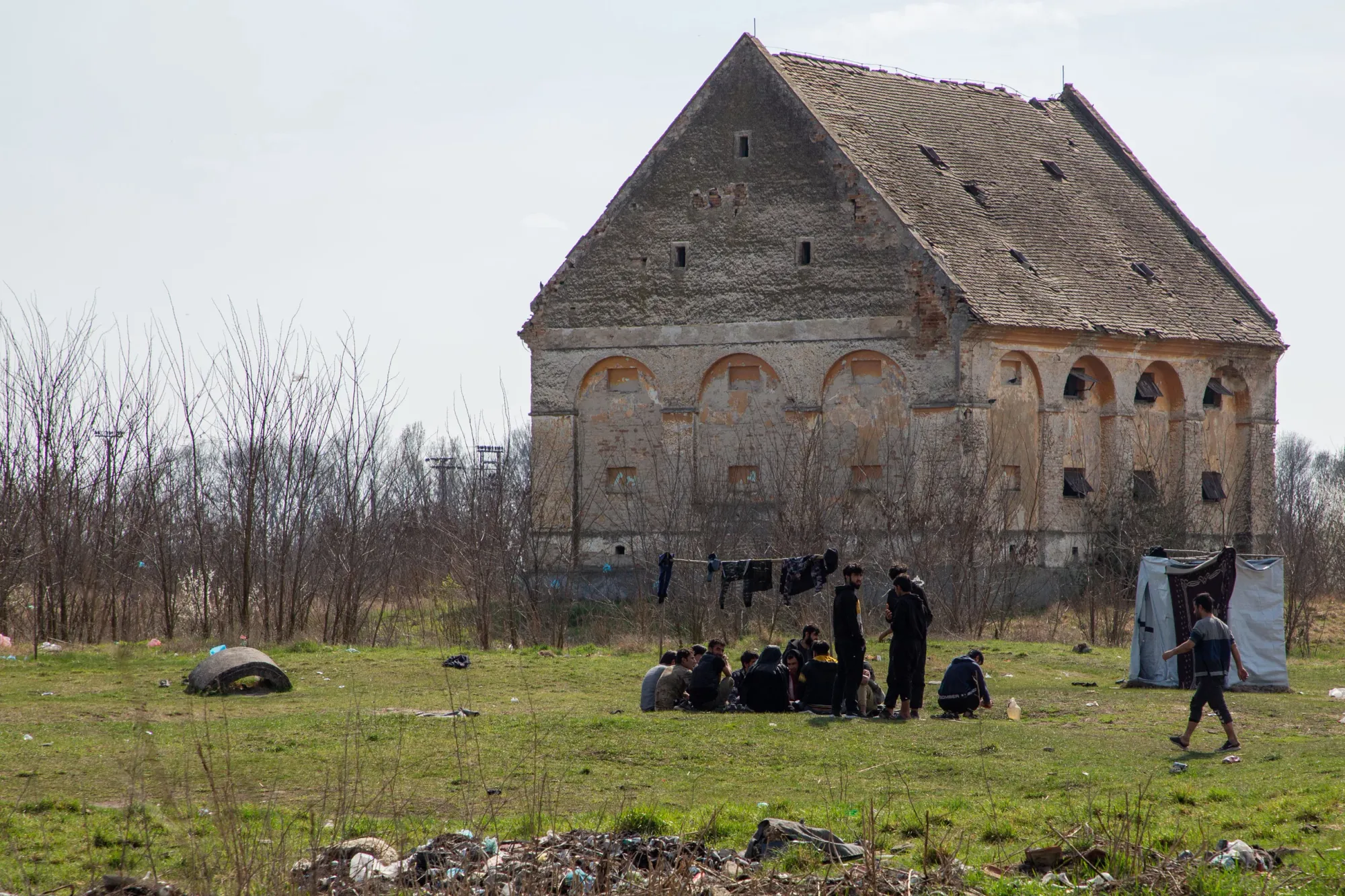
Most sub-Saharan Africans on the EMR would prefer to migrate legally if given the chance. Money is not their challenge. Although their costs would be significantly lower if they could follow regular pathways, not everyone has that option. Therefore, they fly to an EU border country where they can obtain a visa, such as Turkey. It is there that their movements begin to follow clandestine routes. Our fieldwork among those routes made three themes especially clear.
First - The Role of Missiological Research
Returning to the hurricane metaphor, it's evident that many factors drive migration… and they're constantly shifting. Scholars often describe migration in terms of "push and pull" dynamics. Conflict, food insecurity, and poverty are strong push factors. At the same time, globalization has heightened world awareness. A smartphone can show you what life looks like "over there," making the pull factor more immediate and personal. There has never been a time when the motivation and pressure to migrate have been higher. So, who has their hand on the valve?
The most decisive influence on migration patterns is government policy.
Migration tends to follow the path of least resistance. International agreements dictate border controls. Corruption and lack of prosecution shape the operations of smuggling networks. Migrants rarely move alone. “Travel agents” are always involved, whether informal local facilitators or well-organized international mafias. But even these actors operate within the boundaries set by national and regional policies. In the same way that the winds and ocean currents steer hurricanes, migration along the EMR is shaped mainly by politics, particularly those of the European Union and Turkey.
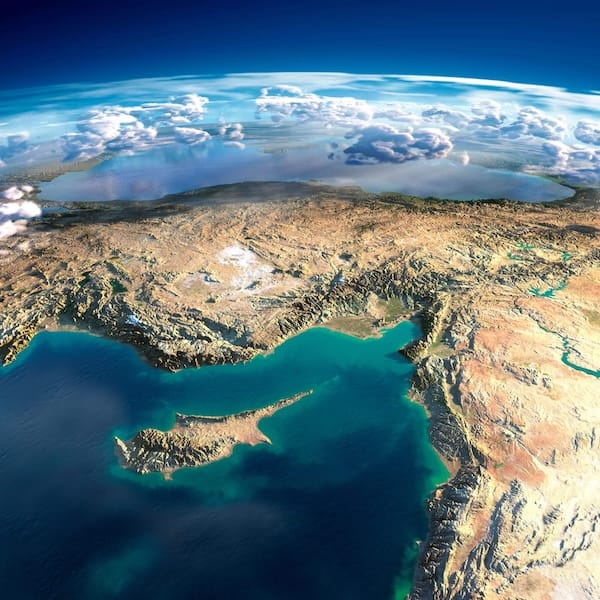
Our aim in field research has been to maintain a high-level view to get above the local conditions and observe broader trends. This vantage point has allowed us to document key influences on sub-Saharan migration: where it starts, how it flows, and where it often stalls. At times, we’ve even flown into the eye of the storm… meeting with pastors and diaspora practitioners on the ground, learning from their experiences, and bringing those insights back into the larger study.
This level of research is critical as churches, mission agencies, and those in the academy seek to understand how and why people are moving. It is their task to engage this world with the gospel. Our current strategies are proving to overlook this population completely.
I will leave it to others to judge the quality of our work with M2M3… but it is essential that we raise a generation of diaspora missiological researchers to shed light on these issues.
Second - The Impact on Human Lives
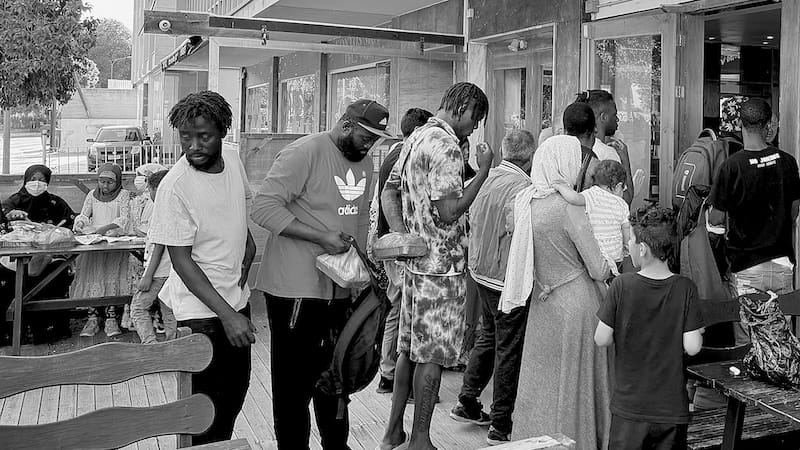
From a distance, it’s easy to urge people to “migrate legally.” But for many, that simply isn’t an option. The reality is stark: poor people don’t migrate—at least not far. They tend to suffer at home. Those who move across borders typically have access to some resources, and someone is always willing to help… for a price.
Human smuggling is a highly profitable industry, with well-established international networks designed to exploit the hopes and vulnerabilities of migrants. In nearly every case, people become commodities. Once the money changes hands, their health and safety become an afterthought.
No one begins a migration journey planning to become a victim.
Yet the suffering and loss of life along irregular pathways is staggering. We hear the stories of those rescued from boats and their accounts of those who didn’t survive the journey. We know of those who perished in the desert. But we don’t know anything of the countless others who departed unnoticed from African shores and never arrived.
We hear of the tens of thousands who reach Europe and claim asylum, but few speak of the hundreds of thousands stranded in transition countries… stuck, stateless, and impoverished.
While billions of dollars flow to smugglers each year, we forget where that money comes from: families who sell their farms and communities who empty their savings, all in pursuit of a better life. The impact is not only human suffering and loss of life; it is economic devastation on a staggering scale. The shame such brings on those who tried and failed is unimaginable.
There’s a region between Africa and the Americas where hurricanes often form. Some become massive storms. Tracking their movement is essential to protect the places where they land in the West. But their effects are felt far beyond those points. Low pressure and high winds can push water across vast distances, creating tidal fluctuations and storm surges far from the eye of the storm.
Irregular migration is much the same. It cannot be viewed as “someone else’s problem.” It has ripple effects that reach us all.
A common belief is: “If you tell people how dangerous it is, they won’t go.” That’s a myth. For every hundred stories of death, loss, and despair, there’s one viral post on social media that tells a story of success. And that’s enough. If even one person from a village makes it, the risk seems justified to others. It’s like a lottery. People fantasize about winning despite the odds being millions to one. And like lottery ads, the promises of quick transit and easy jobs can overpower caution and good judgment.
As followers of Christ, we cannot ignore the suffering. And yet, as many Africans hear only what they want to hear, so does much of the Western Church.
I lived in that kind of security for many years—comfortable, detached, shielded. But after a decade in the field, I can no longer unsee what I’ve seen. I’ve looked across the waters. I’ve seen the boats and the people. And I cannot deny this: people are dying—hour by hour, day after day.
Now, every time I eat a strawberry, an orange, or an olive, I’m reminded: this fruit was picked by hands that likely belonged to a laborer who was exploited, someone moved by smugglers and trapped in systems that profit from pain.
My prayer is that this series has done the same for you—not just informed you, but stirred something deeper. I pray it’s helped you see.
Third - The Capacity to Make a Difference
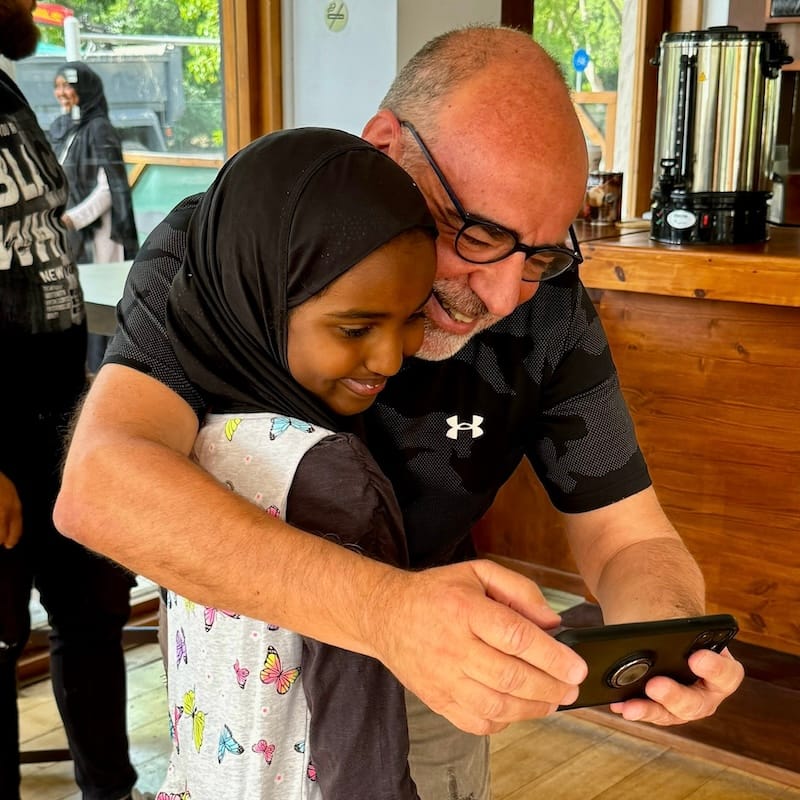
Despite the harsh realities, the body of Christ has the capacity to make a meaningful difference. You are part of this story. As the church, we are not peripheral observers—we are positioned by God. Local churches are present at every stage of migration: in the places people leave, the places they pass through, and the places where they arrive. Many migrants are believers themselves. This means the Spirit of God is present on every bus crossing a border, every pickup traversing the Sahara, and every boat braving the Mediterranean.
These churches and believers face serious challenges of their own, but their presence creates points of access for God to work. And He is working.
It also creates opportunities for the global church to engage. In the West, nearly every major faith group has developed programs for humanitarian aid. When natural disasters strike, they mobilize by bringing food, shelter, and hope to those in need. Many of these groups work through local churches, equipping them to serve their communities effectively.
The same potential exists along irregular migration routes. Faith-based organizations have already become essential support systems in many diaspora contexts. They are present in refugee camps and serving asylum seekers across Europe. But more can be done.
Access to stranded migrants in North Africa may be limited, but supporting the churches already there is well within reach. Strategic entry points like Italy, Greece, and the Balkans offer tangible opportunities to provide care and show Christ's love. The churches in those locations labor to care for their needs, but many do so in isolation, without any external support.
We would be remiss not to lift these churches and their pastors to the Lord in our prayers. They have labored for years, giving their all to the task. We need to see more than their context, we need to hear their hearts. To those of you reading this blog on the frontlines… you don’t need to be convicted… you just need to know that you are not alone.
While migration may be a choice, no one chooses to suffer, be abused, or be exploited. It is the government's job to secure borders and prosecute smugglers. But it is our job to love our neighbor. It is our responsibility to be Christ's hands and feet to those for whom He died. Our journey along the EMR has shown us how the global Church can come alongside those in such need—not just with resources but with presence.
It’s worth remembering: movement increases spiritual receptivity.
When Christians and non-Christians journey together… especially through hardship… it opens doors for witness. Even a young believer carries the light of Christ, and that light shines brightest in dark places. The persistent prayer for God’s mercy in the back of a pickup in the middle of the Sahara Desert avails much.
Churches engaging these migrant communities consistently report a hunger for hope and something eternal. Many are coming to faith. Know that our ability to make a difference extends beyond just prayer. We can support these churches through presence, compassion, and bold witness as they meet their deepest spiritual needs.

Conclusion: Goaded into Action
Solomon once said, “The words of the wise are like goads…” (Ecclesiastes 12:11). Goads were sharp sticks used to prod animals forward—uncomfortable, even painful, but necessary to provoke movement.
It’s a hard image to embrace, but it’s fitting.
If this series on the Eastern Mediterranean Route felt long or even wearying at times, I understand. But I pray that somewhere along the way, something pierced through—something that goaded you gently but firmly out of your comfort zone.
And now, I want to ask three things of you:
First…Pray
Pray that God would stem the tide of irregular migration by guiding pastors and churches in places of origin to speak truth to the next generation.
Pray that those who cannot be dissuaded would at least leave with a secure foundation in Christ, and the spiritual maturity to seek Him along the way.
Pray that those who survive the journey will find a church waiting for them at the end.
And pray that He may sustain and hold dear those who will suffer and die along the way. May the light of Christ shine brightly within all who know His love, and carry His Spirit.
Second… Get Involved
There is real work to be done in diaspora missions. Don’t stop at prayer—partner with those on the front lines. You likely know someone working in this space or connected to a mission agency that could use your support.
You can also support our work by subscribing to these posts and by sharing them with others.
Third… Pay Attention
Most of you will never directly engage with irregular migration—and truthfully, I encourage you not to do so alone. Work through your church. Partner with trusted ministries. Doing the right thing the wrong way helps no one.
But here’s what you can do on your own: pay attention to those already around you.
You don’t have to cross a desert or board a boat to meet a migrant. Legal migrants live in your neighborhood, shop at your stores, and walk your sidewalks.
We will talk about them in our next post, but for now…
…I ask that you go out and greet your neighbors.