93 - EMR Summary Part 2- Gospel Response to Movement Along the Eastern Mediterranean Route
Sent to the Nations – The Diaspora Model of Mission
2025 No 93
The God who made the world and all things in it… made from one man every nation of mankind to live on all the face of the earth, having determined their appointed times and the boundaries of their habitation, that they would seek God, if perhaps they might grope for Him and find Him.
—Acts 17:24-27
Over the past 18 months, our focus has been on the clandestine movements of sub-Saharan migrants to and through the Eastern Mediterranean Route (EMR). But in doing so, we’ve nearly overlooked another group: those who arrived through legal channels—by air, with passports, visas, and invitations in hand. Many are followers of Christ, allowing Him to direct their pathways. Others will find Him along the way… as God moves them into relationships with people of faith.
These migrants aren’t just moving; they’re being moved.
I want to discuss these individuals in my final post on the EMR. We would be remiss not to tell their stories, see their pathways, and bring them to your attention. If you were a citizen in the region, they would be your neighbors, fellow students, and friends at church. They would tell their stories. They would also share about the grace of God. They recognize that it was He who facilitated their movements, and it is in His Spirit that they live and serve.
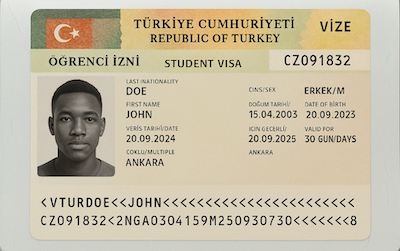
Legal Pathways Exist
In a world hyper-focused on irregular migration, we forget a vital truth: most nations welcome legal migrants. Globally, they make up over 80% of all movements. Along the EMR, Turkey received over 315,000 new immigrants in 2023. Many will join a pre-existing 300,000 foreign university students… 20% of them African.1 The Balkan states issued over 200,000 foreign work permits in the same period.2 Croatia alone anticipates a need for half a million foreign workers by 2030.3 They have already welcomed over 100,000.
This trend extends across Europe. France hosts some of the largest historic populations, drawing from their colonial connections to facilitate post-war reconstruction. In 2015, the number reportedly reached as high as three million.4 Germany hosts over 750,000.5 Across all of Europe, there are thought to be at least 10 million people of African descent.6
It is hard not to be impressed when you meet these young men and women. They are scholars, entrepreneurs, and leaders—the very best from their home countries. Legal migration requires determination. Competition for scholarships is stiff, and only those with good grades and solid reputations make the cut. Those who come as labor migrants must overcome significant obstacles not just to find jobs but to adjust to the rigors of international migration.
And yet, they come... in ever-growing numbers.
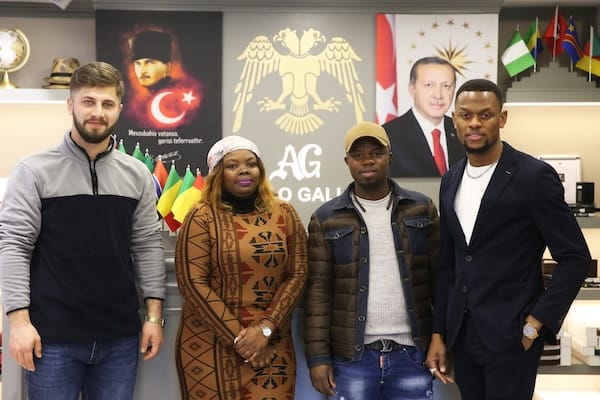
Many Migrants are Passionate Believers
Countries along the EMR actively seek English-speaking immigrants. Turkey is courting Africa’s Anglophone nations for economic access.8 Their point of entry is often through the educational system. Unlike the Sahel to the North, much of central and southern Africa has a significant Christian population.
Not surprisingly, many African students in Turkey are actively involved in their faith. The Balkans have focused on Asia, drawing nearly 85% of their workers from English-speaking areas.9 Our conversations with locals have indicated that the goal was to bring in temporary workers, thus shielding the culture from long-term social change. Once again, many of these laborers have strong Christian backgrounds.
Consequently, an interesting trend becomes evident. Christian migrants do what all believers do: they find ways to express their faith. On university campuses across Turkey, Christian students meet regularly, often forming small groups that blossom into churches. Many will accept professional posts. They then move to larger cities, such as Istanbul, and join existing churches.
In the Balkans, similar stories emerge: believers organize fellowships, share meals, and pray together. In time, these gatherings mature into vibrant churches, with members hearing the call to become residents and to serve in key leadership roles.
Where churches exist, they engage. Where they don’t, they create.
We should not underestimate these young believers. They are a powerful force. God is using them as they grow in their faith and discover their purpose in life. Being away from home and their historical church structures, they become increasingly ecumenical. These young believers can transition easily between theological traditions. As such, there is often a healthy blend between Liturgical, Evangelical, and Pentecostal expressions. Their gatherings tend to be multinational, dynamic, and appealing to non-believers.
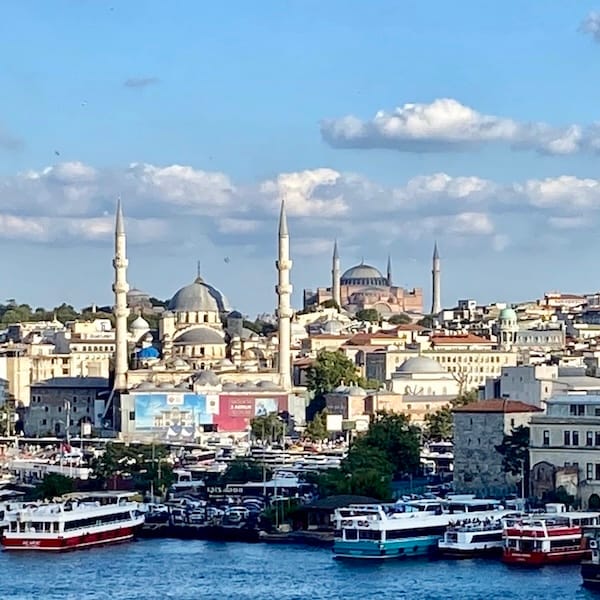
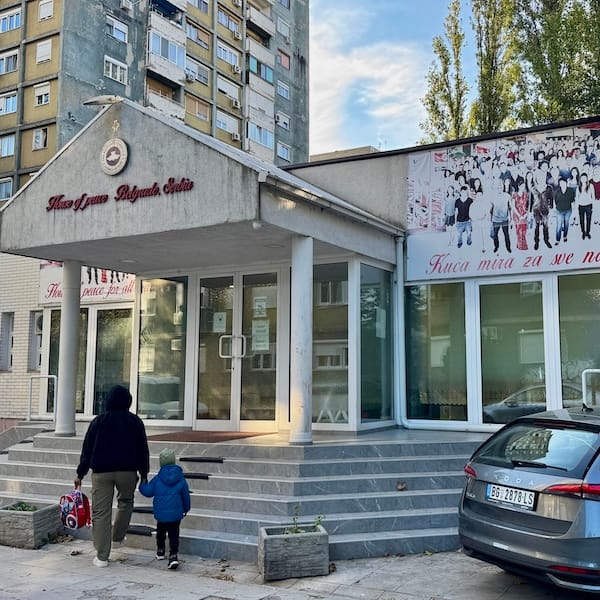
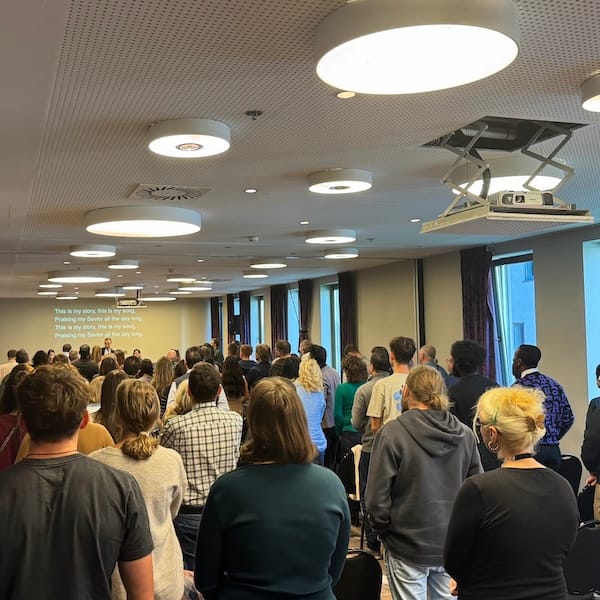
Change is Happening Along the EMR... Churches are Forming... People are Coming to Faith.
EMR Offers Fertile Soil for Evangelism
The Western Church sometimes struggles to imagine how God moves in regions like the EMR.
Previous studies have shown that people become more receptive to the gospel once they leave their place of origin.10 This is especially true among people of Muslim background. Dislocated from cultural norms and protective structures, migrants often explore faith in new ways. This is especially true for those from Muslim backgrounds.
Migration doesn’t just shift geography—it shifts openness.
What’s more, legal migrants enjoy a sense of stability. Free from the fear of apprehension, they can openly visit churches, meet for Bible Study, and even hold evangelism events. Because sharing faith between migrants is seldom legislated, there is an openness to not only tell, but to hear. Those who come to faith can organize and grow in ways that would not be possible back home.
Our fieldwork has also demonstrated that, due to their cultural diversity, migrants are well-positioned to engage and minister to those who are not present legally. They can do things that would be impossible for others. Trust among migrants is challenging to establish, but those from the same ethnic group and with a shared geographical history have a remarkable advantage.
If we believe Paul’s words above, we recognize that God has placed His people on migratory pathways so that they will encounter others without Christ. In those contexts, the gospel flows freely.
Having lived in the Islamic world, I can tell you how difficult it is to share the gospel. For those who come to Christ, there are serious social and, at times, legal consequences. Sharing one's faith can be a very risky endeavor. And yet, the rules seem to be different for those who come to faith outside their home country. Studying and working abroad fosters an openness to other cultures, if for no other reason than the need for survival.
Exposure to change often leads to change. Families back home may not like it, but they are often pressed to accept the transformation in return for the benefits of migration. As such, even a change of faith can become acceptable. After that, these believers find that they carry great influence, even in spiritual decisions.
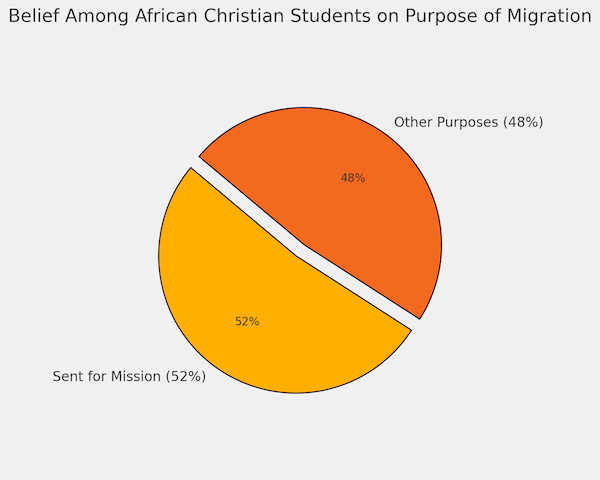
An Incredible Opportunity
Here’s what’s astonishing: more than half of African Christian students studying abroad believe they have been sent by God for mission, not just education.10 We’ve seen a similar story in the Filipino Church, which has long trained its people to enter global labor markets as tentmakers—witnesses through work. They’ve planted hundreds of churches this way.12
Recently, I wrote a five-part series on the issue of mobilization.13 My goal was to highlight this very point…
Migration isn’t just movement. It’s mission.
The African church is on the move. As such, they are probably fielding more missionaries than anyone has ever considered. And… it is nothing new. It has been God’s strategy ever since the Book of Acts.
To respond faithfully, three urgent steps emerge:
- Prepare potential migrants spiritually before they go. Just as we train missionaries, we must equip future migrants... students, workers, professionals... to see their journey as a divine assignment. When I say we, I do not mean the West. The African Church must begin preparing her flock for the day they send their sons and daughters to the fields.
- Support emerging leaders in transition zones. These young believers often function as unofficial church planters—isolated, under-resourced, but powerful in influence. They need training, fellowship, and encouragement. Most came from strong churches in Africa. We have to help them reconnect with their spiritual families back home. Where possible, we need to use our influence to help those churches identify the missionaries that they have already sent.
- Welcome and integrate immigrant churches in our community. They are already worshiping in our cities. But do we know them? Do we invite them to the table? Do we serve them in any way? It is time for the global Church to recognize and celebrate this vibrant part of the Body.

Conclusion: A Diaspora Model of Mission
My wife and I have been privileged to follow sub-Saharan Africans on their pathways to Europe. We have had the joy of knowing the pastors and the churches that are making a difference. We have witnessed things along the way that have broken… and blessed our hearts and souls. We have been inspired by the tenacity of some and humbled by the faith of others. If we have learned anything, however, it is that we know nothing.
I am convinced that the Church must begin to invest deeply in this discipline we call Diaspora Missiology—the study and mobilization of faith through migration. Our first weather satellites were rudimentary and provided us with little more than photographic evidence of weather formations. And yet, those images inspired hundreds to embrace the challenge and to discover the principles behind what they saw. The result is that thousands of lives have been saved along hurricane pathways.
Please do not misunderstand my view of Western Missions. We have a lot of history of doing both the right and wrong things. But we have learned from our mistakes, and we have mastered the,
- Call to Missions (Matthew 28),
- Method of Missions (Acts 1),
- Mobilization for Missions (Acts 13).
However, we have not arrived, and there is still much to discover. Having witnessed what God is doing in global contexts, I can now see that it is nothing new. We were so focused on sending folks that we somehow missed the ones we had already sent. It is now time to recognize and embrace a...
- Diaspora Model of Missions (Acts 8)
This model has been with us all along; it just has not been in our field of view. As missiologists, we missed it. However, we are now in an era when our eyes are being opened. We are catching a glimpse of the reality that the next great mission movement may not come from seminaries, but from student dorms, construction sites, and kitchen tables across Europe.
Let’s not miss it a second time.
1 "International Migration Statistics, 2023", Turkish Statistical Institute https://data.tuik.gov.tr/Bulten/Index?p=International-Migration-Statistics-2023-53544&dil=2#:~:text=316 thousand 456 people immigrated,males%2C 45.8%25 were females. (accessed April 14, 2025). See also, Maina Waruru, "Scholarships Attracting African Students to Turkey", The Pie https://thepienews.com/turkey-african-student-numbers-grow/ (accessed April 14, 2025). And, Ebubekir Yahya, "What Makes Türkiye’s Universities a Magnet for African Students", TRT Afrika https://trtafrika.com/insight/what-makes-turkiyes-universities-a-magnet-for-african-students-12288730 (accessed April 14, 2025).
2 M. Augustus Hamilton, "84 – Western Balkan Route: A Modern Silk Road", M2M3 https://m2m3.org/84-western-balkan-route-a-modern-silk-road/ (accessed January 24, 2025). See also Alida Vračić and Vessela Cherneva, "Depopulation Blues: How Immigration Can Counter Emigration in the Balkans", European Council on Foreign Relations https://ecfr.eu/article/depopulation-blues-how-immigration-can-counter-emigration-in-the-balkans/ (accessed April 14, 2025).
3 Lauren Simmonds, "Croatia to Require 500,000 Foreign Workers by 2030?", Total Croatia https://total-croatia-news.com/news/croatia-foreign-workers-2030/ (accessed April 14, 2025).
4 "The African Diaspora in France", Ministère de L’Europe et des Affaires Étrngères https://www.diplomatie.gouv.fr/en/country-files/africa/the-african-diaspora-in-france/ (accessed April 14, 2025).
5 "Foreign Population by Place of Birth and Selected Citizenships", Statistisches Bundesamt https://www.destatis.de/EN/Themes/Society-Environment/Population/Migration-Integration/Tables/foreigner-place-of-birth.html.
6 These statistics are not difficult to find. Keep in mind that most are educated guesses. "Africa and Europe: Facts and Figures on African Migrations", Africa Europe Foundation Debate https://mo.ibrahim.foundation/sites/default/files/2022-02/aef_summit_african-migrations.pdf (accessed April 14, 2025).
7 "Africans Drawn to Istanbul Become a Part of Lively Cosmopolis", Daily Sabah https://www.dailysabah.com/turkey/istanbul/africans-drawn-to-istanbul-become-a-part-of-lively-cosmopolis?gallery_image=undefined#big (accessed November 6, 2023).
8 Mitch Hamilton, "Historical Context of Turkey", M2M3 https://m2m3.org/69-historical-context-of-turkey/ (accessed January 6, 2024).
9 "First Study on Foreign Workers in Croatia Published", Croatia Week https://www.croatiaweek.com/first-study-on-foreign-workers-in-croatia-published/ (accessed April 14, 2025).
10 M. Augustus Hamilton, “Analysis of the Dynamic Relationship Between Globalization and the Transmission of the Gospel: A Case Study of Soninke Transmigrants in Africa and Europe” (Southwestern Baptist Theological Seminary, 2017).
11 Not All Who Go Are Sent: A Research Report on the Missionary Preparedness of African Christian International Students, Past and Present, from 16 African Nations, (Accra, Ghana: Kwiverr, 2022).
12 Angela Fulton, "Mobilizers See Millions of Future Missionaries in Overseas Filipino Workers", Christianity Today https://www.christianitytoday.com/2024/09/overseas-filipino-worker-missions-tentmaker-pma-christian-migration/ (accessed April 14, 2025). See also David Lim, "Philippine Missions Mobilization Movement", Korean Journal of Frontier Missions https://www.academia.edu/12304593/Philippine_Misions_Mobilization_Movement (accessed April 14, 2025). And Reynaldo Taniajura, "The Philippine Missions Movement C. 2010 and 2020: An Evangelical Perspective" https://www.ggcn.org/wp-content/uploads/tokyo2010/resources/2020_updated_papers/Philippine_Missions_Movement_2020.pdf (accessed April 14, 2025).
13 M. Augustus Hamilton, "M-Moments: Mobilization Pt 1", M2M3 https://m2m3.org/blog/m-moments-mobilization-pt-1/ (accessed April 14, 2025).