CMR Update 3 - A Clear Message
The European Theatre of Human Migration
2024 No 27C
For where jealousy and selfish ambition exist, there is disorder and every evil thing. But the wisdom from above is first pure, then peaceable, gentle, reasonable, full of mercy and good fruits, unwavering, without hypocrisy.
--James 3:16-17
Introduction
Everyone is biased! That's a strong statement, I know. One would hope that those who seek to manage human migration would be biased in a "good direction." Such is not always the case. Who is right or wrong—the migrants, the smugglers, or the politicians? In my observations, the answer is often everyone and, at times, no one. This is why wisdom from above is necessary. Principled migration management requires compassion, steadfastness, justice, and integrity. In a world where the ends often justify the means, we need leaders who can gain such wisdom from above.
Understanding the following conversation will require a connection to the previous post. (This is the second half of that article.) In that discourse, we gave attention to three islands on the Central Mediterranean Route... Malta, Pantelleria, and Lampedusa. Almost every person smuggled from North Africa to Italy will pass through one, if not two, of these three islands. Most of their boats are intercepted in open water. Where they land is critical to the message being presented by the European Union.
The European Narrative
For many reasons, Lampedusa is a dedicated processing center for as many migrants from North Africa as possible. Almost every news story about migration in the Mediterranean comes from this tiny island. That is by design. At peak season, the population (6,000) is nearly doubled by border police, parliament staff, UN aid workers, NGOs, journalists, and rare tourists. The European policy seems to be to centralize migrants into one singular contained space before sending them to the mainland… or returning them to the African continent.
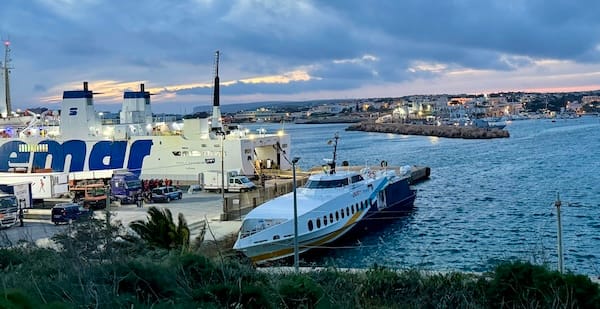
Such helps explain Pantelleria's "ghosting" in much of the media. As noted previously, the island is most certainly a prime destination. In 2023, 10,000 migrants are recorded as having arrived in Pantelleria… as compared to 183,000 in Lampedusa.1 That is a ratio of over 18:1. Are those numbers accurate? I seriously doubt it. So why the differential? It all boils down to a message controlled and presented by the European Union. In the end, only EU authorities know how many made the attempt or where they were intercepted. However, it is evident that they are all being transported to Lampedusa for processing… and counting.
It seems that this centralization allows the Italian government to focus all external attention on one place, allowing actual migrant pathways and, most likely, illegal pushbacks to remain in the shadows.2 Officials learned a long time ago that they do not have to explain that which is not visible. In an environment such as Lampedusa, much of these motivations and movements can indeed be hidden… except when they cannot. When more than ten thousand migrants arrived in just four days in 2023, the center could not hold them, and they began to walk the streets. Such is incredibly rare.3 As with Pantelleria, most people in Lampedusa will say they seldom see migrants anymore. They arrive daily, but they are just sheltered from the public view.
So why are such efforts made for a scripted narrative? Mostly, it is because the truth is difficult to bear. Allow me to share some of the stark realities hidden behind the scenes of this grand theatrical presentation.
How are migrants crossing?
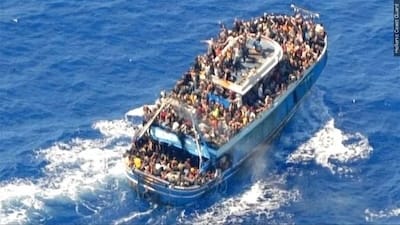
Mediterranean crossings have evolved over the years. In the early days of the migration crisis, fishermen would transport paying passengers from Africa to the islands on their larger boats. All they had to do was to get them close to the beaches and then drop them off in smaller boats and rafts. It was almost like a ferry service. They could take several trips a week and earn a lot of money. Ultimately, they would make a final trip themselves or sell the boats to others. Once the smugglers took control, it was not uncommon to hear about boats with over five hundred migrants on board. As one might imagine, the number of ships in this class was limited, and today these voyages are uncommon. When it does happen, it is often in very old, very dangerous vessels.4
Then came the age of small wooden or inflatable boats. Few could make the 80-plus mile journey with an outboard motor, especially to such a small island. Their goal was simply to get out about fifteen miles into international waters and call for help. Frontex, or any number of NGO rescue boats, would then pick them up and bring them to Lampedusa. EU agencies sought to end this practice by simply not patrolling the waters, not rescuing boats reported to be in distress, and making it illegal for anyone else to do so. They accepted that the loss of life would be higher but believed that this would dissuade the migrants, reducing the total losses.
In the end, the effectiveness of the EU position was impossible to measure. What it did do was to defer the responsibility of migrant control to others. Recent agreements now pay the Libyan or Tunisian coast guard to make those interceptions. When that happens, the boats are almost always returned to their departure points.
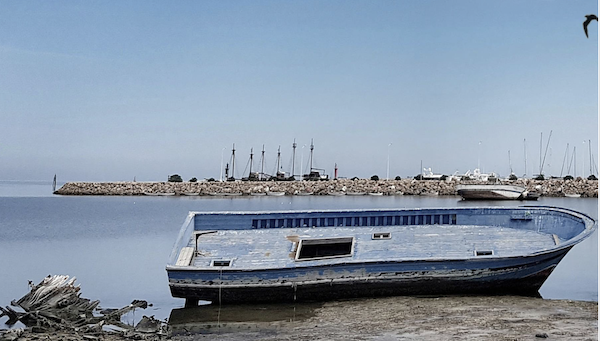
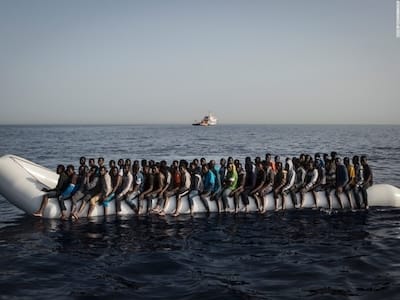
These Boats Were Just To Get the Migrants Into Waters Where They Could Be Rescued 5
Today, smuggling networks are much more “homegrown,” and the local population is fabricating boats. Many leaving Tunisia today are manufactured using the same materials as metal gates for a driveway. They are little more than tube steel and sheet metal. Their goal appears to be to place as many migrants in the water as possible, with little to no regard for their safety. The volume is so high that it overwhelms local coastguards. The condition of these boats is so abysmal that EU authorities “theoretically” cannot ignore them or send them back.
When it works, the migrants find their way to Lampedusa. When it doesn’t, the loss of life is high. Smugglers are indifferent because they have made their money, and those who are lost cannot tell the story of what happened.
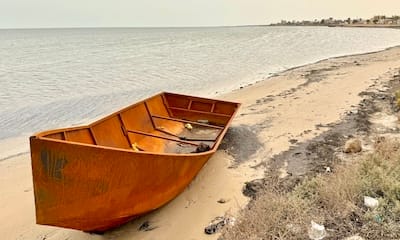
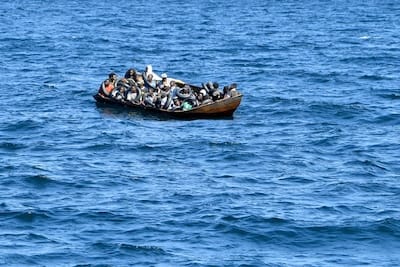
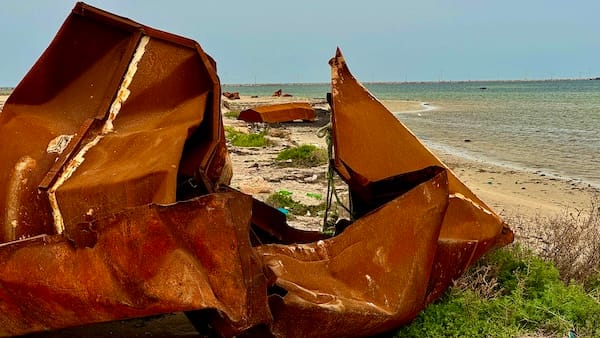
Metal Boats Used Today With a Goal to Overwhelm Border Control Systems 6
Where are they intercepted?
Where the migrants are “rescued” remains an intentional mystery. Most who arrive in Lampedusa are intercepted by EU border control ships (Frontex)... somewhere in open water. Others are occasionally picked up by private vessels and NGOs. The goal of any migrant is to be successful. Smuggling networks in North Africa tend to avoid Malta because their clients know that if they land there, they can be sent back. Thus, the smugglers strategically position their boats to be intercepted in places and numbers where there is little option for Frontex but to move the migrants forward toward Lampedusa. Today that is Tunisia.
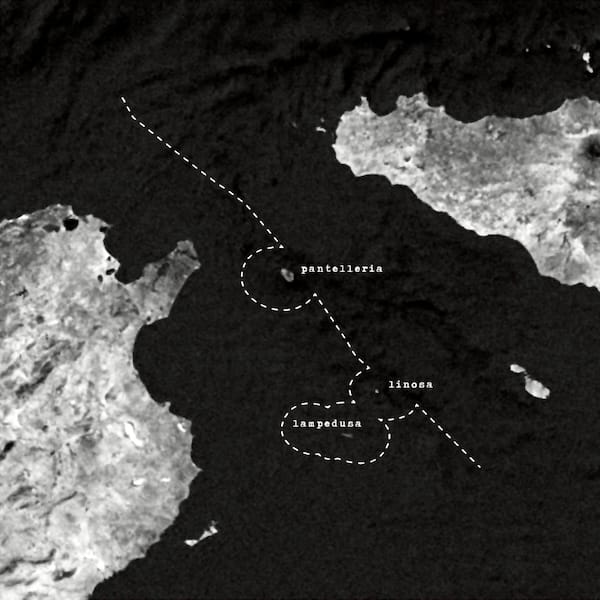
It truly is a bizarre cat-and-mouse game. The migrants want to get far enough away from the coastline so they will not be intercepted by the local coast guard and returned. Their ideal scenario would be to make it all the way to the islands, but much depends upon weather, boat construction, fuel, and luck. Most are hoping to be found by Frontex and yet to be far enough out where there is no option of being pushed back.
On the other hand, Frontex wants to do its work of border patrol, i.e., identifying migrant boats and relaying their position to local coast guards for interception. They certainly do not want to telegraph their position to those in Libya or Tunisia. If that were to happen, the smugglers would send out a hundred boats at once, overwhelming their enforcement capacity and forcing them to become rescue vessels once again.
What happens to those not intercepted?
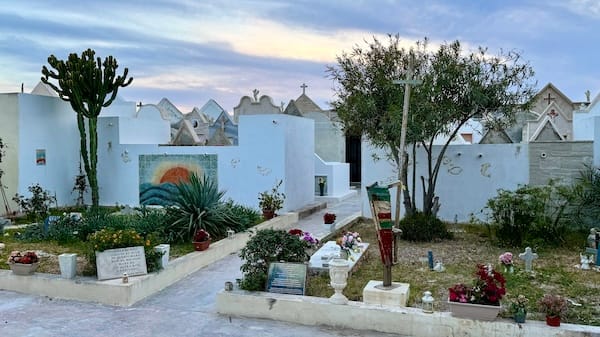
It is here that the story becomes tragically dark. Those in metal boats who are not intercepted will likely die. Due to poor construction, many boats break apart in the waves. Others suffer mechanical failures and wash back up on the beaches. Still others are forced back by local border patrols. All it takes is one high wave or broken weld, and the boat fills with water. When that happens, it goes straight to the bottom, often in a matter of seconds. How many are lost may be challenging to ever know… simply because there is no way to know how many leave Tunisian or Libyan beaches. However, two pieces of anecdotal data may help to give context.
The first comes from an environmental study on the impact of sunken migrant boats around the island of Lampedusa.8 In that study, local fishermen reported that they were snagging their nets on debris four to five times per night. If one were to compare the infinitesimally small area that these fishermen cover… to the vast expanse of Mediterranean waters around the island… the number of sunken boats (and lost lives) must be incalculable. The count (of boats) could easily be in the tens of thousands, with untold numbers of men, women, and children on board.
The second comes from reports of fishermen off the coast of Libya and Tunisia. They tell of recovering the bodies of migrants in their nets who have drowned. These are mostly locals who are fishing in the shallow waters within proximity of the shoreline. Once again, their nets only touch a small percentage of the ocean bottom in their area. The metal and wood of sunken boats may survive the harsh environment and accumulate over the years. In this case, the recovery of bodies indicates that the deaths were recent. It is difficult to extrapolate the number lost from this data, but statistically, it must be very high.
How many are actually crossing?
This is a truly unknown number. As noted above, at least 183,000 were processed through Lampedusa in 2023 alone. That total is probably accurate. This does not include all who were taken directly to Sicily once rescued. Calculating how many left Libyan or Tunisian shorelines is very difficult. A total of those who attempted a crossing during the same time period may have been over a million people.
How might we speculate about this number? Those along the Western Mediterranean Route who tell of the journey from Morocco to Spain share that one, maybe two in five boats who make the effort will be successful. But they also say that it takes an average of three attempts to be in that number. Our sources in Tunisia offer similar statistics. Remember that these are the reports shared between smugglers and migrants. One must imagine that if the success rates were better, it would be reflected in their testimonies.
These same sources will also tell you that the respective coast guard returns one, maybe two, boats for every five boats that leave the shore. These migrants are intercepted and subsequently returned to the migrant camps and shelters... where they try to raise money for another attempt. When we spoke with migrants, those who made it and those who didn’t. All reported that the cost of the trip was a major factor in the final result. Why? The more expensive the trip, the better the boats are, and the greater the capacity to entice border patrol to look the other way.
We have spoken much about those who are lost and presumed dead. Their boats litter the bottom of the Mediterranean, and their remains are caught in local fishing nets. Officially, 28,000 have been counted as dead or missing in the past decade. But those numbers are only registered when the loss can be verified. Such is nearly impossible in this context. If we use the above metric, for every five boats that are launched, between one and three are never seen again. If 200,000 migrants arrive in Italy, and a similar number are pushed back to North Africa, then at least that many drowned in the Mediterranean in 2023 – perhaps more.
Why control the message?
The answer to this question is important. First, migration is a humanitarian public relations nightmare for European politicians. An open border for nine months in 2014-15 created this crisis, and nearly ten years later, they are still trying to get the genie back in the bottle. EU states are overwhelmed from the inside as migrants continue to arrive, stoking a strong nationalistic response. At the same time, international condemnation and criticism are high in the face of existing migrant suffering. The only way to manage both is to control the message.
Second, despite all efforts, migration across the Mediterranean can most certainly be successful. After all, nearly a million have made the crossing in the past decade. If that image (of success) continues to be propagated, authorities know millions more would attempt to make the trip. As such, the EU desperately wants to send a message that will deter such efforts. So how do they do that?
One way is to limit public access to those who are successful. Reception centers on the islands of Malta, Lampedusa, and Pantelleria are notoriously placed in places where they are not visible to the public, and the police prevent unauthorized visitors from approaching. Migrant cell phones are often confiscated. Survivors are not allowed to exit, keeping them isolated from the public.9 In so doing, the numbers of migrants arriving and departing can be reported (or not) in ways that are strategically beneficial to current policies. As such, the image presented on the stage for public consumption is neither accurate nor complete.10 Were it not for external groups who seek to expose abuses, accountability for how migrants are treated might go completely unreported.11
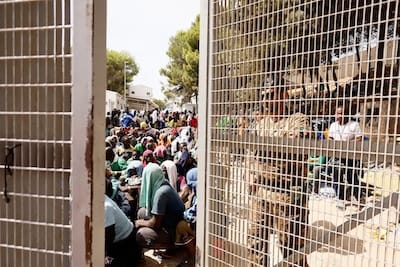
Another way is to send a clear message to migrants in North Africa that any effort to migrate to Europe will be costly.13 If you get in a boat, you will either be intercepted by the local coast guards or pushed back by Frontex. Or, even worse, if you are not intercepted, you will die. The message is that the Central Mediterranean Route is long, expensive, and very dangerous.14 You may not like it where you are... and you may not be able to go back home... but either is still better than attempting to move forward.
The EU has adopted this message because, pragmatically, it works. Life can indeed be miserable for those who fail in their effort to cross. Through social media, migrants share their misery back to their friends and family in places of origin and transition. News reports of the carnage in the sea reach the ears of those back home and cause everyone to think twice about making the journey. Pushbacks to Libya and Tunisia force many to choose other routes. While the ends do not justify the means, these messages clearly impact smuggling routes and the volume of transits. Whether it decreases the number of attempts or simply presses them into other pathways is yet to be determined.
Conclusion
We have traveled extensively across Southern Europe, and in almost every place, one can find sub-Saharan Africans. Many have crossed along the CMR, passing through Lampedusa. Their stories are difficult to hear, seldom requiring embellishment to reflect the horrors of the journey. Many are deeply scarred. And yet, coming from honor/shame cultures, they struggle to reveal those wounds to friends and family back home. They are compelled to speak only of the successes.
For those who hear the voice of success, the European Union's messaging often comes across as propaganda. In those places of origin, desperate people think that the dangers are exaggerated to prevent them from participating in the riches of the North. And so they continue to come. Many will only realize the truth once they have passed the obscure points of no return.
Wisdom from below is driven by "jealousy and selfish ambition." Many who seek relief along migratory pathways such as the CMR will listen to those voices, not recognizing that they are coming from evil men who will exploit them without mercy. Desperate for a place of protection, provision, and peace, they follow the siren's call that tells them that the grass will be greener on "that" side of the fence."that" side of the fence.
One would hope that governmental authorities would do better. Unfortunately, they are also driven by the wisdom of this world. They create their own narrative, played out on global platforms such as Lampedusa. Or, even worse, they capitalize on the migrants' vulnerabilities to satisfy their own political ambitions. In the end, most are left in a place of despair.
It is here that the gospel message resonates. God's people, those on the migratory pathways with them and those in the churches where they land, are uniquely equipped to offer hope in the midst of that despair. Their wisdom... from above... is making a difference. Many are coming to faith and finding life in Christ.
1 "Italy’s Lampedusa Island Hit with Record Migratn Arrivals", Reuters https://www.reuters.com/world/europe/italys-lampedusa-island-hit-with-record-migrant-arrivals-2023-09-12/ (accessed May 25, 2024).
2 Mediterranea, Medreport January 2024 (Naples Italy: Mediterranea, 2024), 17.
3 See D’Ignoti. See also Renata Brito, "What’s Behind the Surge in Migrant Arrivals to Italy?", Associated Press https://apnews.com/article/migration-italy-lampedusa-3b47cdacb91c2d72f99b11aa396a6d59 (accessed May 25, 2024). See also Christina Muguruza, "What’s Happening on Lampedusa — and What Europe Needs to Do Now to Manage Migration", Irish Examiner https://www.irishexaminer.com/opinion/commentanalysis/arid-41241091.html (accessed May 25, 2024).
4 "2023 Messenia Migrant Boat Disaster", Wikimedia Foundation https://en.wikipedia.org/wiki/2023_Messenia_migrant_boat_disaster (accessed October 29, 2023).
5 Mercy Corps, "Tunisia, Country of Emigration and Return", Reach https://www.mercycorps.org/sites/default/files/2020-01/Tunisia_country_of_emigration_and_return.pdf (accessed March 8, 2024).
Moni Basu, "These Crossings Are Nothing but Fatal", CNN https://www.cnn.com/interactive/2016/08/world/dangerous-migrant-crossings-mediterranean/ (accessed May 27, 2024).
6 "Four Migrants Dead After Boat Sinks Off Tunisia", Arab News https://www.arabnews.com/node/2372901/middle-east (accessed May 27, 2024). The second image is courtesy of the author.
7 Dorbolò.
8 Ibid
9 See Francesca Soliman, "Environmental Harms at the Border: The Case of Lampedusa," Critical Criminology 31 (2023).
10 Dorbolò.
11 See AlarmPhone, "2023: A Long Summer of Migration in the Central Mediterranean Sea", AlarmPhone https://alarmphone.org/en/2024/02/18/2023-a-long-summer-of-migration-in-the-central-mediterranean-sea/ (accessed May 25, 2024). See also Muguruza.
12 Judith Sunderland, "Europe’s Lack of New Ideas on Migration Is the Real Crisis", InfoMigrants https://www.hrw.org/news/2023/09/19/europes-lack-new-ideas-migration-real-crisis (accessed My 27, 2024).
13 Maldusa, "The Fall of the Lampedusa Hotspot, People’s Freedom and Locals’ Solidarity", Maldusa https://www.maldusa.org/l/the-fall-of-the-lampedusa-hotspot-people-s-freedom-and-locals-solidarity/ (accessed May 25, 2024).
14 "Video Shows Greece Abandoning Migrants at Sea", New York Times https://tinyurl.com/4t9n2du9 (accessed October 31, 2023).